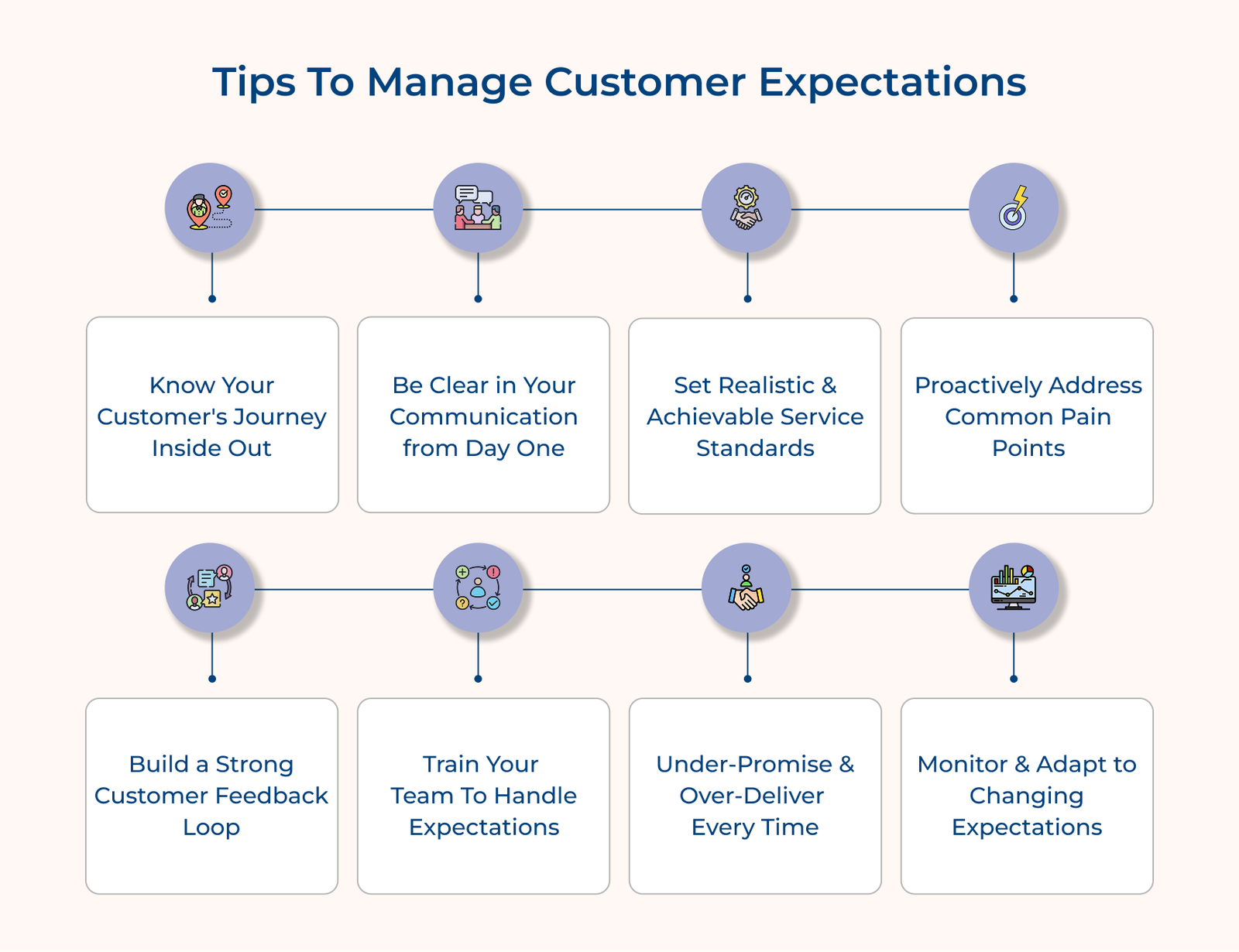
1. Know Your Customer’s Journey Inside Out
Understanding the full customer journey is key to anticipating needs and preventing issues before they arise. Businesses can create seamless experiences and build trust through proactive service by mapping each touchpoint across all channels. Start by analyzing how customers discover your service, engage with different touchpoints and progress through their journey.
Let’s assume that a software company might uncover onboarding challenges in their B2B customer journey, leading them to add a dedicated onboarding specialist and automate check-ins at key milestones. It ensures smoother experiences and stronger customer retention.
Best practices:
- Hold quarterly journey mapping sessions with cross-functional teams to stay aligned on evolving customer touchpoints and needs.
- Use journey analytics tools to track performance and pinpoint areas for improvement.
2. Be Clear in Your Communication from Day One
Clear communication is key to building trust, preventing misunderstandings and enhancing strong customer relationships. Set clear expectations from the start with detailed timelines, service agreements and transparent processes. Regular updates keep customers informed, easing anxiety and strengthening trust.
Implement a structured communication framework with milestone notifications, progress updates and clear escalation paths. Use multiple channels—email, portals and calls—to ensure consistent message delivery.
Pro tips
- Develop standardized templates for routine communications to ensure consistency and clarity across all customer interactions.
- Maintain a proactive update schedule, keeping customers informed even when there’s no major progress to report.
3. Set Realistic and Achievable Service Standards
Setting achievable service standards ensures consistent delivery, helping manage customer expectations while boosting efficiency and team morale. Businesses can define clear, measurable metrics that align with customer needs by analyzing historical data and industry benchmarks.
Service benchmarks like response time guidelines provide clarity for both teams and customers, creating realistic expectations for different scenarios. Let’s consider that a support team establishes response time targets—1 hour for urgent issues, 4 hours for standard queries and 24 hours for non-critical requests. They adjust the resources based on performance.
Actionable tips
- Update service standards quarterly using performance data and customer feedback to ensure they remain relevant.
- Develop clear service level agreements (SLAs) that set customer expectations for various scenarios, ensuring transparency and consistency.
4. Proactively Address Common Pain Points
Proactively addressing common issues before they affect customers builds trust, reduces support volume and boosts confidence in your brand. You can identify recurring pain points and develop preventive solutions by analyzing customer feedback.
Create an easily accessible, regularly updated knowledge base that empowers customers to resolve simple issues on their own, improving satisfaction and cutting support costs. Use data analytics to develop targeted solutions that benefit both customers and your support teams.
Best practices
- Hold monthly support ticket reviews to spot emerging issues and refine preventive measures.
- Create and maintain an easy-to-search, regularly updated knowledge base with fresh solutions to keep customers informed.
5. Build a Strong Customer Feedback Loop
A strong feedback system drives continuous improvement, keeping businesses in tune with customer needs and reinforcing their commitment to satisfaction. Businesses can easily capture both solicited as well as unsolicited insights on service quality by offering multiple feedback channels, such as surveys, direct options and social media monitoring.
Acting on feedback and sharing updates on improvements shows customers their input matters, building trust. Develop a structured process to collect, analyze and implement feedback, ensuring it leads to actionable changes. Close the loop by communicating updates and encouraging ongoing customer engagement.
How to implement
- Adopt a structured approach to categorize and prioritize feedback, ensuring urgent issues are addressed swiftly.
- Maintain a regular schedule of customer feedback surveys and analysis sessions to track trends.
6. Train Your Team to Handle Expectations
Well-trained teams deliver consistent, high-quality service that meets customer expectations while facilitating strong relationships. Clear communication guidelines and ongoing training ensure team members handle every interaction professionally. Equip them with decision-making authority and problem-solving tools to resolve issues swiftly.
Develop dynamic training programs that emphasize communication, expectation management and problem-solving, incorporating real-world examples for practical learning.
Actionable tips
- Hold monthly training sessions to share best practices and tackle new customer service challenges.
- Launch a mentorship program that pairs seasoned team members with newcomers for continuous skill growth.
7. Under-Promise and Over-Deliver Every Time
Setting realistic timelines requires analyzing delivery capabilities and potential hurdles, with buffer time for unforeseen issues. It ensures consistent performance and creates room for early delivery or added value, delighting customers.
Let’s assume that a delivery service promises 45 minutes, but typically delivers in 30. They exceed expectations by occasionally arriving early and offering free upgrades, earning a reputation for exceptional service.
Actionable tips:
- Add a 20% buffer to estimated completion times to account for unforeseen challenges, while still leaving room to exceed expectations.
- Find and implement small, cost-effective ways to add extra value to every service, enhancing the customer experience.
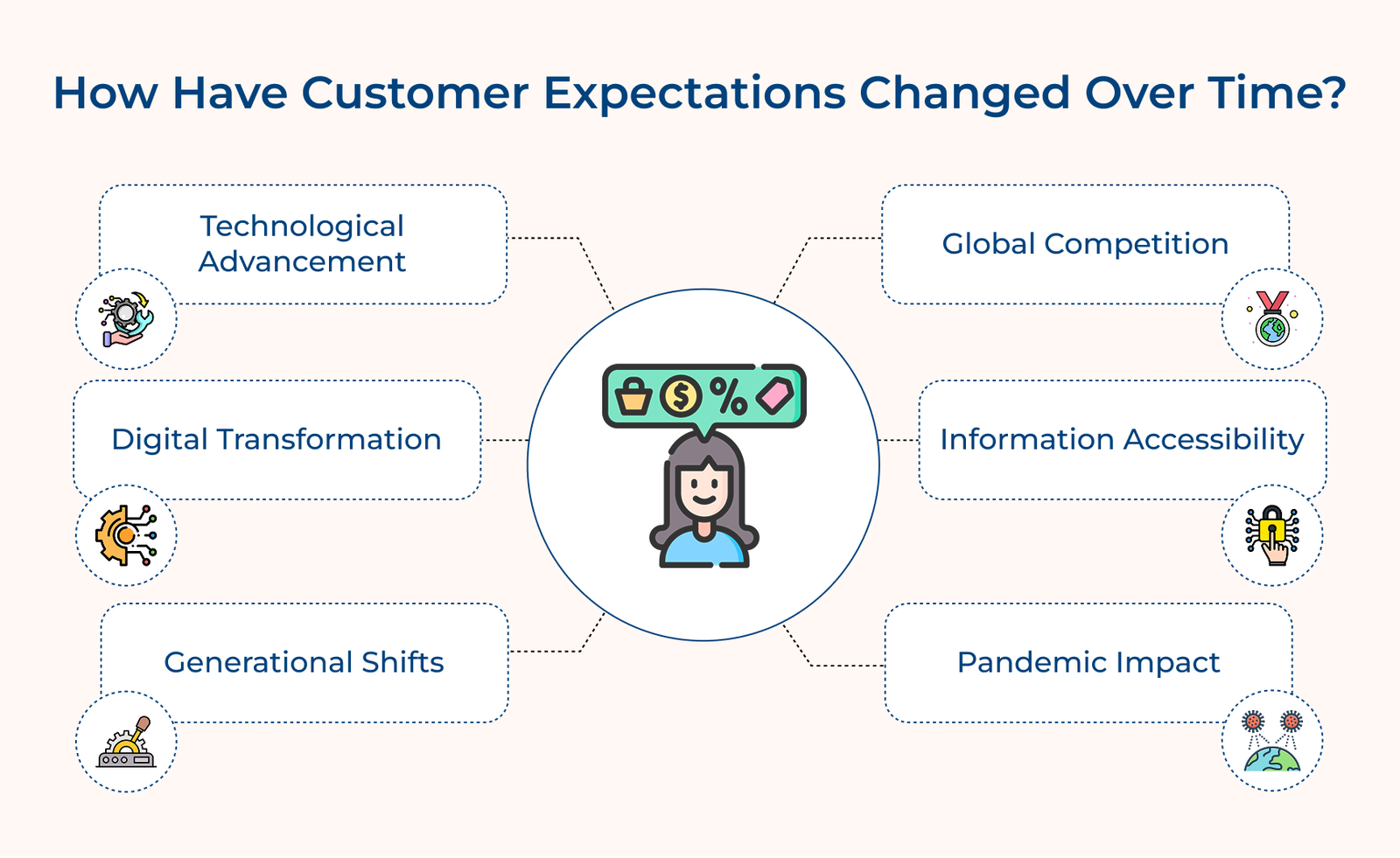
8. Monitor and Adapt to Changing Expectations
Staying on top of competitor offerings helps you track evolving customer expectations, guiding service improvements and keeping your business competitive. Adapting your services based on market shifts shows your commitment to customer satisfaction.
Let’s consider that a fitness center tracks industry trends and member feedback. It adds virtual classes and app features to meet changing customer preferences.
Pro tips
- Conduct quarterly competitor analysis and customer surveys to spot emerging trends.
- Create a cross-functional team dedicated to adapting services based on evolving market demands.
Examples of Managing Customer Expectations Effectively
Check out how leading brands have successfully adapted their strategies to meet and exceed customer expectations, transforming challenges into opportunities.
1. Amazon: Same-Day Delivery Revolution
Customers now demand faster delivery without the premium price tag. Amazon set a new standard by offering same-day delivery through Prime, making speed and convenience accessible.
The innovation boosted customer loyalty and expanded market share, turning Prime into a must-have membership. It propelled Amazon’s transformation from an online bookstore to a global retail leader, driving repeat purchases and attracting a vast new customer base.
2. Starbucks: Mobile Order Personalization
Starbucks launched a mobile app with order-ahead and extensive customization options to eliminate long lines while offering personalized drinks, giving customers a seamless, tailored experience.
The digital shift boosted order frequency and raised average order values, making the app a key revenue driver. Customer satisfaction soared with faster service and more accurate orders.
3. Apple: Seamless Tech Support Experience
Apple launched the Genius Bar in-store to meet the demand for instant, expert tech support, offering face-to-face assistance alongside robust online and remote resources.
The all-encompassing support boosted brand loyalty and justified premium pricing, giving customers confidence in their Apple products.
4. Netflix: Personalized Entertainment Experience
Netflix harnessed advanced algorithms to deliver personalized content recommendations based on viewing patterns. It helped eliminate endless scrolling, making discovery seamless and engaging.
The strategy boosted watch time, solidifying Netflix as the streaming leader and its recommendation system as a powerful competitive edge.
5. Zappos: Customer Service Excellence
Zappos overcame online shoe shoppers’ hesitation by offering free returns, a 365-day policy and excellent customer service with empowered reps who put customers first.
The customer-centric model turned Zappos into a billion-dollar brand, enhancing loyalty and generating organic growth through passionate, word-of-mouth advocates.
Customer Expectations: Where Satisfaction Meets Anticipation
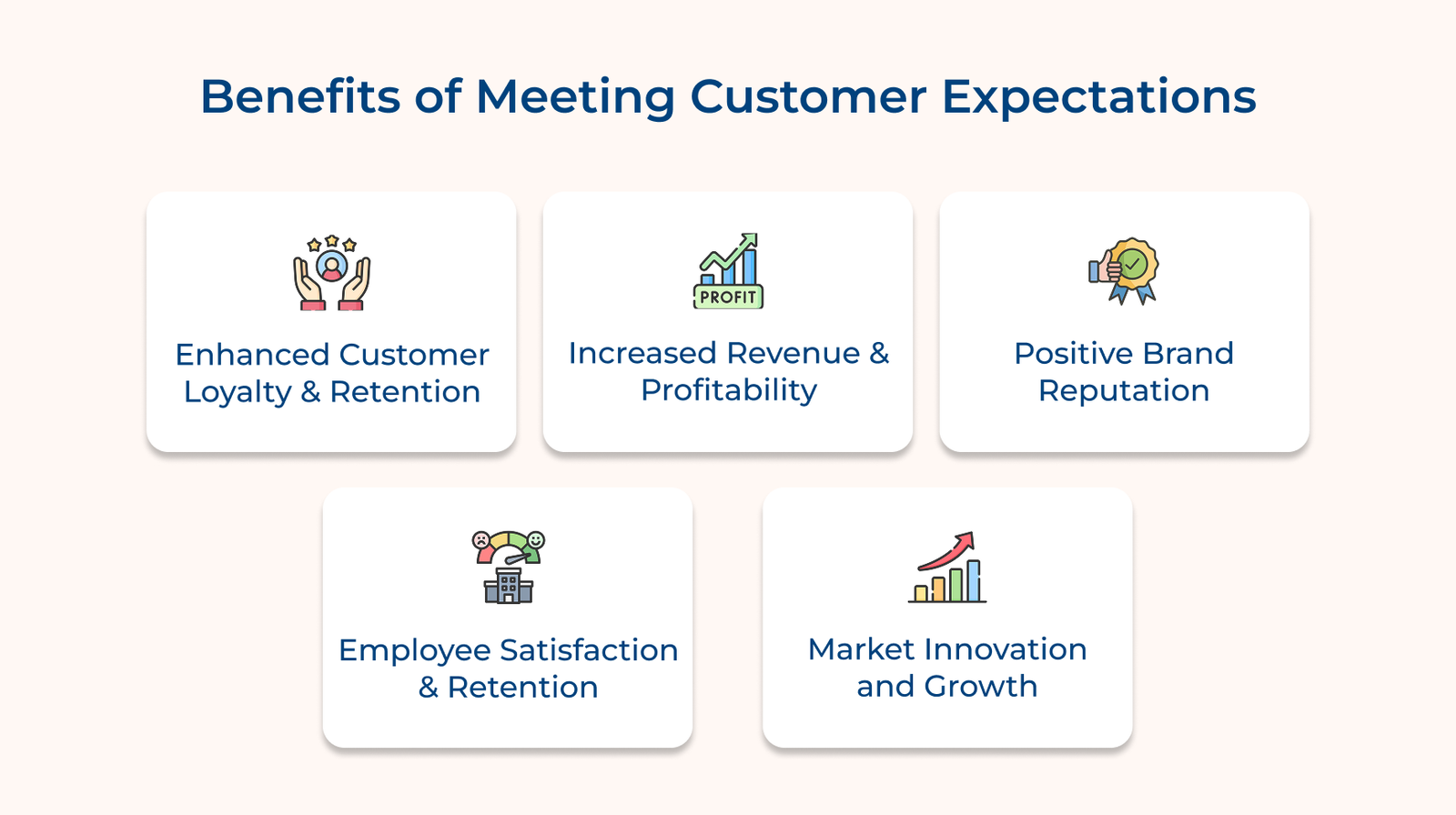
Managing customer expectations is key to thriving in a competitive landscape. It’s about more than meeting basic needs – it’s about understanding, anticipating and consistently delivering experiences that exceed the expectations. The proactive approach builds trust, boosts loyalty and sets the stage for long-term growth.
When businesses go beyond meeting expectations, they turn customers into brand advocates. Satisfied customers not only return but also spread the word, driving new business and reducing acquisition costs. It creates a powerful cycle of growth, strengthening market position and profitability, while giving companies a lasting competitive edge.
Key takeaways:
- Proactively managing expectations turns satisfied customers into loyal brand advocates.
- Consistently delivering on promises builds trust and enhances lasting business relationships.
- Adapting to changing customer needs ensures continued relevance and drives long-term growth.