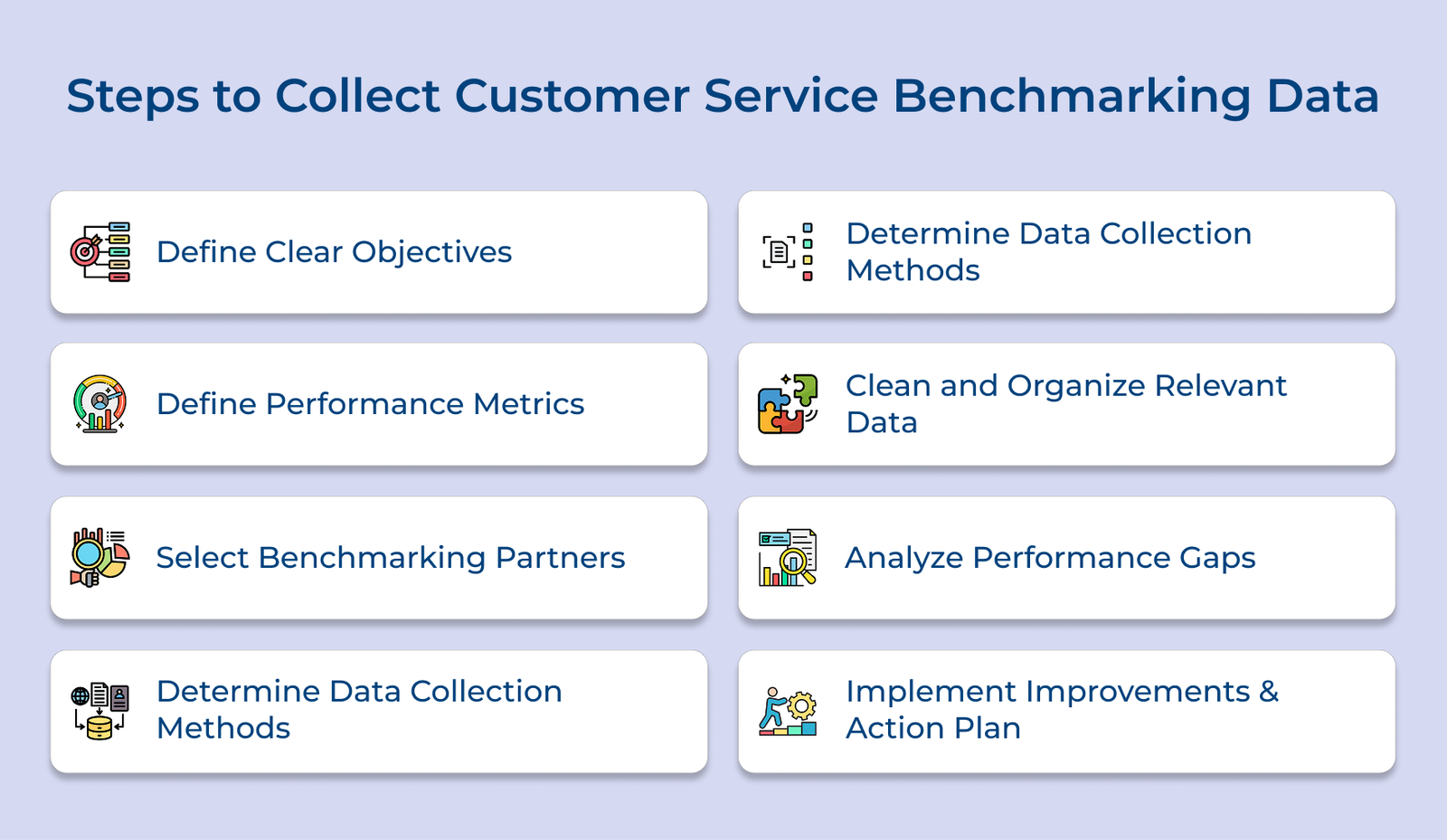
1. Define Clear Objectives
Setting clear, SMART goals is the first step in effective benchmarking. It ensures efforts align with your organization’s strategy, preventing wasted resources and maintaining focus. Without clear objectives, you risk irrelevant data and poor comparisons. Goals should be specific, measurable, achievable, relevant and time-bound—like “Reduce average response time by 25% in 6 months”—to drive meaningful customer service improvements.
Aligning customer service benchmarking with business strategy ensures it supports broader goals, enhancing the company’s competitive edge and driving growth. The focus makes benchmarking efforts more impactful and aligned with organizational success. Consider factors like market positioning, customer experience targets and operational efficiency goals when establishing the alignment.
Pro tips:
- Hold workshops with cross-departmental stakeholders to ensure objectives capture diverse insights and secure company-wide support.
- Establish a clear system to track progress and regularly review objectives to stay aligned with market changes.
2. Define Performance Metrics
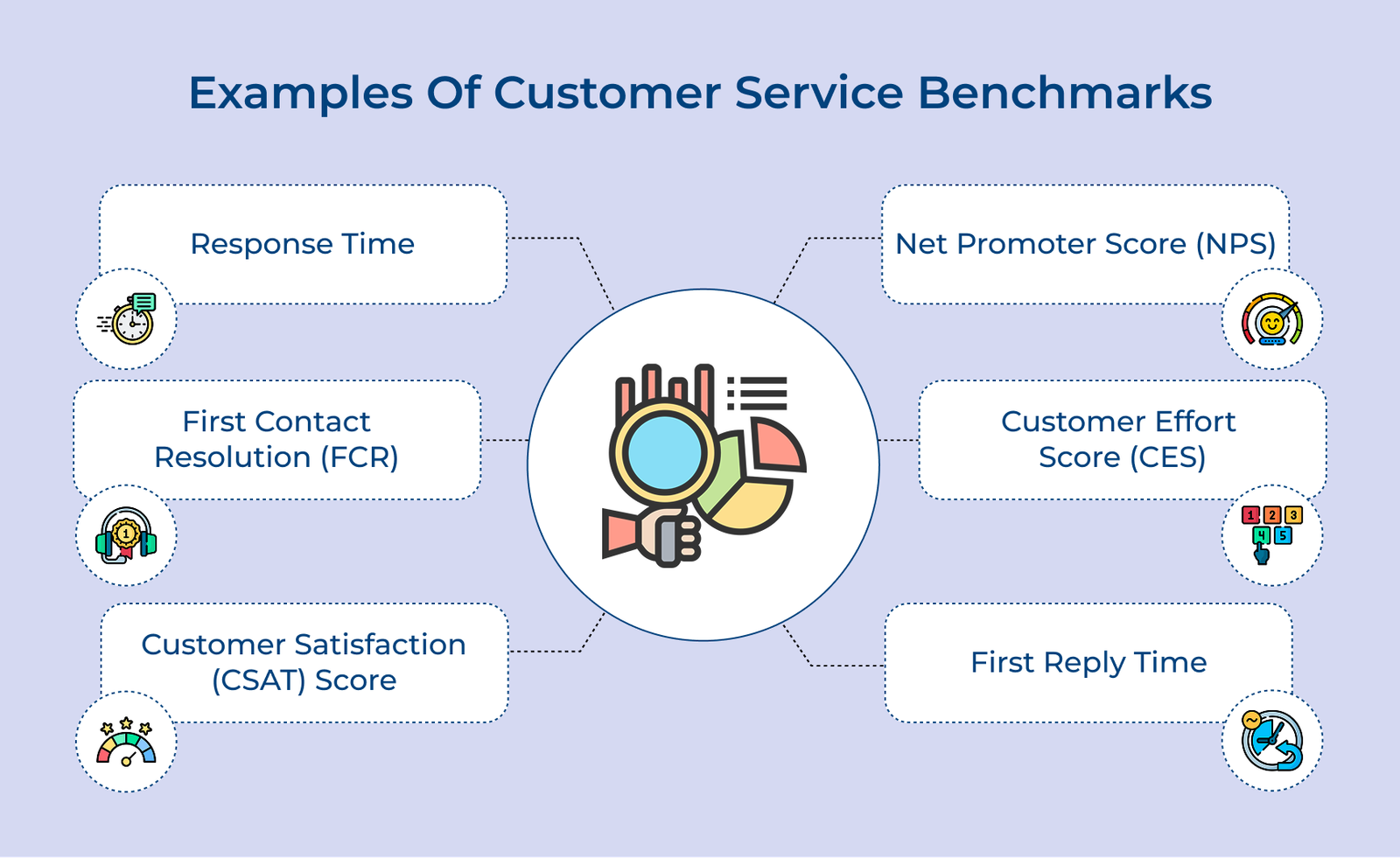
Choosing the right metrics is crucial for effective benchmarking, as they directly influence customer satisfaction and business success. Poorly selected metrics can waste resources and lead to misguided improvements. Key service KPIs such as first response time, resolution rate, CSAT, NPS and average handling time should reflect service quality, offering actionable insights tailored to your industry.
Setting measurement criteria means defining each KPI clearly—how it’s calculated, what success looks like and which data points to track. It includes determining how metrics will be calculated, what constitutes success and what data points need to be tracked. The criteria should be consistent across all comparison points to ensure valid benchmarking results.
Actionable tips:
- Continuously review and update your KPIs to keep them aligned with evolving customer expectations.
- Implement a balanced scorecard approach that combines both quantitative and qualitative metrics for a detailed view of performance.
3. Select Benchmarking Partners
The effectiveness of your benchmarking depends on choosing the right comparison partners. Research those with similar market share, customer bases and service models to identify competitors. Focus on organizations serving comparable segments and facing similar challenges to ensure meaningful insights for improving your customer service.
Choosing industry leaders for comparison helps set aspirational targets and identify best practices. Even if competitors operate at a different scale, their innovative strategies can offer valuable insights for improving your operations. Look to companies with outstanding customer service, even if they’re in related industries.
Best practices:
- Develop a clear evaluation framework to assess potential benchmarking partners based on relevance, data accessibility and comparability of operations.
- Strengthen ties with industry associations and networks to enable data sharing and collaborative benchmarking opportunities.
4. Determine Data Collection Methods
The right tools and methods are crucial for reliable and consistent data, while poor collection methods can lead to misleading insights that undermine the benchmarking process. Select tools like CRM platforms, customer feedback systems, call monitoring software and analytics tools that capture relevant data efficiently. Make sure these tools integrate smoothly with existing systems and present data in formats that simplify analysis.
Clear a structured data collection timeline by setting clear milestones, defining collection frequency and allocating resources to ensure timely data gathering. It includes determining the frequency of data collection, setting milestone dates and allocating resources appropriately. Consider both short-term metrics that require frequent monitoring and long-term trends that need extended observation periods.
Pro tips:
- Implement automated data collection systems to minimize errors and ensure consistency across all touchpoints.
- Document collection procedures and train team members to ensure standardized data collection practices.
5. Gather Internal and External Data
Collecting both internal and external data gives a complete view for effective benchmarking. The approach helps organizations assess their performance while gaining insights into industry standards and competitors. Internal data should include customer interaction records, service levels, employee metrics and customer feedback to build a solid foundation for improvement strategies.
Gathering competitor data requires strategic approaches, such as analyzing public reports, industry surveys, social media monitoring and customer reviews. Documenting market standards helps set baseline expectations and spot emerging trends in customer service.
Actionable tips:
- Build relationships with industry associations and engage in professional networks to access valuable benchmarking data.
- Create a centralized database to store both internal and external data, ensuring easy access for all stakeholders.
6. Clean and Organize Relevant Data
Disorganized data can lead to faulty conclusions and ineffective improvements, so it’s vital to maintain data integrity. Standardizing formats, naming conventions and data entry templates ensures consistency. Remove irrelevant information to focus on data points directly aligned with your benchmarking goals.
Validating data accuracy involves a thorough review to correct errors, eliminate duplicates and ensure completeness. Regular quality checks and validation protocols help maintain data integrity throughout the benchmarking process.
Pro tips:
- Use automated data validation tools to flag inconsistencies and ensure real-time data quality.
- Establish a data governance framework that outlines roles, responsibilities and procedures for maintaining high data standards.
7. Analyze Performance Gaps
Gap analysis turns raw data into actionable insights by highlighting the gap between current performance and desired benchmarks. The analysis helps organizations understand their position and identify areas for improvement. It includes statistical analysis, trend identification and root cause analysis of variations. The comparison should consider both quantitative metrics and qualitative factors that influence performance outcomes.
Prioritizing improvement opportunities involves strategically evaluating gap analysis results. Consider factors such as impact potential, resource requirements and implementation feasibility when prioritizing improvement initiatives. Focus on opportunities that align with strategic objectives and offer the highest potential return on investment.
Best practices:
- Leverage visual analytics tools to highlight performance gaps, making data more accessible to stakeholders.
- Create a scoring system to objectively prioritize improvement opportunities based on key criteria.
8. Implement Improvements and Action Plan
The implementation phase turns insights into real performance improvements, making the key to the benchmarking process’s success. Action plans should address identified gaps with specific goals, assigned responsibilities, resource requirements and clear timelines. Each initiative must align with benchmarking objectives and include success metrics for effective execution.
Effective project management is crucial for setting implementation timelines and tracking progress. Establish key milestones, implement tracking systems and ensure regular communication with stakeholders to stay on course.
Pro tips:
- Develop a change management strategy to facilitate smooth implementation and overcome resistance to new processes or systems.
- Establish a feedback loop to continuously monitor the effectiveness of implemented changes and make necessary adjustments.
What Role Does Technology Play In Customer Service Benchmarking?
Let us explore how technology plays a pivotal role in customer service benchmarking, transforming the way businesses measure and improve their support strategies.