How to Build Sales Team? Importance, Elements & Key Steps
Learn some actionable steps to build sales team. The detailed guide offers strategies to enhance team productivity - from recruitment to training and motivation.

Learn some actionable steps to build sales team. The detailed guide offers strategies to enhance team productivity - from recruitment to training and motivation.
Scaling revenue requires more than a great product – it demands a high-performing sales team. Only 13% of clients feel a salesperson can comprehend their wants. Yet, many organizations struggle with high turnover, missed targets and inconsistent performance. Recruiting top talent, establishing effective processes and enhancing a strong sales culture are common hurdles that can drain resources.
Fortunately, building a successful sales team doesn’t have to be a shot in the dark. You can build a high-performing sales force that consistently delivers results by following a proven framework. Let us explore the essential steps to build sales team that excels from assessing business needs to cultivating a strong team culture.
A sales team refers to a dedicated group of professionals focused on driving revenue by selling a company’s products or services. They act as the bridge between the company and potential customers, understanding their needs.
Sales teams work in a coordinated structure, with specialized roles such as lead generators who identify prospects, account executives who nurture relationships and sales managers who provide strategic direction. Collaboration with marketing, product development and customer service ensures a unified approach to achieving sales goals.
Key objectives:
Understanding the importance of building a well-structured sales team is crucial for driving consistent revenue, enhancing customer acquisition and maintaining a competitive edge in the market.
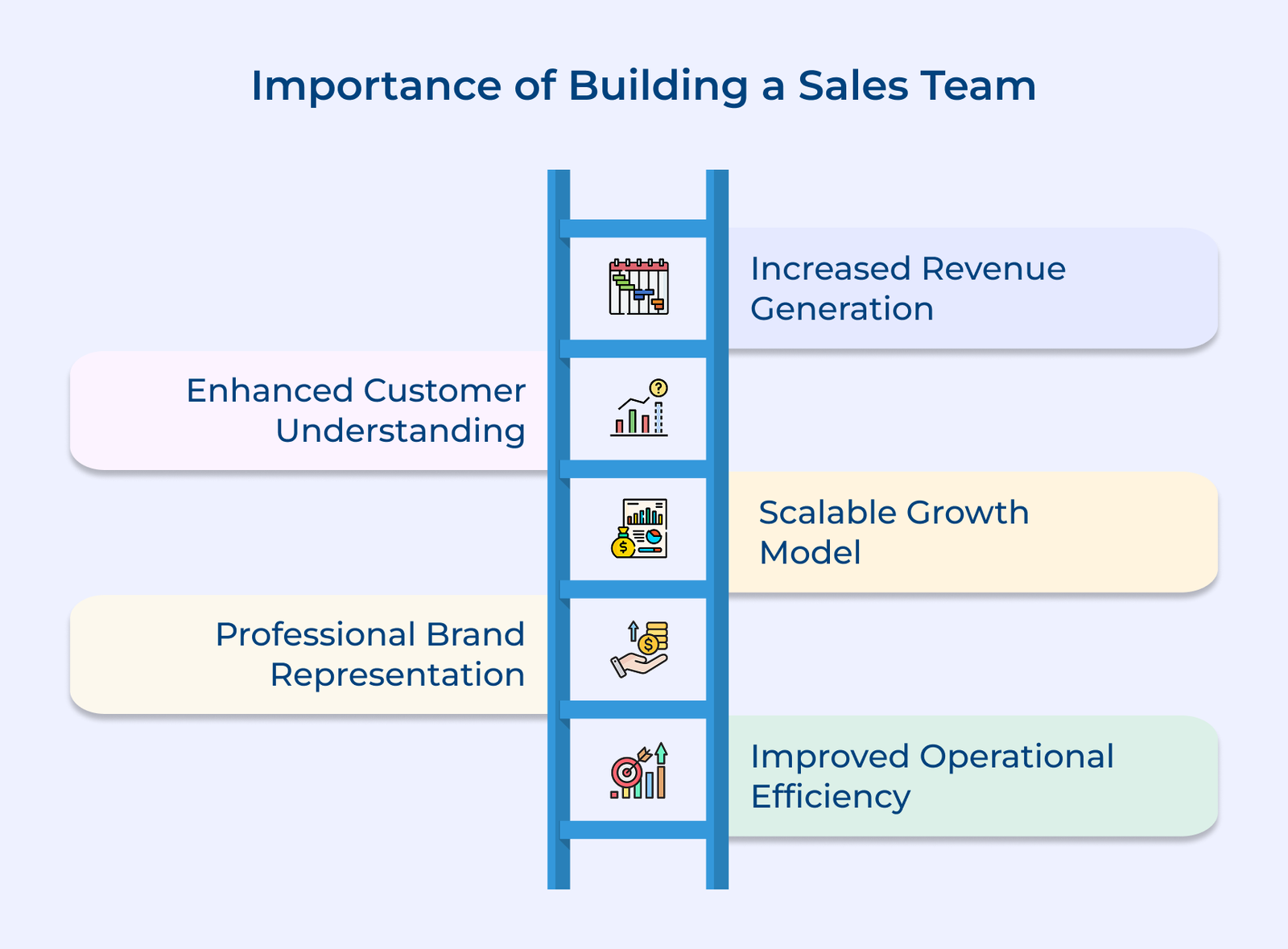
1. Increased Revenue Generation
A dedicated sales team drives revenue by systematically prospecting, qualifying leads and managing accounts strategically. Their focused expertise boosts conversion rates, increases deal sizes and ensures sustainable, predictable revenue growth.
2. Enhanced Customer Understanding
Sales teams give valuable insights into customer needs and pain points through regular interactions. The feedback shapes product development, marketing and service improvements, positioning them as the voice of the customer within the organization.
3. Scalable Growth Model
A well-organized sales team creates scalable frameworks with repeatable processes and standardized practices. The approach ensures consistent performance, making it easy to replicate success as the business expands across markets and regions.
4. Professional Brand Representation
Trained sales professionals serve as brand ambassadors, consistently embodying company values and messages. Through professional interactions and high service standards, they create a positive brand experience that boosts the company’s reputation.
5. Improved Operational Efficiency
Sales teams enhance efficiency by streamlining processes with specialized roles, automation and optimized workflows. It reduces redundancies, shortens sales cycles, and improves resource allocation, driving better cost management.
A high-performing sales team is built on several key elements that drive success. Understanding these elements is essential for creating a sales team that delivers exceptional results.
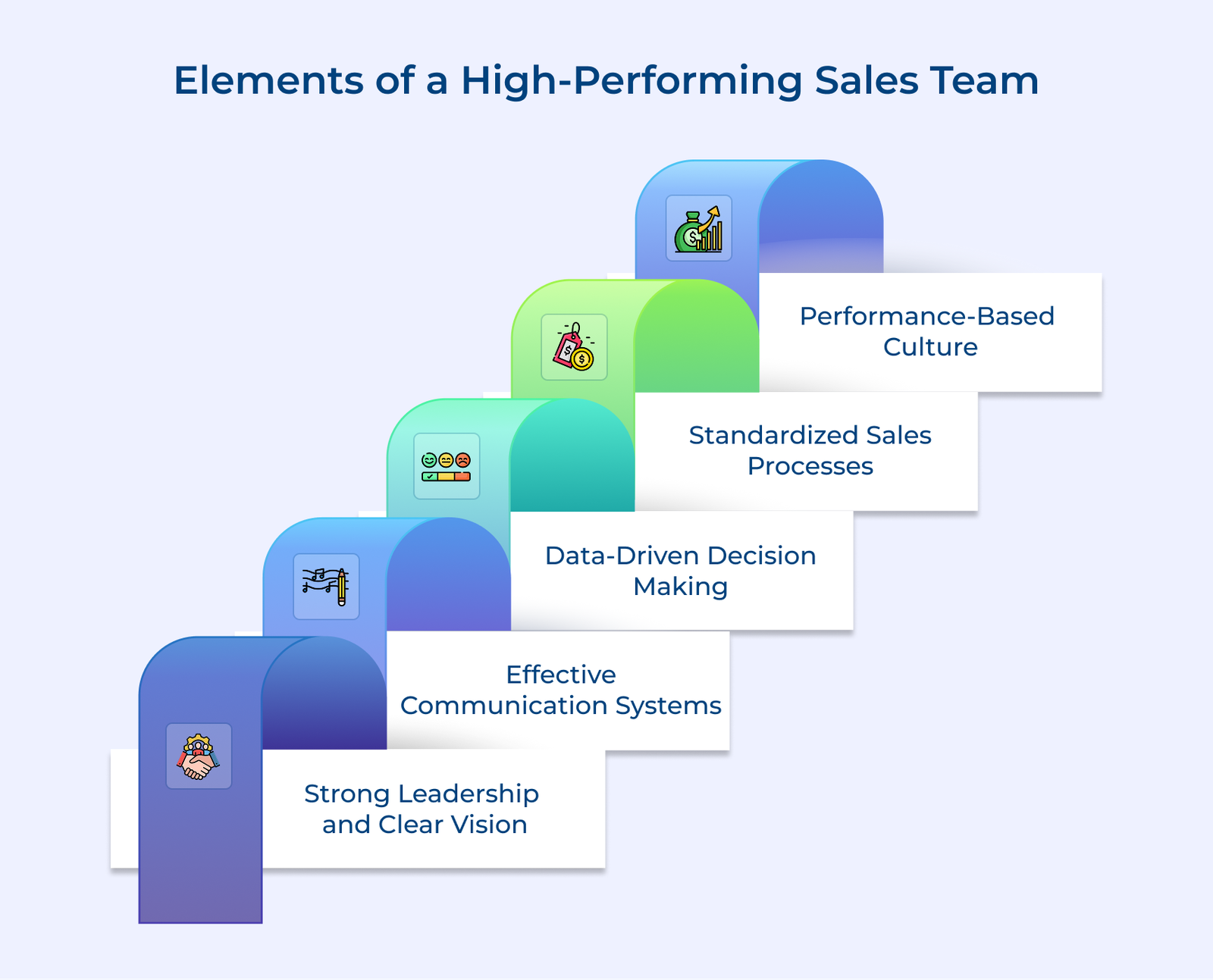
Sales leaders set clear goals and expectations, aligning the team with company objectives. They offer ongoing coaching, feedback and support to nurture growth. Leaders empower reps to take initiative by enhancing a culture of accountability and continuous improvement.
Frequent team meetings, one-on-one check-ins and collaborative tools enhance seamless communication across the organization. Open channels ensure quick sharing of updates, feedback and cross-departmental alignment with product development boosts team performance.
The team leverages sales analytics to track performance, spot trends and make data-driven decisions. Regular analysis of key metrics helps refine sales strategies, optimize resources and stay agile in response to market shifts.
Clear sales processes and playbooks guide reps through each stage of the cycle, ensuring consistency while allowing flexibility for customer-specific needs. Regular reviews and updates, driven by performance data, keep the team efficient.
Recognizing and rewarding high performance fuels motivation, enhancing healthy competition. Regular performance reviews, incentives and career growth opportunities keep the team aligned with goals.
If you’re ready to take the plunge, here are nine effective steps you should follow to construct a dynamic sales force that not only meets but exceeds your expectations.
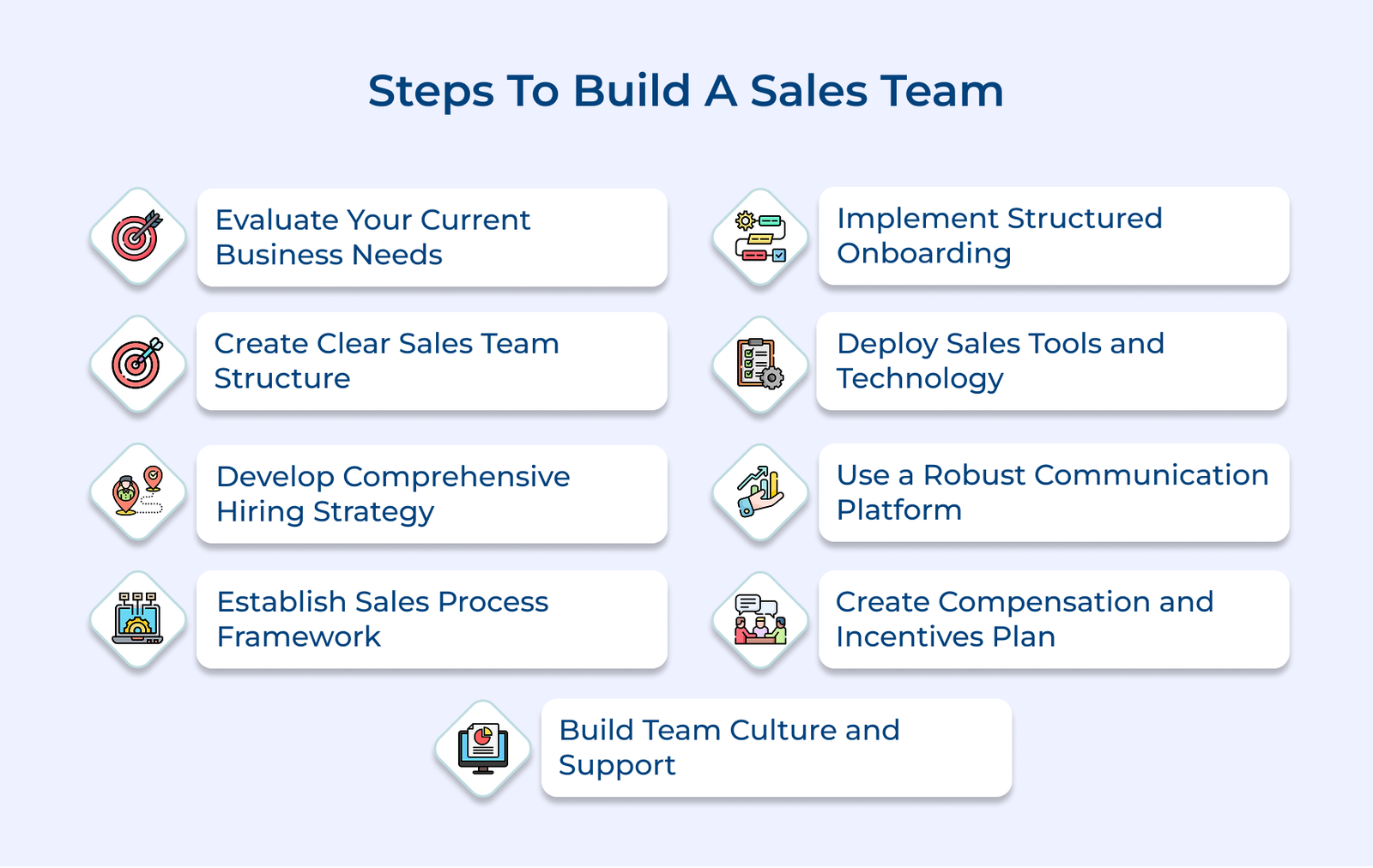
Evaluating business needs is key to building an effective sales team. The assessment identifies required resources, team structure and investment to meet revenue goals. Organizations can make informed decisions on team expansion by analyzing current sales performance, setting growth targets and pinpointing capability gaps.
Let’s assume a tech company aiming to grow from $2 million to $5 million in sales found they needed three new sales reps and two product specialists to cover new territories or handle enterprise sales.
Actionable Tips:
A clear team structure defines roles, responsibilities and accountability, ensuring efficient workflows. It prevents confusion, enabling the team to focus on achieving sales goals. Start by defining key roles like Sales Development Representatives (SDRs) for prospecting and Account Executives (AEs) for closing deals, with clear responsibilities.
The structure also covers territory planning and account management. Properly allocating accounts and establishing collaboration guidelines for large opportunities helps avoid internal competition.
Pro tips:
A strategic hiring process attracts qualified sales professionals aligned with company goals, reducing turnover and improving team stability. Clear job descriptions outlining responsibilities, qualifications and required competencies set expectations.
Structured interviews, sales simulations and reference checks ensure candidates possess technical skills as well as cultural fit. Regular evaluation of hiring metrics allows for continuous improvement. Let’s consider that a SaaS company revamped its hiring strategy with a three-stage interview process, boosting recruitment success and reducing turnover.
Actionable tips:
A standardized sales process ensures consistent performance and a repeatable approach across the team. It streamlines activities, helps new hires onboard quickly and enables accurate forecasting. The process should outline clear actions and best practices for each stage of the customer journey, from initial contact to deal closure. Regular reviews keep the methodology relevant as market conditions evolve.
Standardized templates and tracking mechanisms help measure progress through pipeline stages. Clear metrics for each stage guide opportunity management, while scoring and prioritization optimize team efforts.
Pro tips:
A structured program ensures consistent skill development across the team while enhancing retention through career growth opportunities. Role-specific modules cover product knowledge, prospecting techniques and negotiation strategies.
Mentorship programs pair experienced reps with newcomers for hands-on support, while regular coaching helps identify areas for improvement. Advanced training and certification programs enhance continuous development. Performance metrics track progress, ensuring the program’s ongoing effectiveness.
Actionable tips:
Modern sales tools boost efficiency and streamline operations through automation. The use of sales automation tools has grown by 71%, with companies using automation tools seeing significantly higher productivity and deal closure rates. Integration with marketing automation ensures seamless lead management and nurturing, while regular updates enhance system functionality based on user feedback.
Sales enablement tools provide quick access to marketing materials and case studies, while automation reduces admin tasks, giving more time for selling. Analytics platforms offer performance insights and accurate forecasts, with mobile access allowing reps to update info anywhere.
Best practices:
Effective communication tools enhance seamless collaboration across sales teams, ensuring alignment on goals and strategies. Real-time updates, document sharing and mobile access keep everyone connected. CRM integration ensures data consistency.
Daily standups ensure address immediate priorities, while weekly reviews focus on strategic discussions. One-on-ones offer personal feedback and monthly meetings share success stories. Communication metrics track engagement and information flow.
Actionable tips:
Well-designed compensation plans motivate sales teams by aligning rewards with performance, driving behaviors that support organizational goals. Competitive base salaries, informed by market rates, ensure fairness, while different pay levels reflect experience and role responsibilities. Clear progression criteria and regular market surveys keep compensation aligned with industry standards, helping to retain top talent.
Commission structures directly tie earnings to sales results, while bonus programs encourage specific behaviors like acquiring new customers or focusing on key products. Recognition systems celebrate both individual and team achievements, reinforcing success. Regular reviews of the compensation plan ensure it remains aligned with evolving business priorities, ensuring long-term motivation and retention.
Best practices:
A positive team culture enhances engagement and long-term loyalty, driving organizational success. Supportive environments encourage knowledge-sharing and collaboration, reducing turnover while attracting top talent. Leadership plays a key role in shaping the culture by modeling desired behaviors, while team-building activities and open communication policies strengthen relationships.
Offering clear career advancement opportunities and mentorship programs helps employees grow professionally. Regular feedback sessions ensure individual development needs and aspirations are met, demonstrating the company’s commitment to its team’s success.
Best practices:
When building a sales team, selecting individuals with the right skills is essential for success. Identifying these traits ensures you assemble a team that is not only capable but also adaptable to the ever-evolving sales landscape.
How to identify:
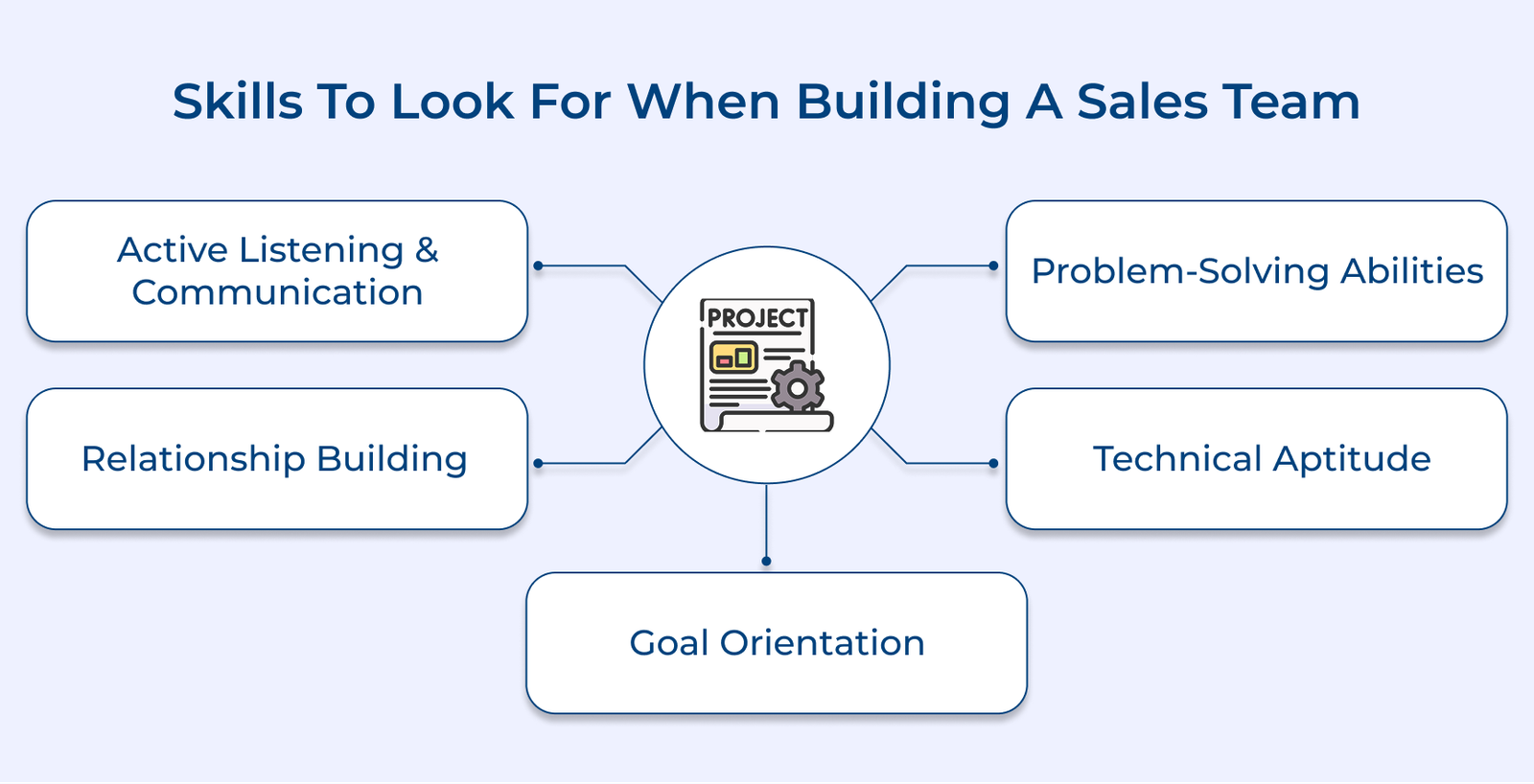
1. Active Listening and Communication
Exceptional at understanding customer needs through active listening and asking insightful questions. It communicates value propositions and adapts messaging to suit different audiences. Active listening can improve sales performance by 8%.
2. Problem-Solving Abilities
Reps should be skilled at identifying customer pain points and crafting tailored solutions. They should be creative in overcoming objections and exploring alternative strategies. A strong analytical mindset is necessary when managing complex sales challenges and customer needs.
3. Relationship Building
The sales representatives should be exceptional at building trust and rapport with customers, showing genuine interest in their business. They should be skilled at nurturing long-term relationships and managing multiple accounts simultaneously.
4. Technical Aptitude
Teams should be quick to new sales tools and proficient in CRM systems. They must be able to simplify complex product features and communicate technical specifications.
5. Time Management
The skills should effectively prioritize tasks and manage multiple opportunities at once. It should demonstrate strong organizational skills in pipeline management, consistently meeting deadlines and maintaining a productive schedule.
6. Goal Orientation
The team should be driven to exceed targets and overcome setbacks, maintaining focus on long-term goals while effectively managing short-term tasks. Reps should be resilient in the face of challenges, always pushing to achieve more.
Following are some common mistakes to avoid when building a sales team to ensure you can create a stronger, more effective sales team.
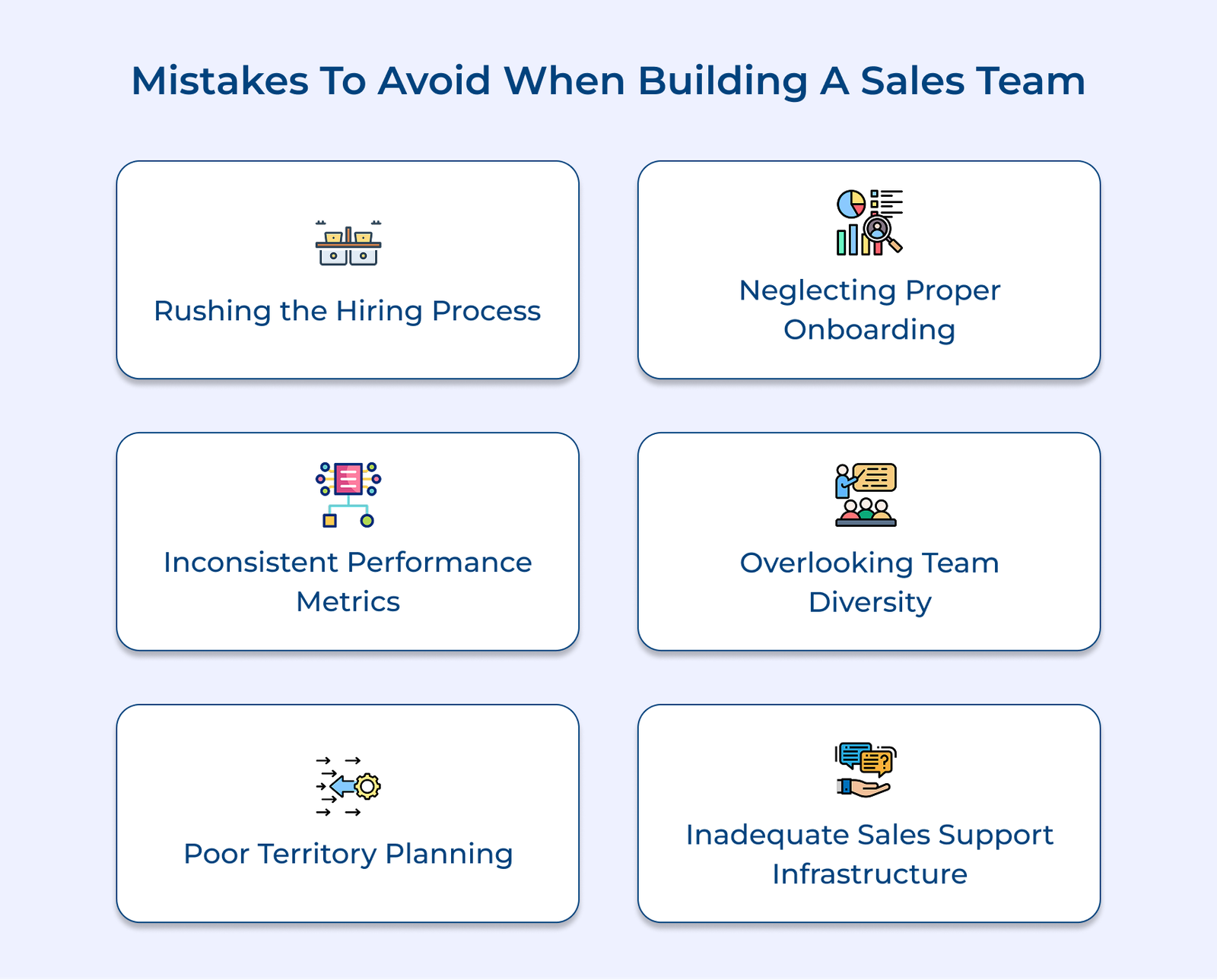
Rushing hiring decisions based only on experience or charm can harm team dynamics and lead to high turnover. Thoroughly assessing candidates through structured interviews and role-playing ensures better, longer-term fit.
Sensing new hires into the field without proper training leads to slow ramp-up and inconsistent performance. A structured onboarding program covering product knowledge, sales processes, and company culture ensures success from day one.
Unclear or shifting performance expectations create confusion and demotivation. Sales teams thrive when KPIs are clear, consistent and aligned with business goals, ensuring fair evaluation standards.
Building a uniform team with similar backgrounds limits perspective and customer connection. A diverse mix of skills and experiences is essential for effectively engaging various market segments.
Unbalanced territories and unclear account assignments create internal competition. Poor planning, based on market potential and fair opportunity distribution, ensures an equitable workload.
Neglecting to provide essential tools and support forces sales reps to focus on non-sales tasks, reducing their effectiveness. Equip teams with CRM systems, sales enablement tools and dedicated support to maximize selling time.
Understanding sales team performance requires tracking specific metrics that provide insights into productivity, efficiency and revenue generation. Let’s explore them along with the key questions you must ask to ensure you are on the path of success:
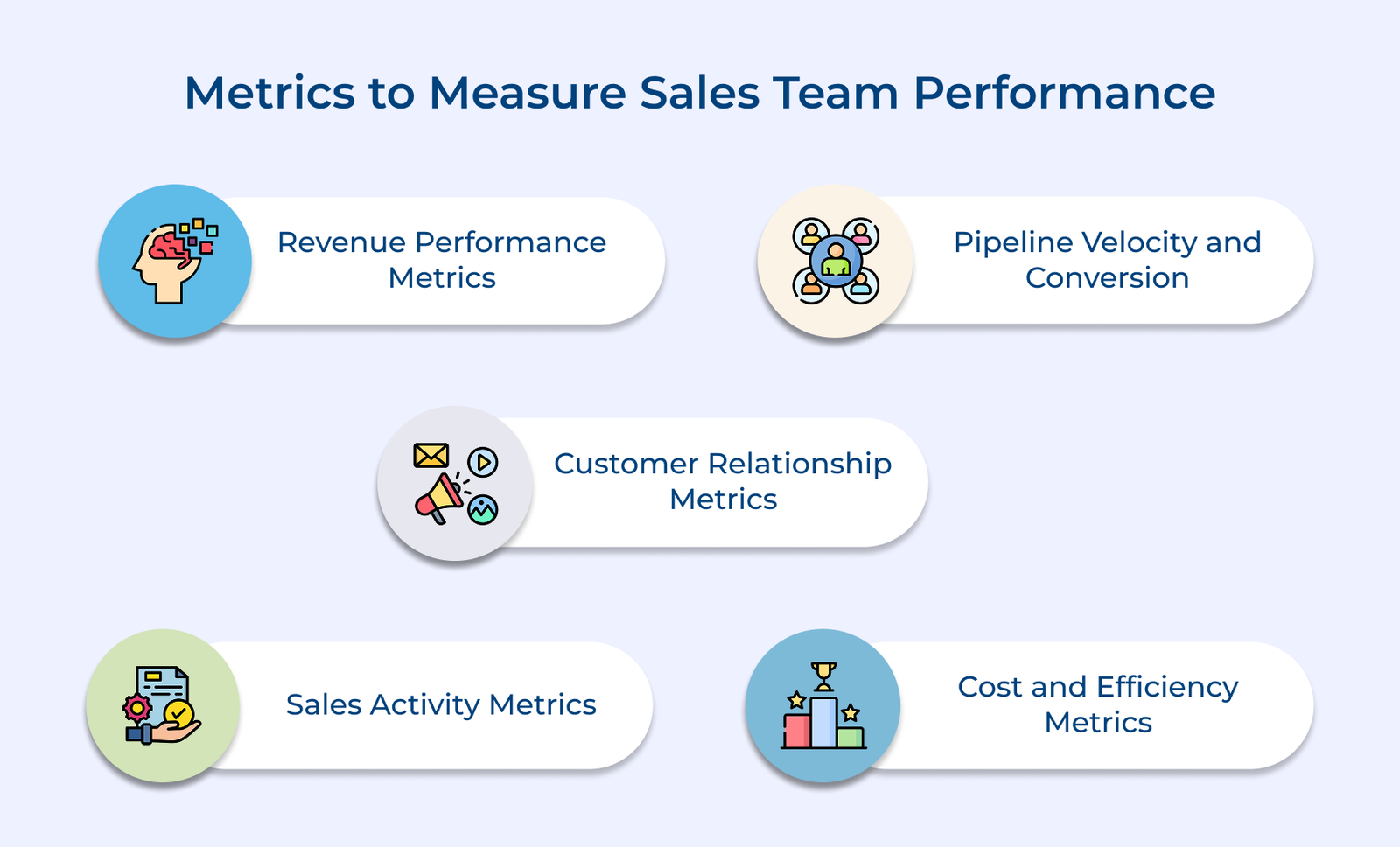
1. Revenue Performance Metrics
The metric monitors total revenue against targets, including monthly and quarterly goals. It tracks the average deal size and revenue per rep while analyzing year-over-year growth rates. The metric also evaluates new vs. existing customer revenue.
2. Pipeline Velocity and Conversion
The metric tracks lead-to-opportunity conversion rates, opportunity-to-close ratios and average sales cycle length. It analyzes where deals stall, win rates by customer segment and pipeline value with deal progression speed.
3. Customer Relationship Metrics
The indicator monitors customer retention, account expansion and satisfaction scores. It tracks repeat purchase rates, customer lifetime value and analyzes reasons for lost business.
4. Sales Activity Metrics
The metric tracks customer interactions, including calls and meetings, along with proposal submissions. It assesses time spent on selling versus administrative tasks and evaluates the success of various outreach methods.
5. Cost and Efficiency Metrics
The metric calculates customer acquisition costs and sales expenses relative to revenue. It tracks return on sales investment, cost per lead and commission effectiveness. The metric analyzes productivity ratios and resource utilization efficiency.
Building a high-performing sales team is a strategic investment that drives business growth. Companies can establish a strong foundation for consistent revenue generation by combining skilled professionals, efficient processes, and robust infrastructure.
Success in sales team development hinges on careful hiring, targeted training and ongoing development. Focused attention to clear structures, the right tools and a positive culture ensures teams stay motivated. Long-term success requires continuous performance evaluation, agile leadership and the right resources to keep pace with changing market demands.
Key takeaways:

The right time arrives when your company has a proven product-market fit and repeatable sales process. You should have clear evidence that customers are willing to pay for your solution and that you can consistently deliver value. Look for signs like steady inbound interest, consistent customer success stories and a sales pipeline that’s becoming too large for founders to manage effectively.
Begin with a sales development representative (SDR) to qualify leads and an account executive (AE) to close deals. The partnership creates a foundation for scalable growth. As your pipeline grows, add a sales operations manager to optimize processes and handle administrative tasks. Later on you can bring in specialized roles like enterprise AEs or vertical-specific sellers based on your market segments and customer needs.
Design compensation around base salary plus variable components that align with company goals. The typical ratio is 50:50 base-to-variable for AEs and 60:40 for SDRs. Include accelerators for exceeding targets and consider quarterly bonuses for key metrics beyond revenue such as customer retention or solution adoption. Ensure compensation drives desired behaviors while remaining sustainable for the business.
Businesses should be tracking both leading and lagging indicators. Essential metrics include pipeline coverage (aim for 3-4x quota), conversion rates between sales stages, average deal size and sales cycle length. Monitor activity metrics like number of qualified opportunities created and meaningful customer interactions. Individual metrics should roll up to team goals and eventually connect to company revenue targets.
Build a structured program that combines product knowledge, sales methodology and hands-on practice. Start with the company value proposition, then move to detailed product training and competitive positioning. Include role-playing exercises, call shadowing with top performers and gradual responsibility increases. Create clear milestones for the first 30, 60 and 90 days, with regular check-ins.
Grow Customer Relationships and stronger team collaboration with our range of products across the Conversational Engagement Suite.
Omnichannel Customer Support & Help Desk Software
AI Enabled Business Messaging and Chatbot Software
Sales Engagement & CRM Software
Call Center Software & Virtual Phone System
Product Marketing & Experience Platform
Customer Experience & Feedback Management Software
 20+ Creative Ideas for Crafting Customer Thank You Messages
Scroll to top
20+ Creative Ideas for Crafting Customer Thank You Messages
Scroll to top