1. Lead Scoring and Opportunity Prioritization
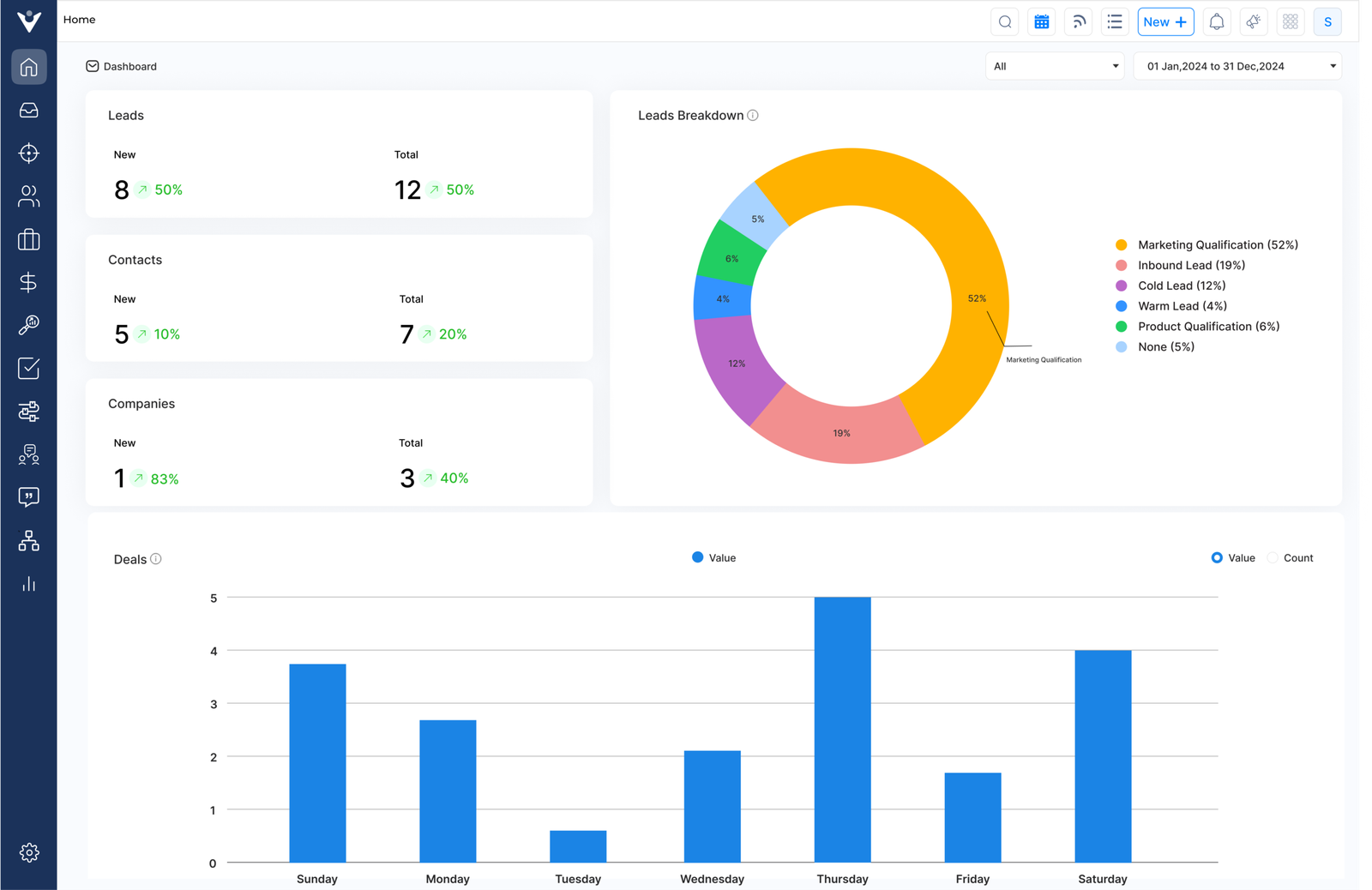
Predictive algorithms are transforming lead qualification by analyzing historical conversion data and customer behavior. AI systems assess key factors such as engagement metrics and firmographics to generate accurate lead scores, refining criteria based on past success.
Let’s assume that a software company using AI-driven lead scoring automatically ranks 1000+ leads each month, basing scores on interactions with marketing content and alignment with successful customer profiles. Sales reps receive prioritized, actionable lists of leads with tailored engagement strategies.
Actionable tips:
- Tailors lead scoring parameters to your industry and sales cycle for maximum relevance.
- Regularly review scoring accuracy by comparing predicted scores with actual conversions to refine your approach.
2. Automated Sales Intelligence and Research
AI-powered intelligence-gathering revolutionizes prospect research by automating data collection across various platforms. Natural language processing extracts valuable insights from news articles and social media to build detailed prospect profiles. Real-time monitoring alerts sales teams to key changes within prospect organizations.
Consider a manufacturing company that uses AI to track potential clients, aggregating data on leadership shifts and expansion plans. Sales reps receive automated updates, ensuring they never miss a critical opportunity.
Pro tips:
- Define key trigger events that should prompt immediate sales team notification.
- Establish a process for integrating AI-gathered intelligence into sales strategies for optimal impact.
3. Dynamic Content Generation and Personalization
AI-powered content generation transforms how sales teams create and deliver personalized materials. AI customizes presentations by analyzing prospect data, such as industry and past interactions. The system adapts content elements in real-time based on engagement signals, offering dynamic suggestions for case studies, supporting materials and email sequences that align with prospect behaviors.
Take the example of a technology solutions provider. They use AI to tailor sales collateral for enterprise clients. The system customizes decks with industry-specific stats and client-focused examples, providing real-time recommendations during sales interactions.
Best practices:
- Build a content library with tagged metadata for precise AI-driven recommendations.
- Set guidelines for personalization to ensure brand consistency across automated content.
4. Customer Behavior Analysis and Prediction
Advanced analytics leverage customer interactions across digital touchpoints to detect buying signals and predict purchase readiness. Machine learning uncovers patterns from behavioral data, providing insights into customer needs and preferences. AI categorizes prospects based on similar traits and past behaviors, guiding sales teams on the best engagement strategies for each segment.
Let’s consider that a financial services firm uses AI to track client investment preferences and service usage, receiving predictive alerts about client needs for personalized engagement.
Actionable tips:
- Develop detailed customer profiles to enhance behavioral pattern recognition.
- Regularly validate predictions to ensure accuracy across different customer segments.
5. Real-Time Sales Call Intelligence
AI-driven call intelligence revolutionizes customer interactions by offering real-time analysis and guidance. AI analyzes ongoing conversations to provide contextual coaching prompts with advanced speech recognition and natural language processing. Sentiment analysis detects shifts in customer tone, revealing concerns or buying signals.
Let’s assume that a business services company uses AI coaching to guide sales reps during calls, offering suggestions for handling objections and emphasizing key benefits. After each call, reps receive summaries with key takeaways and actionable next steps.
Pro tips:
- Define clear guidelines for delivering AI prompts during calls.
- Implement a structured review process for automated insights to enhance future conversations.
6. Sales Performance Analytics and Coaching
AI analytics platforms analyze successful sales behaviors to uncover winning patterns and techniques. Machine learning models assess the communication styles and engagement strategies of top performers, offering valuable insights into performance. The insights fuel personalized coaching, addressing skill gaps and optimizing sales effectiveness across various scenarios.
Let’s consider that a pharmaceutical company leverages AI to optimize its sales team, analyzing effective strategies across healthcare provider segments. Sales managers receive tailored coaching recommendations for each team member
Best practices:
- Establish baseline performance metrics to measure improvement over time.
- Schedule regular check-ins to review AI-generated coaching recommendations and track progress.
7. Customer Journey Mapping and Management
AI-powered journey mapping offers full visibility into customer interactions across all channels. Advanced tracking systems monitor engagement touchpoints to uncover buying patterns and preferences. Journey analytics reveal common paths to purchase and identify friction points that may hinder conversion.
Assume there’s a SaaS company that uses AI journey mapping to enhance customer acquisition. The system tracks prospect interactions across marketing and sales touchpoints, providing sales teams with automated and recommended strategies.
Actionable tips:
- Document key touchpoints and success metrics for each stage of the customer journey.
- Set clear protocols for acting on AI-generated insights and recommendations.
8. Price Optimization and Proposal Generation
AI-driven pricing systems optimize pricing strategies by analyzing market conditions and historical deal data. Machine learning models consider factors like competitive positioning and customer preferences to recommend dynamic pricing adjustments based on deal specifics.
Let’s consider that a manufacturing equipment supplier uses AI to optimize pricing for complex deals, analyzing past contracts to identify pricing patterns across market segments. Sales teams receive automated proposal templates with tailored pricing recommendations.
Best practices:
- Establish clear pricing ranges and discount thresholds.
- Implement a review process for AI-generated proposals to ensure accuracy and completeness.
9. Meeting and Pipeline Scheduling Automation
AI scheduling systems simplify the coordination of sales meetings across multiple stakeholders and time zones. Advanced algorithms analyze calendar availability and participant preferences. They recommend optimal meeting times, reducing administrative tasks.
Let’s assume that a global consulting firm uses AI to streamline enterprise sales coordination, managing complex international meetings across teams and clients. Sales reps receive automated pipeline alerts and follow-up recommendations based on deal progression.
Actionable tips:
- Set scheduling parameters to align with team availability and time zone constraints.
- Implement clear protocols for tracking pipeline milestones and managing automated follow-ups.
Challenges in AI-Powered Sales Enablement
Below are some significant challenges that organizations face when implementing AI in their sales enablement processes. Let’s understand them in more detail.