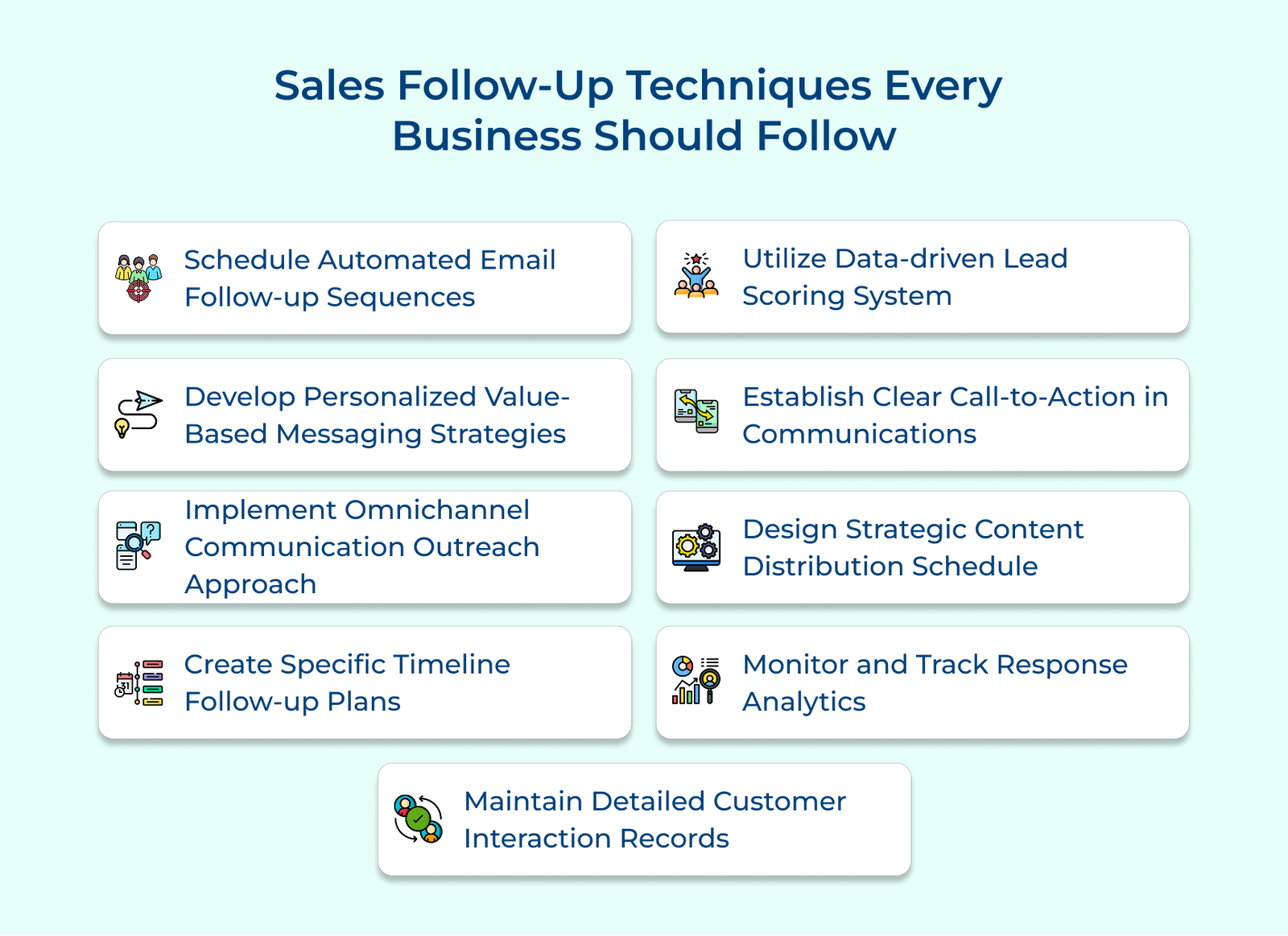
1. Schedule Automated Email Follow-up Sequences
Automated email sequences are key to consistent communication and improved sales efficiency. The approach ensures no lead is overlooked, allowing sales teams to focus on high-priority tasks while automation handles routine follow-ups. The best time to implement the sequences is right after initial contact, from website inquiries, trade shows or direct outreach.
Create a series of strategically timed emails that guide prospects through their journey. Map key touchpoints and tailor messaging for different segments, then use your CRM or automation platform to trigger sequences based on prospect actions. Each email should build on the last, moving prospects closer to a decision.
Actionable tips:
- Develop separate email sequences for each prospect segment, addressing their unique pain points and objectives.
- Set clear exit criteria like engagement thresholds, to transition leads to personal follow-up when necessary.
2. Develop Personalized Value-Based Messaging Strategies
Personalized, value-driven messaging turns standard follow-ups into meaningful conversations tailored to a prospect’s specific needs and challenges. You can position your solution as directly relevant to their goals by demonstrating an understanding of their business context. The approach works best when you have gathered detailed information about the prospect’s pain points, objectives and industry.
Analyze prospect data to identify key pain points and business goals. Create customizable messaging templates with relevant case studies and industry-specific language that demonstrate a clear understanding of the prospect’s business environment.
Pro tips:
- Build a database of industry-specific value propositions and success stories for quick customization.
- Develop a framework for quantifying ROI or business impact based on prospect variables, making your value proposition more compelling.
3. Implement an Omni-Channel Communication Outreach Approach
An omnichannel sales follow-up ensures consistent messaging across multiple platforms, meeting prospects where they’re most responsive. The integrated strategy creates a seamless experience that reinforces your message and boosts engagement. It’s especially effective when prospects interact with your brand through various channels.
Coordinate messaging across email, phone, social media and other relevant channels. Create a unified content calendar that schedules touchpoints while maintaining message consistency. Each channel should complement others, guiding prospects smoothly through the sales journey.
Pro tips:
- Build a centralized content calendar to ensure consistent themes while adapting tone and format for each platform.
- Use tracking systems to monitor engagement across channels and identify the most effective touchpoint combinations for different segments.
4. Create Specific Timeline Follow-up Plans
Timeline-based follow-up plans bring structure and accountability to the sales process, ensuring steady communications without overwhelming prospects. The approach helps maintain momentum, build relationships and drive higher conversion rates. The plans are essential for complex sales cycles or when multiple decision-makers are involved.
Map out key milestones, set intervals for follow-up activities and create a detailed timeline with specific actions, responsibilities or expected outcomes. Allow flexibility for prospect responses while maintaining momentum.
Best practices:
- Develop standardized timeline templates for various sales scenarios, ensuring quick customization while maintaining consistency.
- Define transition points in the timeline where follow-up strategies should evolve based on prospect engagement and sales cycle progress.
5. Utilize Data-Driven Lead Scoring Process
A data-driven lead scoring system helps sales teams prioritize follow-ups by quantifying prospect engagement and potential value. The approach ensures resources are allocated effectively, maximizing conversion rates through targeted strategies aligned with prospect qualification.
Define key scoring criteria based on demographics, behavior and engagement. Create a weighted system that reflects your ideal customer profile and configure your CRM to auto-update scores based on interactions, establishing clear thresholds for follow-up actions.
Actionable tips:
- Set clear scoring thresholds that trigger specific follow-up actions, ensuring consistent response across the sales team.
- Regularly review and refine scoring criteria based on conversion data to continually improve the system.
6. Establish Clear Call-to-Action in Communications
Well-defined calls-to-action (CTAs) in follow-up communications give prospects clear direction, reducing ambiguity and creating specific pathways to move the sales conversation forward. CTAs are especially critical as prospects progress through the sales stages – they can increase conversion rates by 161%.
Map CTAs to different sales stages and build a library of action-oriented requests. Each CTA should be specific, time-sensitive and designed to advance the conversation while providing value.
Implementation tips:
- Craft CTAs that emphasize clear value exchanges, ensuring prospects see the benefit of taking action.
- Test various CTA formats and placements, tracking response rates to continuously optimize their impact.
7. Design Strategic Content Distribution Schedule
A well-planned content distribution schedule ensures follow-up communications deliver relevant, valuable content at the right moments throughout the sales cycle. The approach keeps prospects engaged, demonstrating expertise and the value of your solution. Content scheduling is most effective after initial qualification and during the nurturing phase, especially in longer sales cycles where consistent, valuable content helps maintain interest.
Create a content calendar aligned with the prospect’s journey, addressing industry trends, pain points and decision-making factors. Distribute content through the right channels while maintaining consistent messaging.
Pro tips:
- Develop a content matrix that matches specific content pieces to prospect pain points and buying stages, ensuring timely delivery.
- Set up trigger-based content distribution rules that adjust based on prospect engagement and actions.
8. Practice Strategic Persistence with Prospects
Strategic persistence is about balancing consistent follow-ups with respect for prospect preferences, maximizing conversion without overstepping boundaries. The approach is vital for high-value prospects who haven’t indicated interest or disinterest. Start following up after initial contact, adjusting based on engagement signals.
Create a structured framework for follow-up intervals, mixing communication methods and message types. Track prospect responses to adjust persistence levels while staying professionally engaged.
Best practices:
- Set clear guidelines for follow-up frequency based on prospect behavior and engagement.
- Use diverse messaging approaches for each follow-up, ensuring each contact brings fresh value.
9. Use Personalized Videos for Better Follow-Up
Personalized video follow-ups are powerful tools for creating engaging, memorable interactions that stand out in a crowded inbox. The dynamic method combines digital efficiency with personal, face-to-face touch, boosting impact and strengthening relationships. Video follow-ups are ideal for complex product explanations, addressing specific prospect concerns or building rapport with key decision-makers.
They should be used strategically for high-value opportunities or pivotal moments in the sales cycle. Identify when video is most effective and create templates with personalized, focused content. Ensure professional quality and clarity while keeping the message concise
Pro tips:
- Develop adaptable video templates for various prospect scenarios, maintaining high-quality production.
- Set clear guidelines for video length, structure and key messaging to ensure effectiveness without overwhelming the prospect.
Sales Follow-Up Statistics
Check out the sales follow-up statistics that provide valuable insights into the effectiveness of consistent prospect engagement.