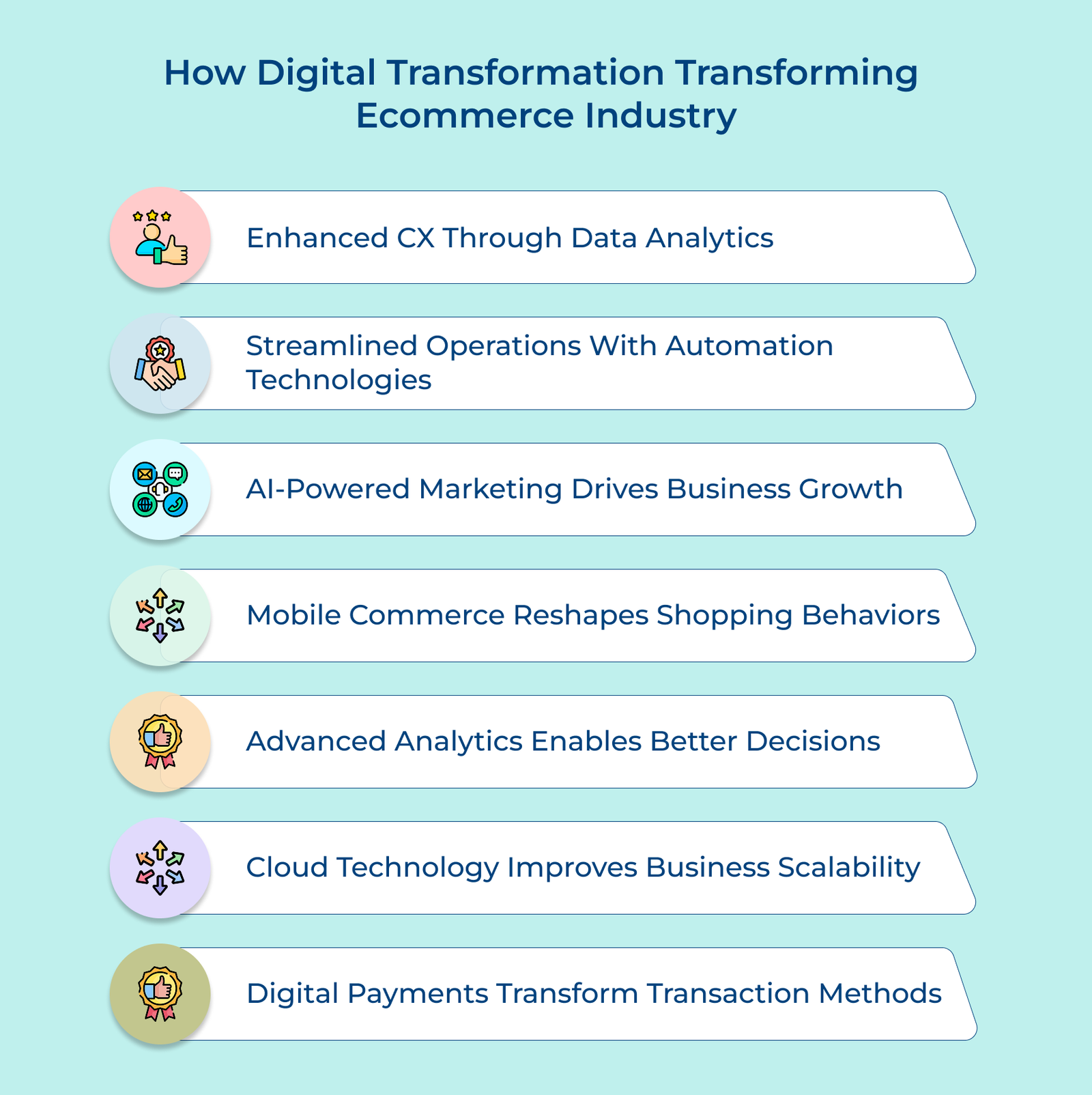
1. Enhanced Customer Experience Through Data Analytics
Data analytics is transforming ecommerce by helping businesses better understand and serve their customers. Companies can deliver highly personalized experiences that boost engagement by tapping into data across various touchpoints. The shift moves businesses from generic customer service to tailored interactions based on individual preferences.
Take Amazon’s recommendation engine for example. It not only considers past purchases but also factors in complementary items, seasonal trends and price sensitivity for a more personalized shopping experience. Real-time customer service has evolved with AI-powered chatbots, instant messaging and predictive support systems. The tools work seamlessly with dynamic pricing strategies that adjust based on demand, competitor pricing and customer segments.
Key takeaways:
- Data analytics helps businesses create personalized experiences, leading to higher customer satisfaction and conversion rates.
- Real-time support and dynamic pricing allow businesses to quickly adapt to market shifts.
2. Streamlined Operations With Automation Technologies
Automation technologies reduce operational costs, enhance accuracy and boost scalability to meet demand. Automating various business functions is now crucial for staying competitive. Modern warehouse management systems leverage automation to optimize inventory tracking, storage and fulfillment.
Supply chain optimization has also advanced with intelligent systems that predict demand, optimize routing and manage supplier relationships. Robotic process automation handles routine tasks like order processing and customer data management, freeing up resources for strategic work.
Pro tips:
- Automation reduces operational costs and human error while increasing speed.
- Intelligent systems in the supply chain create a more resilient, adaptable business model that responds quickly to market changes.
3. AI-Powered Marketing Drives Business Growth
Artificial Intelligence has transformed how ecommerce businesses approach marketing and customer acquisition. AI enables companies to create highly targeted marketing strategies by analyzing vast customer data and delivering the right message at the right time. 32% of marketers have used marketing automation and AI for paid advertising.
AI-driven platforms use machine learning to predict customer behaviors and identify the most promising segments for conversion. Marketing teams can now tailor campaigns based on the insights for maximum impact. AI powers automated content personalization across various channels, adapting marketing messages based on customer interactions.
Actionable tips:
- AI-driven marketing enables businesses to create targeted campaigns that boost conversion rates.
- Predictive analytics and automated campaign management reduce marketing costs while enhancing effectiveness.
4. Mobile Commerce Reshapes Shopping Behaviors
Mobile commerce has revolutionized consumer interaction with ecommerce by offering unmatched convenience and accessibility. The shift has pushed businesses to rethink their digital presence and provide seamless experiences for on-the-go shoppers, making mobile optimization crucial for success.
Cross-device shopping has become vital as customers move between devices during their shopping journey. Leading ecommerce platforms ensure a smooth experience, allowing customers to start shopping on one device and finish on another without disruption.
Pro tips:
- Mobile commerce optimization is vital for success as shoppers increasingly turn to mobile devices.
- Location-based services and seamless payment solutions enhance the shopping experience, making it more convenient.
5. Advanced Analytics Enables Better Decisions
Advanced analytics has transformed decision-making in ecommerce, offering real-time insights from vast data sets that empower businesses to make informed, data-driven decisions. Real-time performance dashboards give businesses immediate visibility into key business metrics like sales, customer behavior and inventory levels.
Customer journey mapping has become more detailed, tracking how customers interact with ecommerce platforms. Predictive demand forecasting uses historical data and market trends to predict future demand, allowing retailers to optimize inventory levels.
Key takeaways:
- Advanced analytics enables businesses to make quick, data-driven decisions, boosting operational efficiency.
- Customer journey mapping and predictive forecasting allow businesses to proactively adapt to changing market conditions.
6. Cloud Technology Improves Business Scalability
Cloud technology has revolutionized how ecommerce businesses manage infrastructure and scale operations, offering unparalleled flexibility. The shift allows businesses to focus on growth instead of infrastructure maintenance. Cloud-based systems adjust resources automatically to handle varying website traffic and transaction volumes, ensuring consistent performance during peak times like holidays or promotions.
The elasticity optimizes resource usage and cost management. Enhanced security measures and compliance frameworks protect sensitive data, while cloud platforms integrate business applications, creating an unified ecosystem. The modern eCommerce platforms combine inventory management, CRM and accounting systems through the cloud, providing a seamless view of operations.
Best practices:
- Cloud technology allows businesses to scale efficiently while maintaining performance and security.
- Integration of business applications through cloud platforms boosts operational efficiency and enhances visibility into processes.
7. Digital Payments Transform Transaction Methods
Digital payment transformation has redefined how ecommerce businesses handle transactions, making them more secure, convenient and accessible. As payment technologies evolve, businesses can better serve customers with varying preferences across global markets.
Contactless payment systems have become crucial, offering secure, hassle-free transactions without traditional methods. Businesses can cater to diverse customer preferences by integrating multiple digital payment solutions, enhancing the shopping experience. The ability to process multi-currency transactions has expanded ecommerce’s global reach.
Key takeaways:
- Digital payment transformation helps businesses meet diverse customer preferences and expand into new markets.
- Integrating various payment methods and currency support creates a more inclusive, accessible experience for global customers.
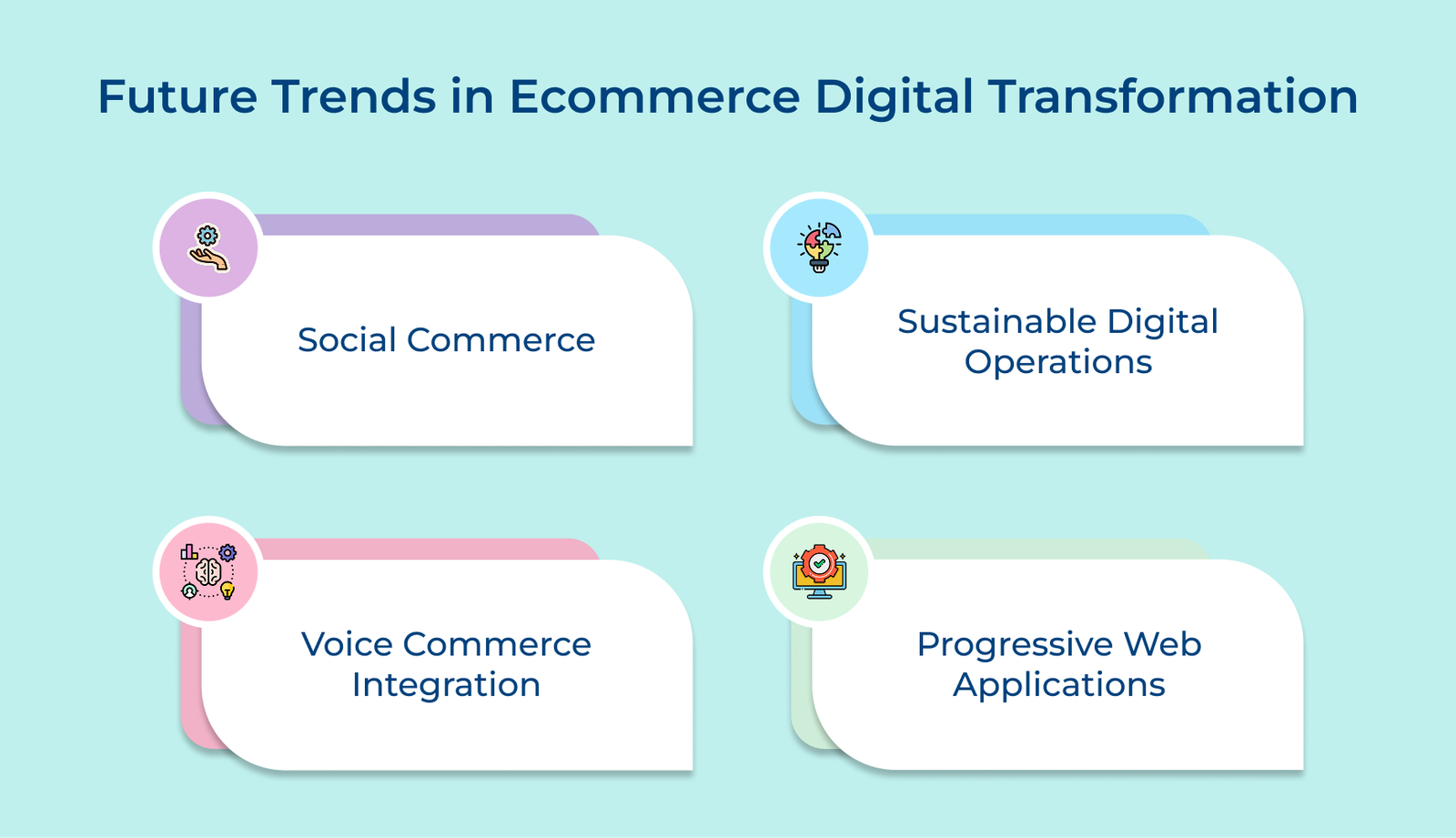
Future Trends In Ecommerce Digital Transformation
Check out the future trends in ecommerce digital transformation, where emerging technologies and innovations are set to reshape the shopping experience.
Recent indicators:
- Global digital transformation spending hit $1.6 trillion.
- 76% of consumers now favor personalized shopping experiences.
- Social commerce sales surpassed $492 billion.
- Voice commerce is expected to reach $80 billion by 2026.
- 85% of businesses are prioritizing sustainable digital operations.