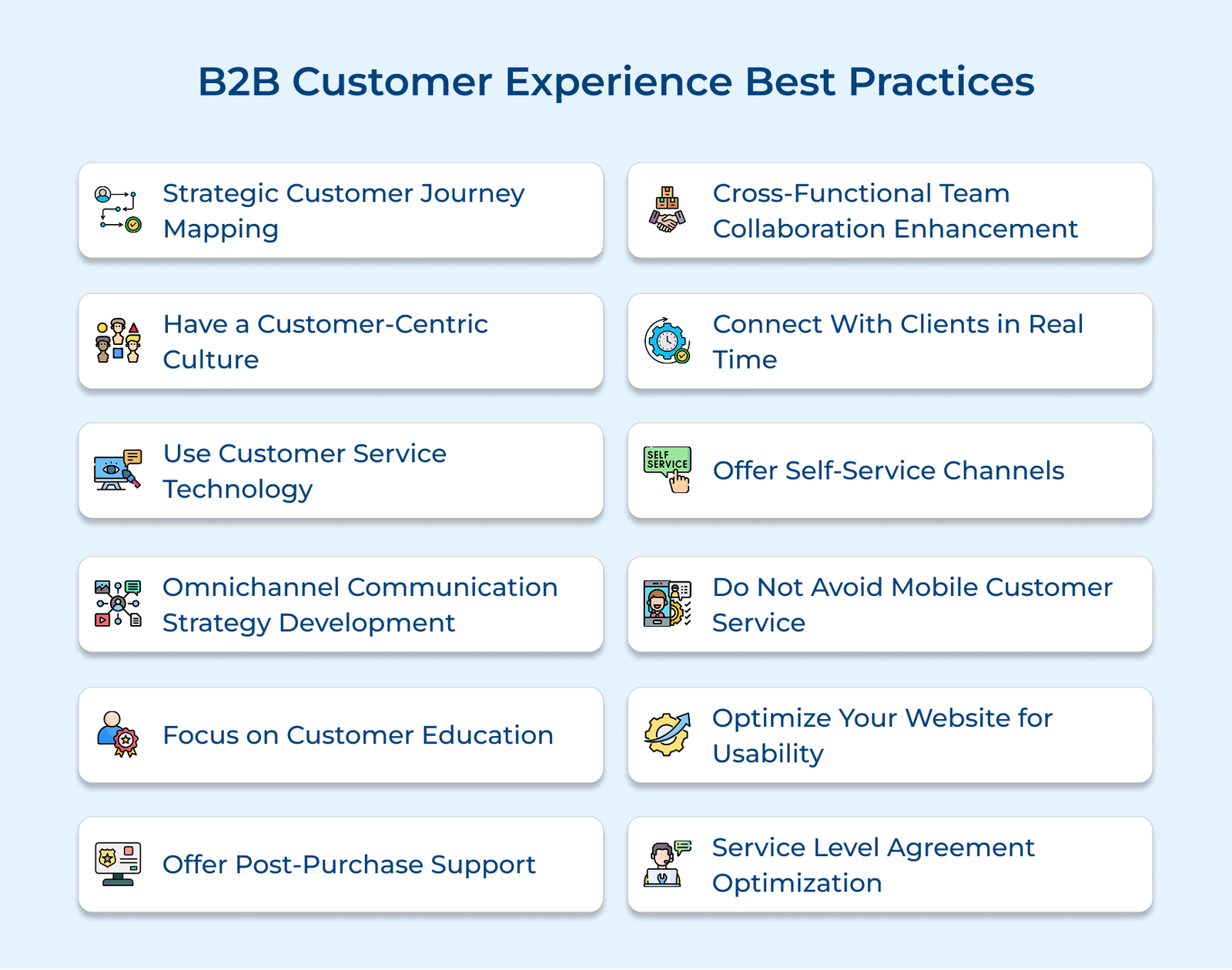
1. Strategic Customer Journey Mapping and Analysis
Mapping the customer journey allows businesses to identify every touchpoint with clients, uncovering service gaps and areas for improvement. The strategic approach helps create more meaningful experiences.
Document all touchpoints from awareness to post-purchase support. Create detailed flowcharts to visualize the customer’s journey, involving cross-functional teams for actionable insights at each stage.
Pro tips:
- Validate your customer journey with customer feedback to uncover hidden pain points and opportunities.
- Update journey maps quarterly to align with evolving customer needs and market conditions.
2. Put Customer at the Center of Business
Customer-centricity focuses on aligning every aspect of your with customer needs, ensuring value in every interaction. The approach enhances long-term relationships and drives sustainable growth.
Start by gathering deep insights through research, surveys and direct feedback to create customer personas. Tailor your services and train all employees on customer-focused practices, making customer satisfaction a key performance indicator.
Actionable tips:
- Set up a customer advisory board for regular input on product and service improvements.
- Implement a customer impact assessment checklist before any major business changes.
3. Use Customer Service Technology
Modern customer service technology is key to delivering exceptional B2B experiences at scale. It helps organizations streamline support processes, manage complex relationships and leverage data for continuous improvement.
Start by choosing tools that fit your business needs, beginning with a robust CRM. Implement specialized solutions for ticketing, knowledge management and automation. Train your team to maximize the value of the systems.
Best practices:
- Implement a phased technology adoption roadmap to help teams master each tool.
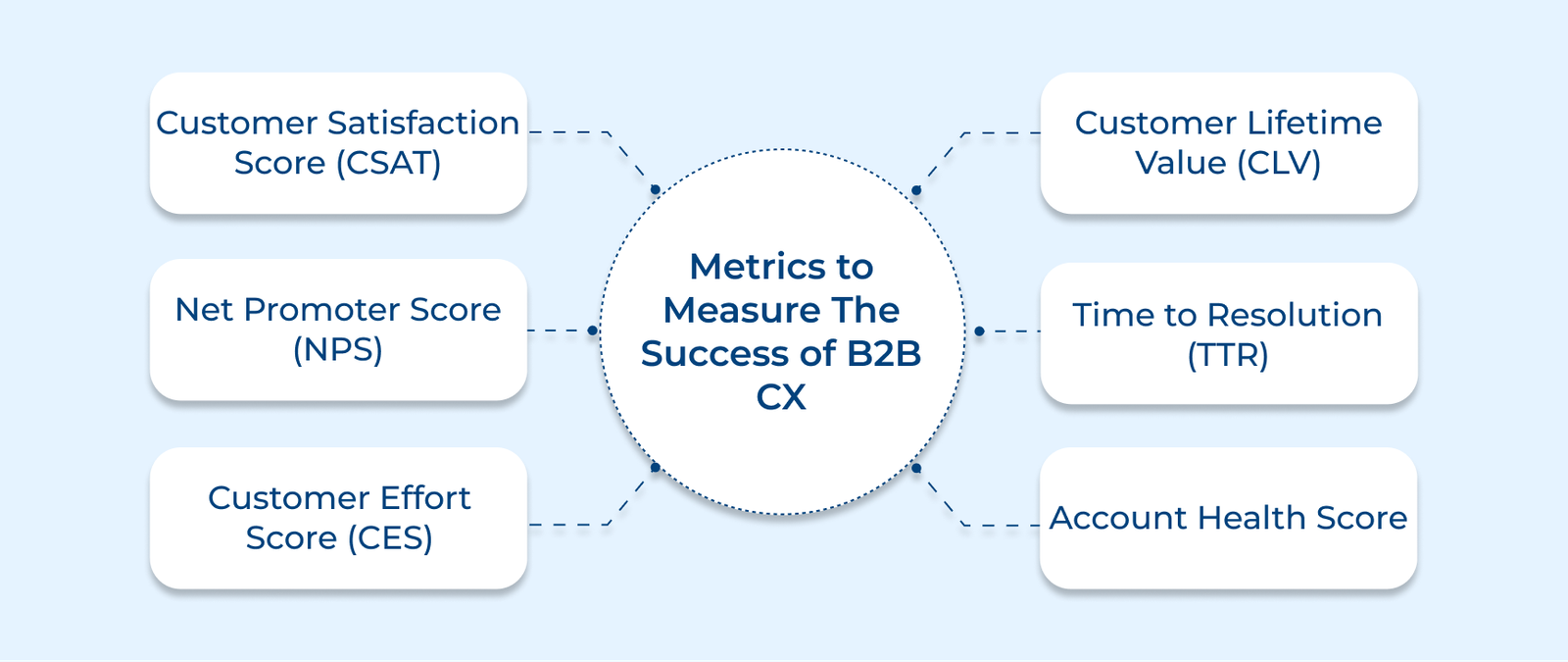
- Set clear metrics to track ROI, focusing on efficiency and customer satisfaction improvements.
4. Omnichannel Communication Strategy Development
An omnichannel strategy ensures seamless communication across all platforms, providing a unified experience for B2B. It connects email, phone, social media and portals for smooth, consistent interactions.
Begin by mapping your communication channels and understanding how clients use each one. Standardize messaging and response protocols across platforms. Implement a central system to track every interaction, ensuring customer history is always accessible to your customer service team.
Best practices:
- Set channel-specific SLAs to manage unique expectations for each communication method.
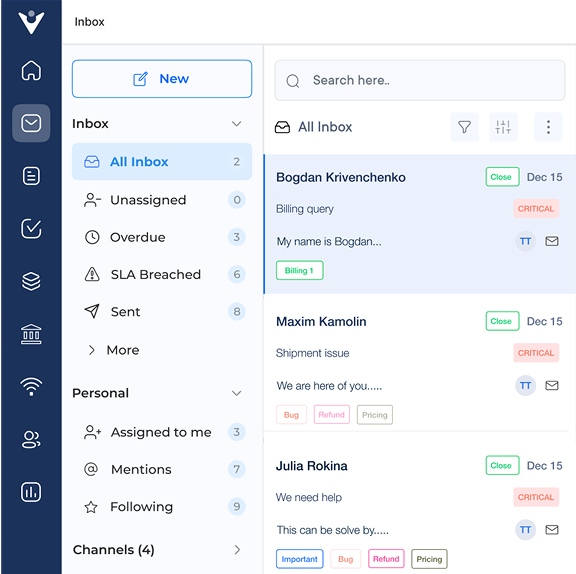
- Use a unified dashboard to display real-time interaction data from all channels in one place.
5. Focus on Customer Education and Enablement
Customer education programs empower B2B clients to fully leverage your products or services, boosting confidence, reducing support needs and enhancing loyalty. Well-informed customers tend to be more successful with your products which leads to higher satisfaction.
Start by building a structured learning program with diverse formats like online courses, documentation, webinars and hands-on training. Begin with onboarding materials, then expand to advanced content for various roles and skill levels. Make resources easily accessible through a customer portal and regularly update them based on customer feedback.
Pro tips:
- Develop role-specific learning paths tailored to job functions and expertise.
- Offer a certification program to recognize customer expertise and enhance brand advocacy.
6. Cross-Functional Team Collaboration Enhancement
Effective collaboration between departments is key to delivering a seamless customer experience. When teams work together, customers enjoy faster resolutions, accurate information and better service, reducing friction in their journey.
Hold regular cross-functional meetings to share insights and align on initiatives. Use shared dashboards and communication tools to keep everyone updated on customer needs. Establish clear protocols for handling cross-departmental requests, ensuring efficiency and effectiveness.
Key takeaways:
- Form a customer experience council to meet monthly and enhance collaboration.
- Set shared KPIs to encourage teamwork and collective goals.
7. Connect With Clients in Real Time with Live Chat
Live chat is a crucial tool in the B2B customer experience, offering immediate assistance during critical moments. It resolves urgent issues quickly and demonstrates your commitment to customer satisfaction by providing real-time support. Fast responses not only improve customer experience but also ease the pressure on other support channels.
Focus on both efficiency and personalization to optimize live chat. Train agents to handle complex B2B inquiries and equip them with access to customer data. Use AI-powered chatbots for initial contact, ensuring smooth transitions to human agents for intricate issues. Standardize responses for common questions but allow flexibility for tailored interactions.
Pro tips:
- Monitor chat analytics to identify peak times and adjust staffing accordingly.
- Integrate live chat with your CRM for real-time customer insights.
8. Offer Self-Service Channels for Higher Customer Satisfaction
Self-service channels empower B2B customers to resolve issues on their own, boosting satisfaction while reducing support costs. Customers increasingly prefer solving simple problems independently before reaching out for direct support.
Start by building a comprehensive knowledge base with clear documentation, FAQs and troubleshooting guides. Organize content by topic and include video tutorials for common processes. Regularly update content based on customer feedback and trends in support tickets. Analyze usage patterns to identify content gaps.
Actionable tips:
- Enable a feedback loop for users to rate and suggest improvements for self-service content.
- Use analytics tracking to track popular resources and uncover areas that need more attention.
9. Do Not Neglect Mobile Customer Service
Mobile B2B customer service is essential as decision-makers increasingly rely on mobile devices for business tasks. A mobile-first strategy ensures customers can access support and communicate on the go, boosting customer satisfaction.
Develop a mobile-optimized support portal with easy access to key features and seamless functionality. Prioritize touch-friendly design, simple navigation and fast-loading content across various screen sizes.
Pro tips:
- Implement swipe gestures and simplified forms for smoother mobile interactions.
- Use progressive web apps for app-like experiences without requiring downloads.
10. Optimize Your Website for Usability
Website usability plays a key role in customer satisfaction and support efficiency in B2B relationships. A user-friendly site minimizes friction, saves time and reflects professionalism, while poor usability can frustrate customers.
Begin by testing the site with real users and gathering feedback. Focus on intuitive navigation, clear structure and faster load times. Ensure support functions and documents are easy to access.
Best practices:
- Use heat maps to track user behavior and spot areas for improvement.
- Run A/B tests to fine-tune the user experience.
11. Service Level Agreement Optimization
Service Level Agreements (SLAs) set clear service standards, helping to manage expectations and build trust. Well-designed SLAs offer performance metrics, ensure consistency and promote accountability.
Create SLAs by collaborating with customers, aligning metrics with their business goals. Regularly adjust SLAs based on performance data, feedback and evolving needs. Include clear escalation and resolution processes for when SLAs are at risk.
Pro tips:
- Incorporate both technical and relationship-focused metrics for a complete view of service quality.
- Use real-time SLA tracking dashboards, accessible to both teams and customers for transparency.
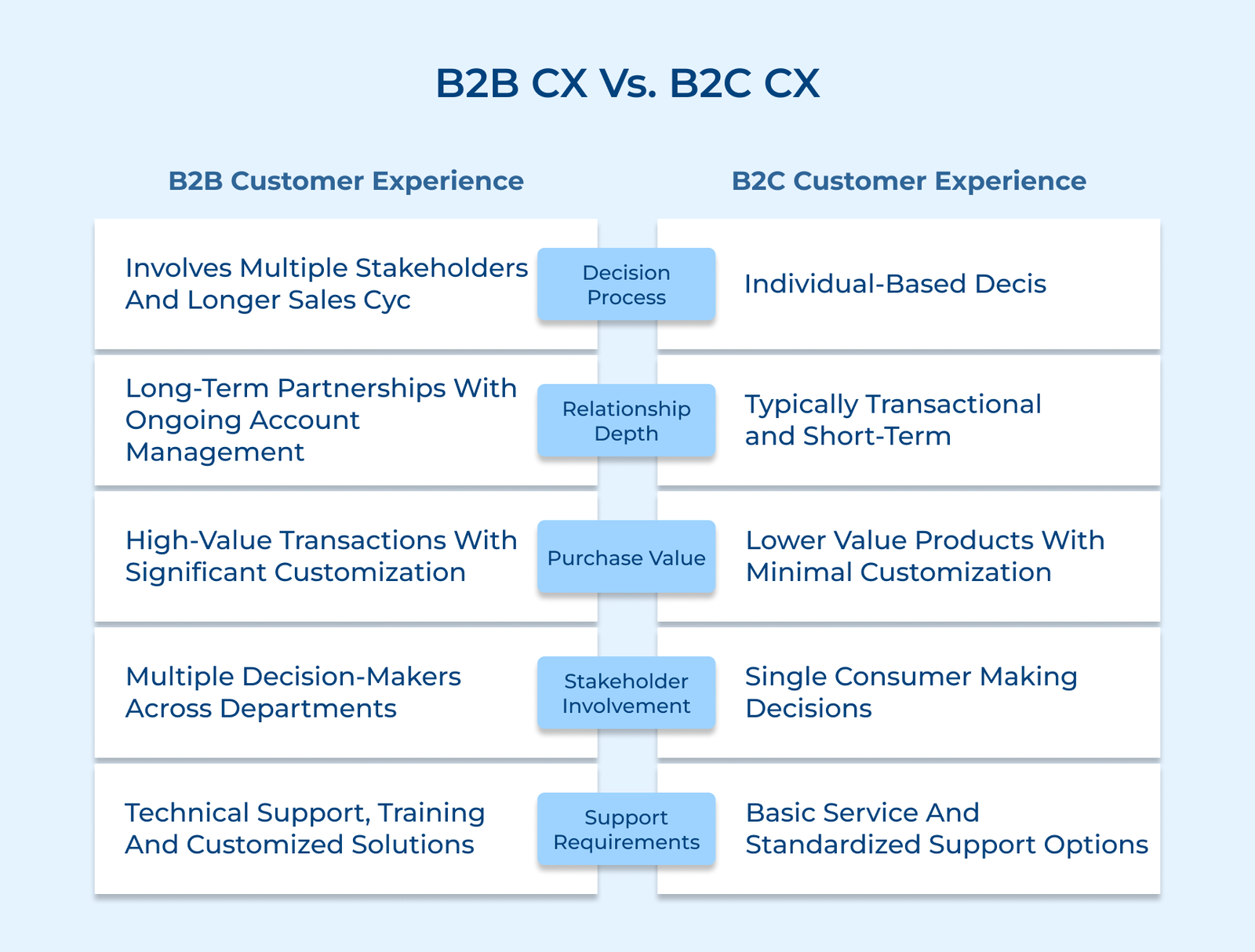
B2B Customer Experience vs. B2C Customer Experience
Following are the key differences between B2B and B2C customer experience, highlighting how their distinct needs shape their interactions with businesses.