Omnichannel Feedback Guide: Steps, Challenges & Key Metrics
Omnichannel feedback integrates customer insights from various touchpoints. It helps businesses improve experience, address challenges and track key metrics for better decision-making.

Omnichannel feedback integrates customer insights from various touchpoints. It helps businesses improve experience, address challenges and track key metrics for better decision-making.
Businesses often collect customer feedback from multiple sources such as social media, in-store interactions, mobile apps and customer service calls. But when this feedback is scattered, it’s hard to see the full picture. Important insights get lost, and opportunities for improvement slip through the cracks.
An omnichannel feedback system brings everything together, creating a clear view of customer sentiment and behavior. With a unified approach, businesses can track, analyze and act on feedback in real-time, leading to improved customer experiences. We will cover why unified feedback matters, how it benefits both businesses and customers along with the steps to implement it effectively.
Omnichannel customer feedback refers to a unified approach of collecting, analyzing and acting on customer input across every interaction point. Unlike traditional single or multichannel systems, it creates an interconnected ecosystem where data flows seamlessly between touchpoints, providing a comprehensive view of the customer journey.
The system ensures that every customer feedback, including on a mobile app, website, in-store, via social media or customer service is captured and linked to a single customer profile by integrating various feedback channels into a centralized platform.
Key principles:
Let’s go through the key benefits of omnichannel feedback, exploring how it enhances customer experience and provides valuable insights for business growth.
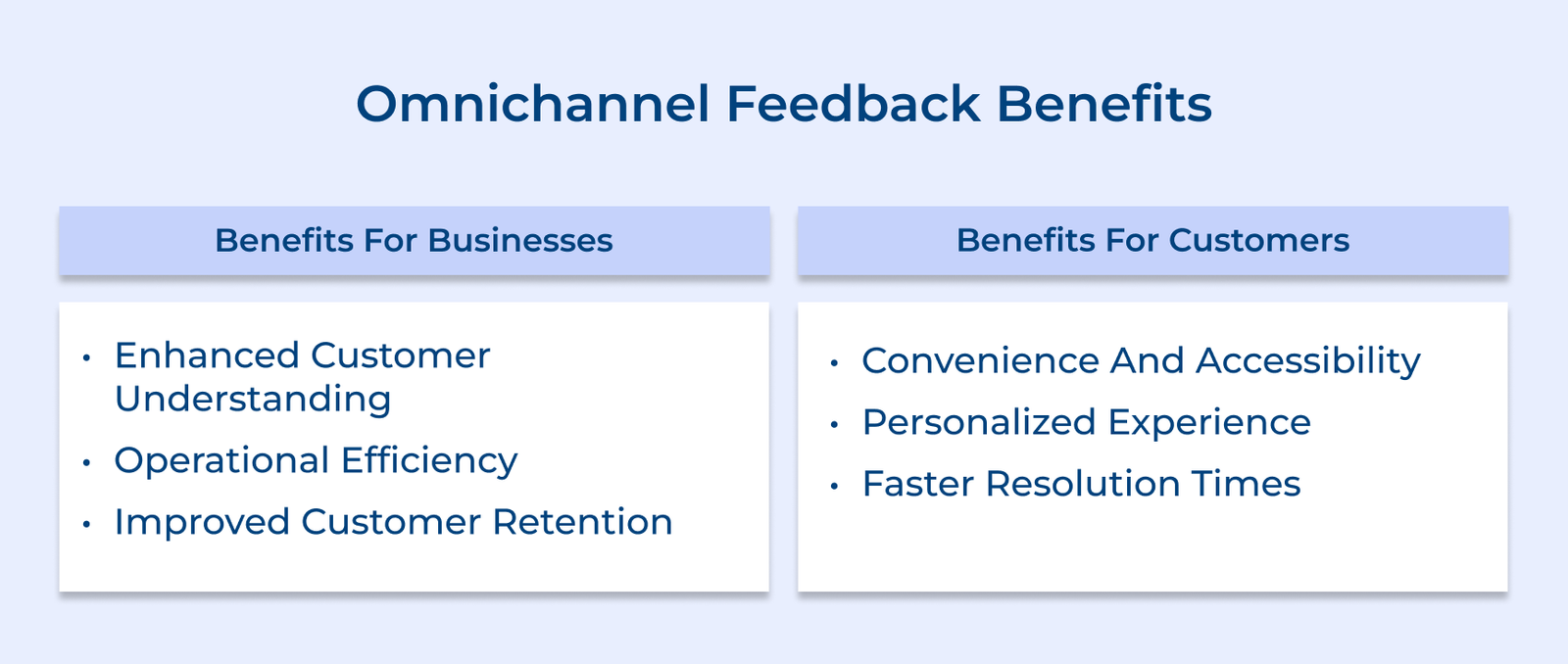
1. Enhanced Customer Understanding
A comprehensive feedback system offers valuable insights into customer behavior and preferences. Organizations can make informed decisions and targeted improvements by tracking the entire customer journey from initial contact to post-purchase.
2. Operational Efficiency
Omnichannel customer feedback’s centralized approach breaks down data silos and streamlines processes. Teams gain access to real-time on one platform, enabling quicker responses and more efficient resource allocation.
3. Improved Customer Retention
Businesses can spot pain points early by analyzing feedback from all touchpoints. The proactive approach allows them to resolve issues before they escalate, boosting customer loyalty and reducing churn.
1. Convenience and Accessibility
Customers can share feedback through their preferred channels anytime, ensuring their voices are heard no matter how they choose to engage with the brand.
2. Personalized Experience
The system tracks past interactions and preferences, delivering a personalized experience. Customers receive relevant responses and solutions tailored to their complete history with the brand.
3. Faster Resolution Times
Customers enjoy faster problem resolution without having to repeat information across channels, with their feedback and history easily accessible, resulting in a smoother experience.
Check out the common omnichannel feedback collection channels that help businesses gather valuable insights from various touchpoints.
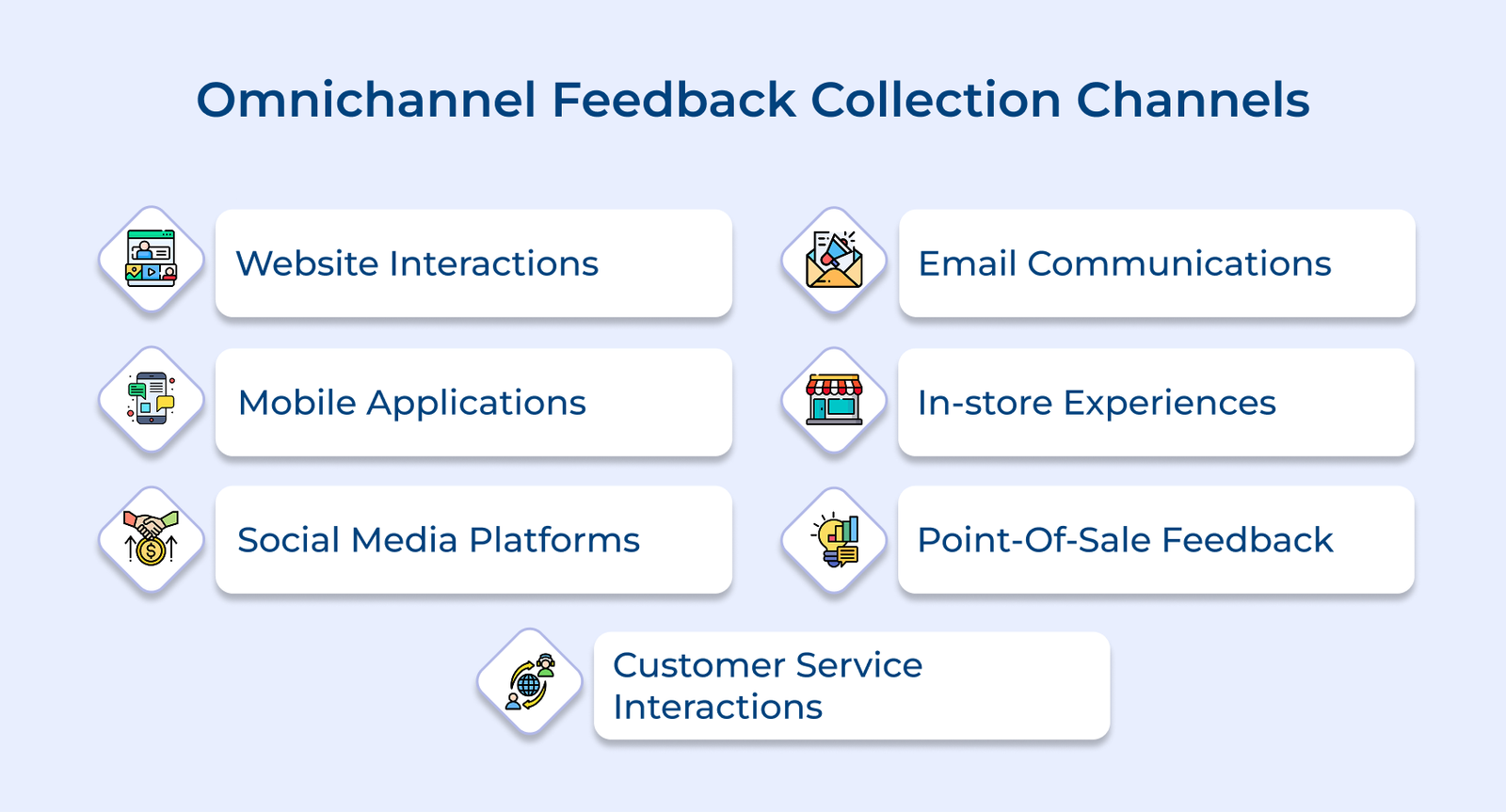
Website Interactions
Website feedback tools capture real-time user behavior through surveys, heatmaps and session recordings. The interactions reveal insights into navigation patterns and potential friction points in the customer journey. The data helps optimize page layouts, content strategy and key metrics like time spent on page or bounce rates, ensuring the website meets customer needs effectively.
Mobile Applications
In-app feedback lets users share their experiences directly within the app, capturing sentiment during active engagement. Mobile apps also provide valuable usage analytics, helping companies track feature adoption and identify areas needing further support or guidance.
Social Media Platforms
Social media channels provide real-time insights into customer sentiment through comments, mentions and direct messages, revealing brand perceptions. The platforms also enhance two-way conversations and community engagement, helping companies monitor market trends.
Email Communications
Email surveys offer a structured way to collect detailed feedback through targeted questionnaires, focusing on specific product or service aspects. Automated and personalized, the programs maintain ongoing customer dialogue while gathering valuable, long-term insights.
In-store Experiences
In-store feedback captures immediate reactions through kiosks and tablets, offering insights into product quality. The data helps evaluate store layouts, customer service and enables performance comparisons.
Point-of-sale Feedback
Transaction-based feedback reveals insights into the purchasing and payment process, highlighting friction points in the checkout process. Integrated POS systems link customer history to current transactions enabling personalized interactions and targeted feedback based on purchase patterns.
Customer Service Interactions
Customer service communications capture detailed feedback on issues and resolutions, providing valuable insights into pain points. Analyzing support interactions helps identify recurring problems and training needs, enabling improvements in service protocols.
Below are eight actionable steps to help you implement a comprehensive and effective omnichannel customer feedback strategy that truly resonates with your audience.
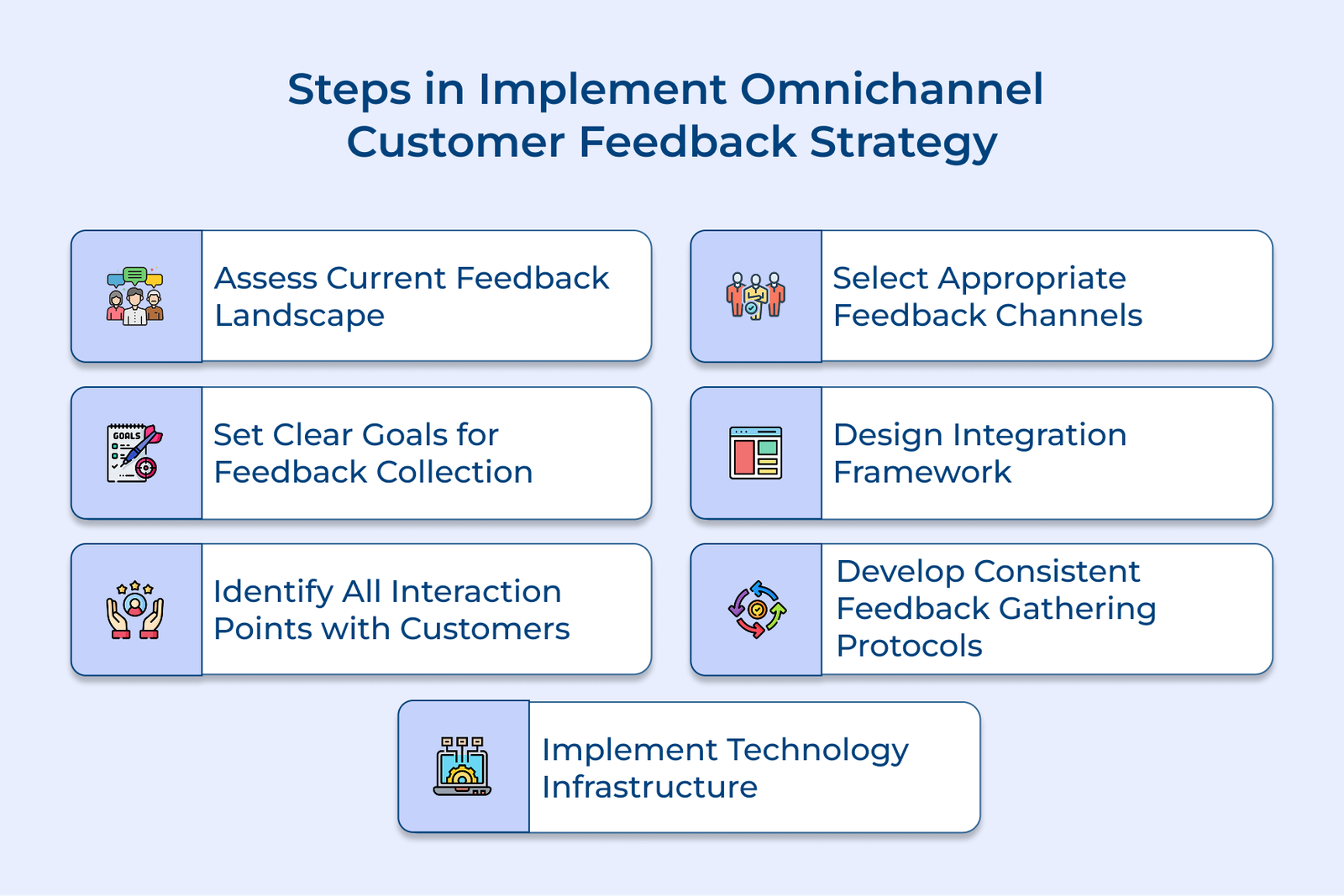
Setting clear goals is crucial to a successful feedback strategy. Organizations should define specific objectives that align with business priorities and customer experience goals, providing a roadmap for actionable insights.
Start by identifying key performance indicators (KPIs) that matter most, such as improving customer satisfaction or reducing response times. Create SMART goals – specific, measurable, achievable, relevant and time-bound to guide your feedback collection.
Best practices:
Before introducing new feedback systems, it’s crucial to evaluate existing methods and channels. The assessment helps identify current strengths, limitations and gaps, offering insights into areas for improvement.
Begin by mapping all feedback touchpoints and assessing their effectiveness. Identify your current communication channels and assess their effectiveness. Review data quality, track response rates and evaluate feedback to see if it leads to clear, actionable insights. The audit establishes a baseline and highlights which aspects of the current system should be maintained, improved or replaced.
Pro tips:
Mapping every customer interaction with your brand is key to building a comprehensive feedback system. The process helps uncover feedback opportunities that might otherwise be overlooked, ensuring no valuable insights are missed.
Start by creating a detailed customer journey map, covering both digital and physical touchpoints. Include pre-purchase interactions like website visits, followed by the purchase process and post-purchase support. Don’t forget ongoing relationship touchpoints like loyalty programs and retention activities, each represents a chance to collect valuable feedback.
Actionable tips:
Selecting the right feedback channels is essential for maximizing engagement and data quality. The selection should focus on your customers’ preferences, communication habits and comfort with different technologies, ensuring feedback is easy to provide while aligning with your strategic goals.
Start by analyzing where your customers spend their time and how they prefer to communicate. Consider factors like technology adoption rates and preferred communication methods. Choose channels that match the preferences and still provide valuable data. Let’s assume that younger customers might favor in-app feedback, while older demographics may respond better to email surveys.
Best practices:
An integration framework connects all feedback channels into a unified system, ensuring smooth data flow and creating a single source of truth. Without proper integration, data silos can prevent a complete view of the customer experience.
Start by designing a data architecture that allows seamless communication between feedback, with standardized formats and clear protocols for synchronization. Define how systems will interact and centralize feedback for analysis. Include plans for secure data storage, access controls and security measures.
Pro tips:
Standardized feedback protocols ensure consistent, reliable data across all channels, acting as a quality control mechanism. Without the standards, data may become inconsistent, making analysis difficult and insights less actionable.
Begin by creating clear guidelines for feedback collection, defining standard questions, rating scales and response formats. Establish timing protocols for when and how often feedback should be requested. Document the standards and share them with all team members involved in feedback collection. Let’s consider that if you’re using the same satisfaction scale whether the feedback comes through a website survey or an in-store kiosk.
Actionable tips:
A strong technology infrastructure is crucial for any successful omnichannel feedback system. It must support seamless data collection, integration, analysis and reporting across all channels while maintaining security. The right infrastructure ensures smooth feedback flow from collection to analysis and empowers decision-makers with actionable insights.
Start by selecting a central customer feedback management platform that integrates with all chosen channels. Implement the necessary APIs and set up data warehousing for storage tools for processing. Ensure security measures comply with data protection and privacy standards. Finally, configure dashboards and reporting tools for easy access to insights.
Pro tips:
Following are the challenges companies face when integrating omnichannel feedback mechanisms that can hinder seamless integration.
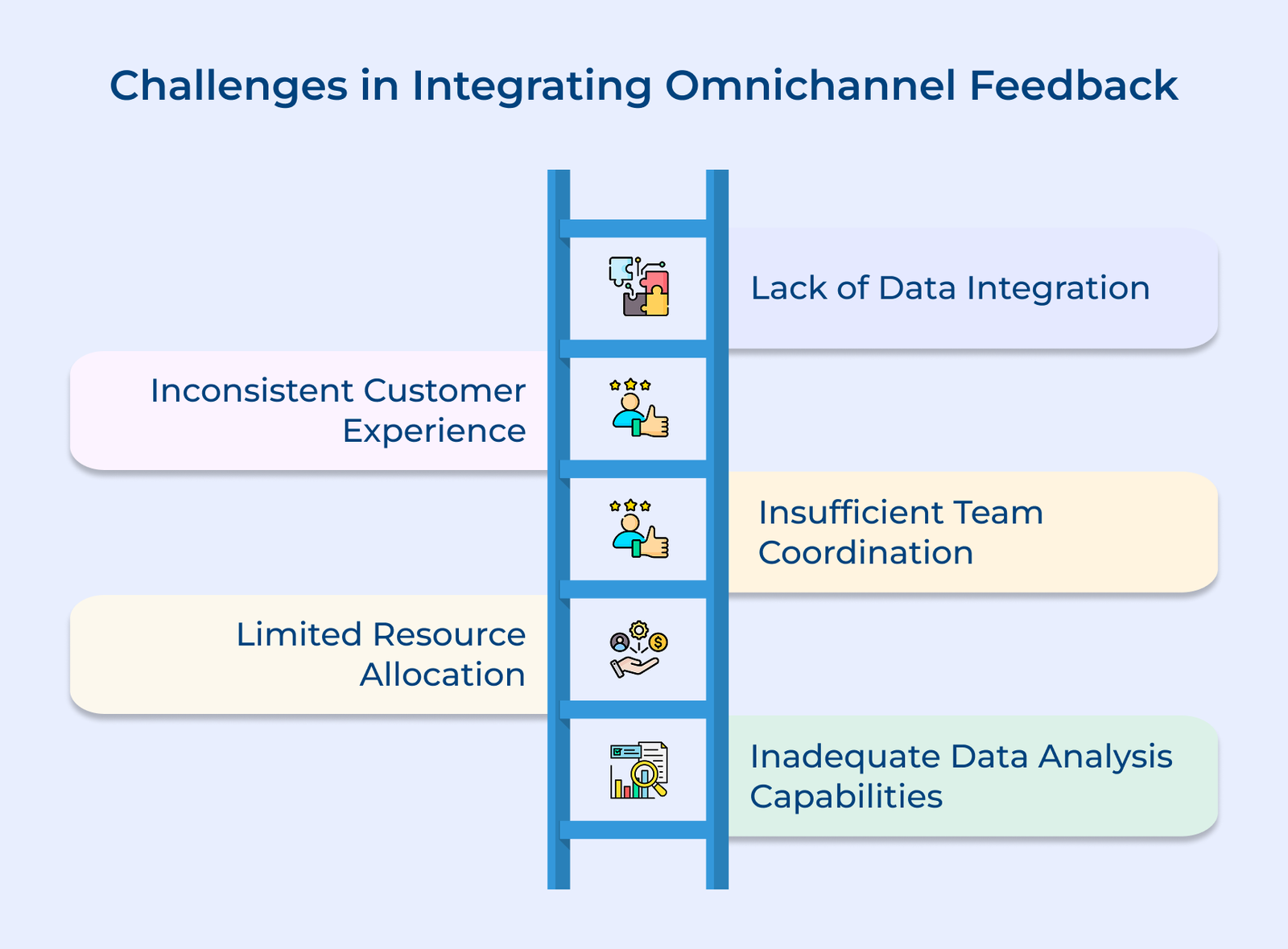
Channels often operate in isolation, creating data silos to make it difficult for teams to merge feedback. The fragmentation limits customer insights and prevents organizations from understanding the full customer journey.
When different departments manage feedback separately, response times, quality standards and communication styles vary across channels. The inconsistency leads to poor customer experiences, damaging brand perception and reducing engagement.
When teams work in isolation and don’t share customer insights, it results in duplicated efforts, miscommunication and conflicting responses. The lack of collaboration hinders organizations from delivering cohesive solutions to customer concerns.
Organizations often underestimate the investment required for robust feedback systems, leading to inadequate staffing, technology and training. It leaves teams overwhelmed, struggling to manage multiple channels with limited support.
Teams struggle to extract actionable insights from diverse feedback sources. The complexity of analyzing unstructured data from multiple channels overwhelms existing analytics, preventing organizations from driving meaningful improvements.
Implementation tips to overcome the common challenges:
Check out the key metrics for measuring the success of omnichannel feedback collection, from response rates to data accuracy to evaluate performance.
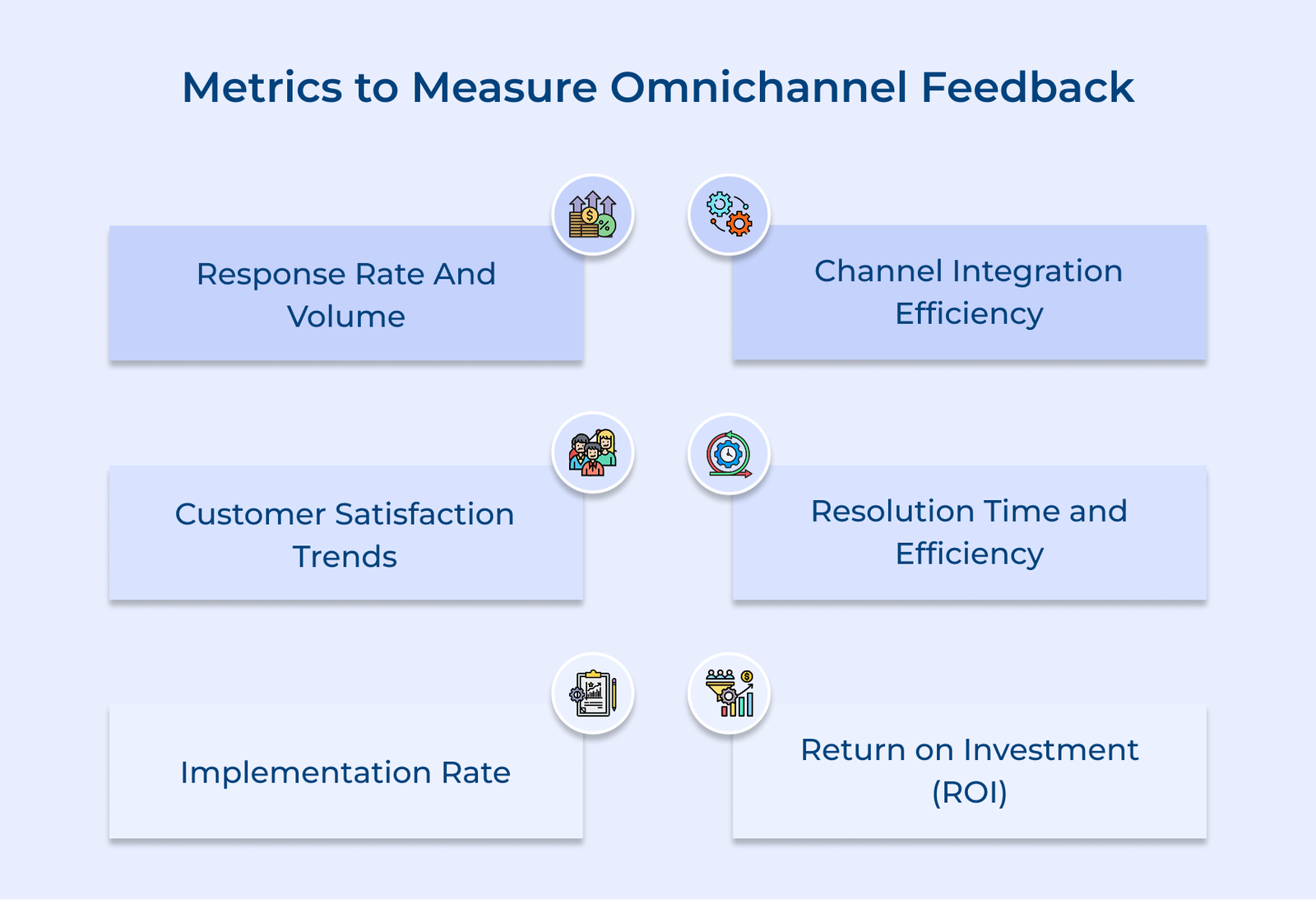
1. Response Rate and Volume
The metric tracks the percentage of customers providing feedback across various channels. Monitor responses per channel and overall engagement to see which methods resonate most with customers. Higher response rates suggest effective collection methods and strong customer engagement.
2. Channel Integration Efficiency
Track how efficiently feedback flows between channels and systems, measuring the time taken from collection to central analysis. Monitor data synchronization and successful integration rates to assess the effectiveness of your omnichannel system.
3. Customer Satisfaction Trends
Track satisfaction scores across channels and touchpoints, comparing them to spot inconsistencies in customer experience. Monitor how scores improve after feedback-driven changes to assess the impact on customer happiness.
4. Resolution Time and Efficiency
Track the average time to acknowledge, resolve and close feedback loops across channels. Measure the percentage of issues resolved within target timeframes and assess how efficiently feedback is routed to the right teams. It indicates your organization’s responsiveness to customer input.
5. Implementation Rate
Track the percentage of feedback that leads to tangible improvements. Measure how many customer suggestions are implemented within set timeframes and monitor the impact on satisfaction. It reflects how effectively your organization acts on feedback.
6. Return on Investment (ROI)
Measure the financial impact of your omnichannel feedback strategy by tracking cost savings from improved processes and efficiency, as well as revenue growth from feedback-driven changes. Compare the gains to the investment in feedback systems to showcase its business value.
Below are some brands that have successfully implemented omnichannel customer feedback collection strategies, showing how different industries can effectively utilize customer feedback.
1. Starbucks
Starbucks has built an integrated feedback ecosystem that links their mobile app, in-store experiences and loyalty program. They gather feedback through app ratings, in-store tablets and social media monitoring, all unified into a single system.
The approach has enhanced their ability to personalize experiences and optimize operations. Starbucks gains deeper insights into customer preferences, adjusts store layouts based on local feedback and improves their mobile ordering system by connecting feedback across channels. Their responsive feedback strategy has boosted customer loyalty and streamlined operations.
2. Nike
Nike integrates feedback from retail stores, mobile apps and digital platforms to create a seamless feedback loop. They use in-store kiosks, product reviews on their website and the Nike+ app, along with fitness tracking data to gather insights.
The interconnected system enables Nike to improve products and personalize shopping experiences. They enhance product development by quickly identifying trends, addressing product issues and creating targeted campaigns.
3. Disney
Disney gathers feedback across theme parks, hotels, streaming services and mobile apps. They use a combination of real-time surveys, post-visit emails, on-site stations, social media and customer service interactions.
The unified feedback system helps Disney improve both physical and digital experiences. They boost satisfaction across their various entertainment offerings by swiftly addressing guest concerns, enhancing attractions and personalizing communications.
4. Bank of America
Bank of America collects feedback via their mobile app, branch locations, ATMs and online platform, integrating customer service call insights with digital interactions. They leverage AI-powered analytics to identify patterns across channels and proactively seek feedback after key transactions.
The omnichannel approach enables the bank to quickly address issues, enhance digital services, streamline branch operations and reduce customer support needs. The result is improved customer satisfaction and increased digital adoption.
5. Target
Target gathers feedback from stores, their mobile app, website and loyalty program, using in-store kiosks, app surveys or social media insights. They integrate the data with customer service feedback for a comprehensive view.
The approach allows Target to optimize inventory, improve store layouts and enhance the digital shopping experience. Target strengthens its competitive edge by better-predicting customer needs, personalizing promotions, and improving fulfillment.
Check out the emerging trends shaping the future of omnichannel feedback, as businesses continue to enhance their feedback systems to deliver more personalized experiences.
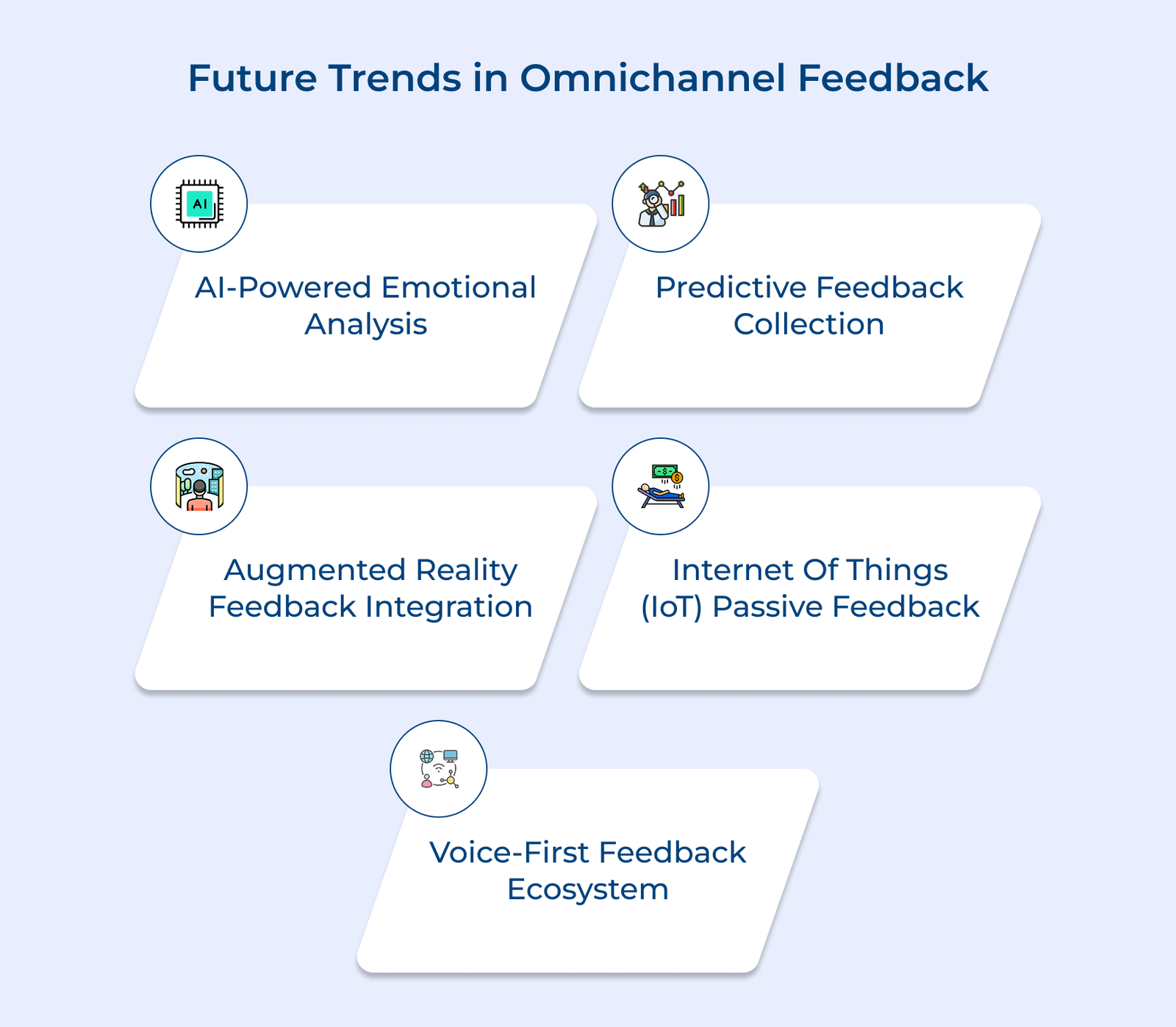
Advanced AI will analyze customer emotions across all feedback channels, interpreting tone, sentiment and context in text, voice as well as video. Natural language processing will enable businesses to respond more empathetically to feedback.
Machine learning will predict the best times for feedback, triggering personalized requests at optimal moments. The proactive approach will boost response rates, gather valuable insights and reduce survey fatigue.
AR technology will enable real-time feedback during product interactions. Customers can provide immediate input through immersive AR interfaces, offering unique insights into their experiences and preferences.
Connected devices will passively collect usage patterns and performance data, enhancing active feedback methods. IoT sensors will even identify potential issues before customers need to report them, offering a complete view of behavior.
Voice-activated devices will emerge as key feedback channels, allowing customers to share experiences through seamless conversations with AI assistants. The effortless method will boost participation across all demographics.
Omnichannel customer feedback revolutionizes how businesses understand customer behavior across multiple touchpoints. Companies gain deeper insights into customer needs, expectations and pain points by integrating feedback from diverse channels. The holistic view allows for more personalized experiences and stronger customer relationships.
A successful feedback strategy provides a complete customer journey perspective, not just fragmented insights. When executed well, it boosts customer satisfaction, drives operational efficiency, supports informed decision-making and enhances brand loyalty through timely, data-driven actions.
Key takeaways:

Customer feedback reveals blind spots in your support system that internal analysis might miss. It identifies friction points that cause customer frustration, highlights which channels need improvement and shows where agent training falls short. When implemented systematically, feedback creates a continuous improvement loop that raises customer satisfaction while potentially lowering support costs through more efficient processes.
Omnichannel customer feedback creates a unified view of the customer journey across all touchpoints, whereas multichannel approaches collect feedback separately from each channel. Omnichannel links feedback to individual customer profiles, revealing how experiences connect across interactions. The integrated approach shows how satisfaction in one channel affects engagement in others, providing a holistic understanding impossible with siloed feedback methods.
Implementing omnichannel feedback requires integrated technology platforms that consolidate data across channels, skilled analysts who can interpret cross-channel patterns and cross-functional teams. You’ll need executive sponsorship to drive organizational alignment, dedicated project management for implementation and ongoing training resources to help teams utilize feedback insights effectively.
Technology serves as the backbone of omnichannel feedback by connecting disparate data sources into a single customer view. Modern platforms use AI to analyze sentiment across text, voice and video interactions, automatically categorizing feedback themes. These systems trigger real-time alerts for critical issues, distribute insights to relevant departments and track resolution progress.
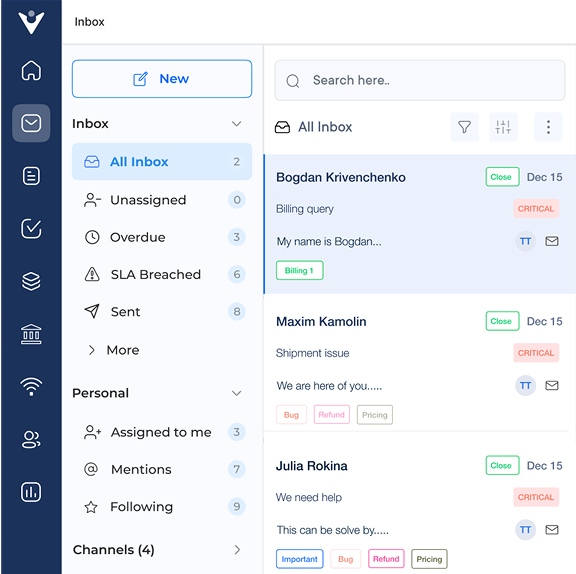
Grow Customer Relationships and stronger team collaboration with our range of products across the Conversational Engagement Suite.
Omnichannel Customer Support & Help Desk Software
AI Enabled Business Messaging and Chatbot Software
Sales Engagement & CRM Software
Call Center Software & Virtual Phone System
Product Marketing & Experience Platform
Customer Experience & Feedback Management Software

 How to Create Effective Buyer Persona Questions in 2026
Scroll to top
How to Create Effective Buyer Persona Questions in 2026
Scroll to top