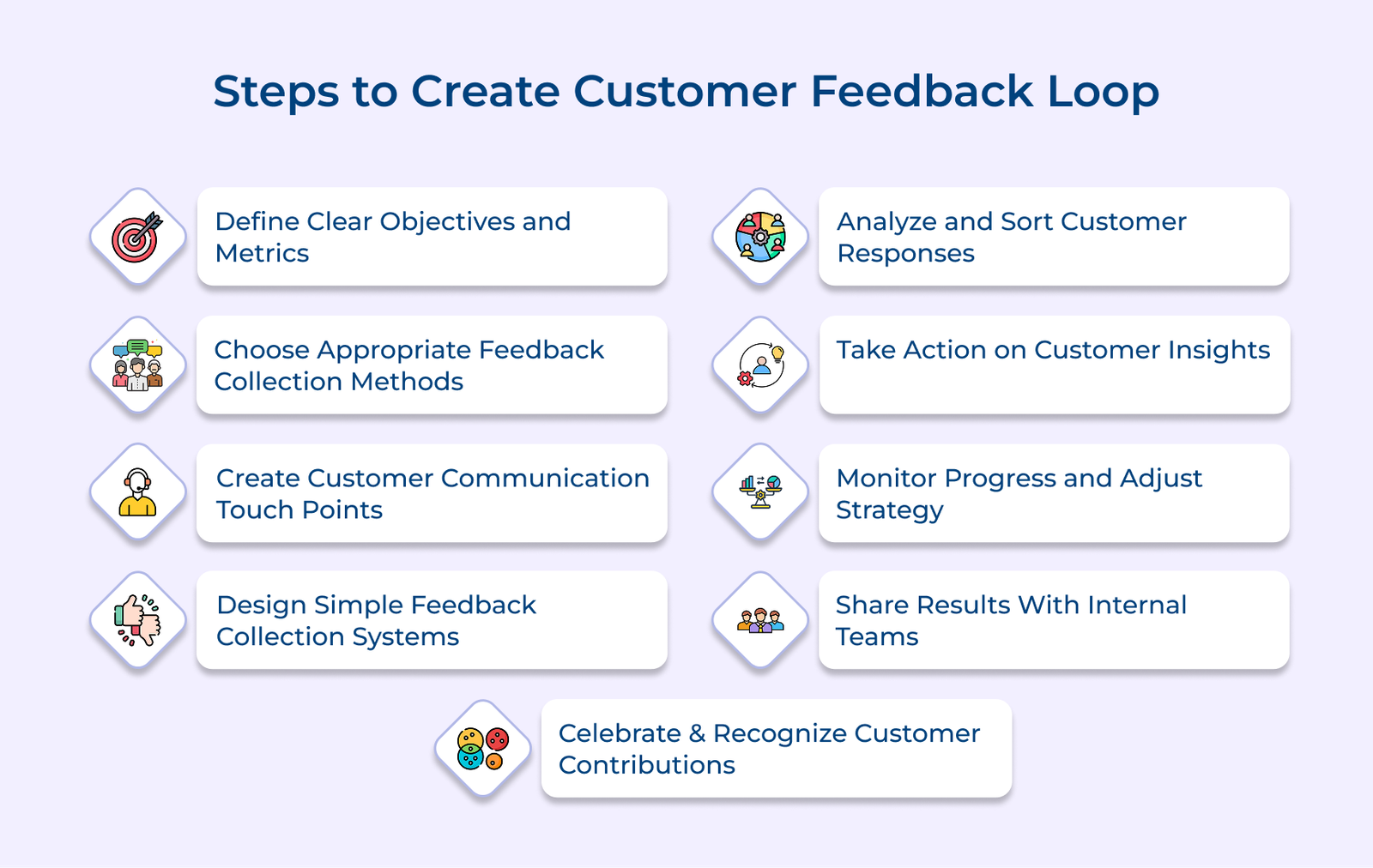
1. Define Clear Objectives and Metrics
Clear objectives are key to building a successful feedback system. Setting specific goals helps organizations focus their feedback collection efforts and measure success effectively. Without clear objectives, teams risk collecting irrelevant data or overlooking crucial insights that could improve the customer experience.
Start by identifying key customer interaction areas needing improvement. Then set measurable goals, such as reducing complaints by a certain percentage or boosting satisfaction in specific service categories.
Pro tips:
- Balance short-term and long-term objectives to maintain momentum.
- Review and adjust objectives quarterly to stay aligned with evolving customer needs.
2. Choose Appropriate Feedback Collection Methods
Choosing the right feedback collection methods is essential, as customers have varying preferences for sharing their thoughts. Some may prefer quick customer surveys, while others may opt for in-depth interviews. Using the wrong methods can lead to low response rates and biased feedback.
Map out your customer journey to identify key touchpoints. Then choose appropriate methods for each, such as post-purchase surveys for transaction feedback or focus groups for product insights. Test different approaches to find what works best for your audience.
Actionable tips:
- Combine quantitative and qualitative methods for a complete view of customer sentiment.
- Keep your methods flexible to adapt to changing customer preferences and technology.
3. Create Customer Communication Touch Points
Creating effective communication touchpoints is key to maintaining consistent engagement and gathering valuable feedback throughout the customer journey. Well-planned touchpoints ensure you don’t miss critical moments when customers are most likely to share insights.
Start by mapping the entire customer journey from initial awareness to post-purchase interactions. Identify key moments for feedback, such as during onboarding, after customer service interactions or while using specific product features. Design each touchpoint to feel natural and not intrusive.
Best practices:
- Provide immediate value at touchpoints, like helpful tips or requesting feedback.
- Balance your communication calendar to avoid feedback fatigue while keeping engagement consistent.
4. Design Simple Feedback Collection Systems
Simple feedback collection systems are crucial because complexity discourages participation. When systems are complicated or time-consuming, customers are less likely to engage. A streamlined approach removes barriers and boosts both the quantity and quality of feedback.
Start by selecting user-friendly tools that align with your customers’ technical comfort levels. Design feedback with clear, concise questions and minimal required fields. Use progressive disclosure, where follow-up questions only appear if relevant based on initial responses. Test your system with a small group to identify and remove friction points before full deployment.
Pro tips:
- Use visual elements like emoji reactions or rating scales to make feedback more engaging and intuitive.
- Ensure your system works seamlessly across all devices and platforms your customers use.
5. Analyze and Sort Customer Responses
The analysis phase bridges raw feedback and actionable insights, turning scattered responses into meaningful patterns. A systematic approach helps identify recurring themes, prioritize issues and uncover hidden opportunities that may otherwise be overlooked.
Start by categorizing feedback into themes like product features, customer service or user experience. Create a standardized framework to evaluate feedback based on severity and impact. Use data visualization tools to spot trends and establish a regular review cadence to update your system as new patterns emerge.
Actionable tips:
- Use a prioritization matrix to assess feedback frequency and its potential impact on customer satisfaction.
- Train multiple team members in your analysis methodology to maintain consistent interpretation across the organization.
6. Take Action on Customer Insights
Taking action on the insights from customers is the critical step to making meaningful improvements. It validates the feedback process and shows customers that their input matters. Without action, even the best feedback systems are ineffective. The phase turns insights into real changes that enhance the customer experience.
Start by creating clear action plans based on the analyzed feedback. Prioritize changes that have the greatest impact and are resource-efficient. Assign owners to each task and set realistic timelines. Maintain transparency by documenting successes and challenges. Establish a system to track progress and its effect on customer satisfaction.
Pro tips:
- Identify quick-win improvements that can be implemented immediately, alongside longer-term strategic changes.
- Create a feedback review board to regularly assess progress and adjust action plans based on new insights.
7. Monitor Progress and Adjust Strategy
Monitoring progress is essential to guide your customer feedback journey. It ensures that implemented changes are improving customer satisfaction and helps organizations adapt to evolving customer needs and market conditions. Without proper monitoring, companies risk sticking with ineffective strategies or missing opportunities to build on successes.
Establish a tracking system for key performance indicators and set up regular checkpoints to review the metrics. Compare current results against your baseline and adjust strategies as needed to maintain momentum. Focus resources on the most effective initiatives.
Actionable tips:
- Use a balanced scorecard that includes both quantitative metrics and qualitative feedback for a full view of progress.
- Set up automated alerts for significant changes in key metrics to respond quickly to emerging trends.
8. Share Results with Internal Teams
Sharing results internally enhances alignment and drives momentum across the organization. When teams understand how customer feedback shapes business decisions, they become more invested in the process and prioritize customer-centric solutions.
Start by creating a communication framework that ensures all levels of the organization stay informed. Set up regular reports that highlight key insights, success stories and ongoing challenges. Use team meetings, presentations and internal newsletters to keep everyone updated on customer feedback trends.
Pro tips:
- Tailor department-specific reports to focus on feedback relevant to each team’s goals.
- Recognize and reward teams that successfully implement changes based on customer feedback.
9. Celebrate and Recognize Customer Contributions
Celebrating customer contributions is key to maintaining an engaged feedback community. Recognizing and appreciating customers who provide valuable feedback encourages ongoing participation. The recognition shows customers that their time and insights are truly valued by the organization.
Customer recognition can take various forms based on your business context. Consider creating a customer advisory board, sending personalized thank-you messages, offering exclusive previews or providing special perks to active contributors. The key is to make recognition feel authentic and meaningful, not transactional.
Pro tips:
- Create a customer feedback hall of fame to showcase how specific suggestions led to impactful improvements.
- Develop a tiered recognition program to reward different levels of customer engagement.
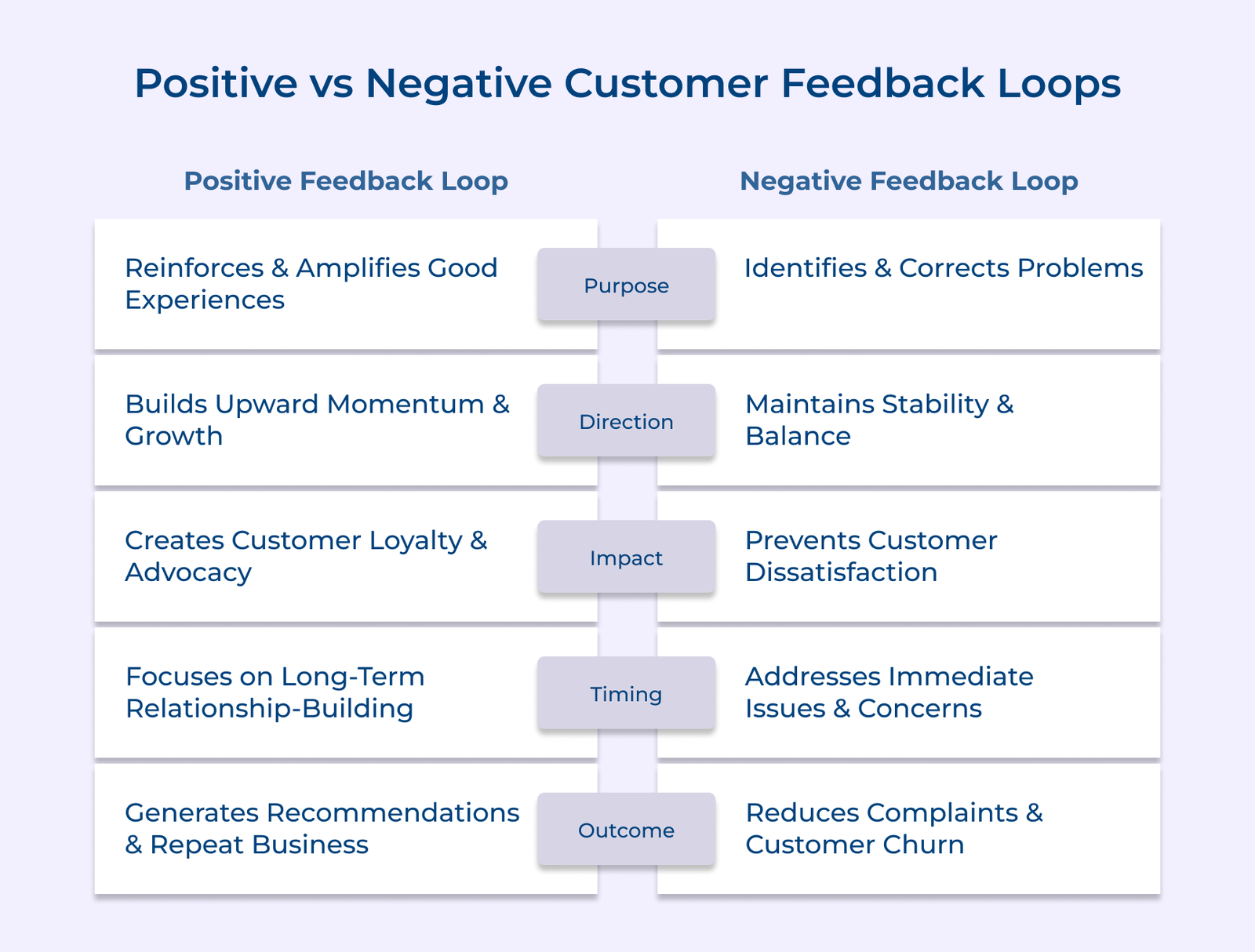
Positive vs Negative Customer Feedback Loops
Understanding the key differences of positive vs negative feedback loops is vital for strengthening customer relationships and enhancing satisfaction.