Lead Qualification Checklist Guide: Key Steps & Questions
Unlock the secrets to an effective lead qualification checklist. Learn actionable steps to identify high-potential leads, boost sales efficiency and drive business growth.

Unlock the secrets to an effective lead qualification checklist. Learn actionable steps to identify high-potential leads, boost sales efficiency and drive business growth.
Did you know that more than 70% of leads are typically rejected because they’re unqualified? Teams often waste valuable time chasing unqualified leads, even with advanced CRM and automation tools. The issue lies in inconsistent lead qualification processes, where gut feelings and incomplete data drive decisions, leading to wasted efforts.
Enter the lead qualification checklist— a structured approach helps you evaluate prospects based on their needs, readiness and potential value, ensuring no qualified lead is overlooked. You can make smarter, data-driven decisions on where to allocate resources and optimize sales performance by using this framework. Let’s dive into how the essential questions can transform your lead qualification process.
A lead qualification checklist refers to a structured approach to evaluating potential customers, ensuring your sales team focuses on high-value prospects while maintaining consistency across the organization.
The process involves assessing leads against key criteria that match your ideal customer profile. Sales teams analyze data from various touch points like initial conversations, website interactions and marketing engagement to evaluate the lead’s readiness. The systematic approach helps make informed decisions about resource allocation.
Key principles:
Let’s go through the benefits of a lead qualification checklist to understand how it helps to streamline your sales process and prioritize high-quality leads.
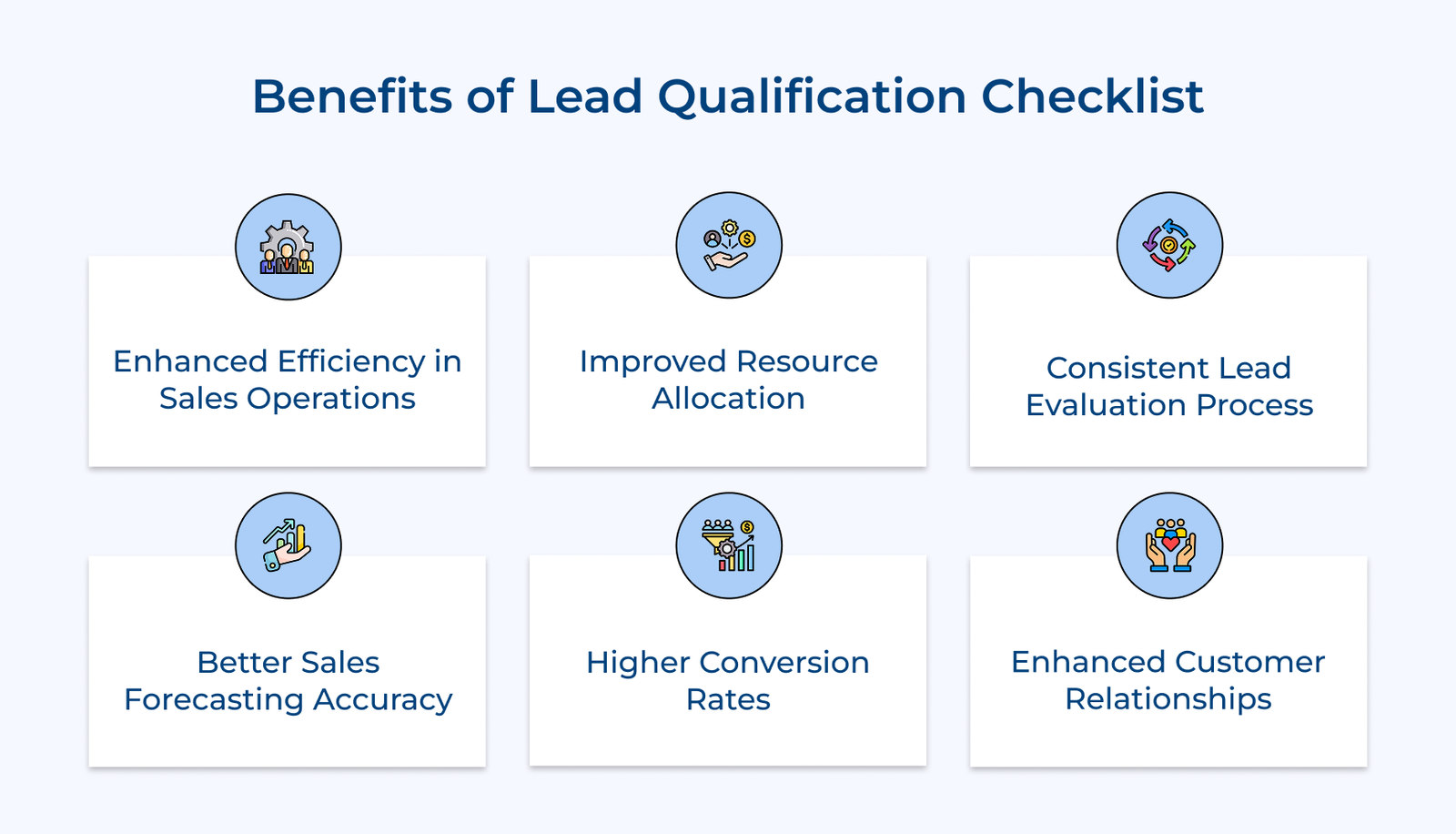
Enhanced Efficiency in Sales Operations
Sales teams can boost productivity by prioritizing high-potential leads. The checklist removes the guesswork, offering a clear framework to quickly identify leads that need immediate focus and those requiring further nurturing.
Improved Resource Allocation
A structured qualification process helps organizations allocate sales resources effectively. You can ensure time and budget are focused on high-potential leads only. It reduces the chances of the business putting effort into unqualified prospects.
Consistent Lead Evaluation Process
The checklist creates a standardized evaluation method, ensuring consistency across the sales team. It ensures subjective decision-making and enhances the reliability of the sales process for ongoing improvement.
Better Sales Forecasting Accuracy
A structured qualification process enables sales managers to predict conversion rates and outcomes more accurately. The clarity enhances pipeline insights, improves revenue forecasting and supports informed strategic decisions on growth.
Higher Conversion Rates
Focusing on well-qualified leads boosts conversion rates. The checklist helps identify prospects with both the intent and ability to make a purchase, enabling sales reps to target those most likely to convert.
Enhanced Customer Relationships
Understanding a prospect’s needs upfront helps the sales teams tailor their approach. They can enhance stronger relationships, boost customer satisfaction and drive longer-lasting business connections.
Below are six essential steps to help you build a comprehensive lead qualification checklist that will empower your sales team to achieve greater success.
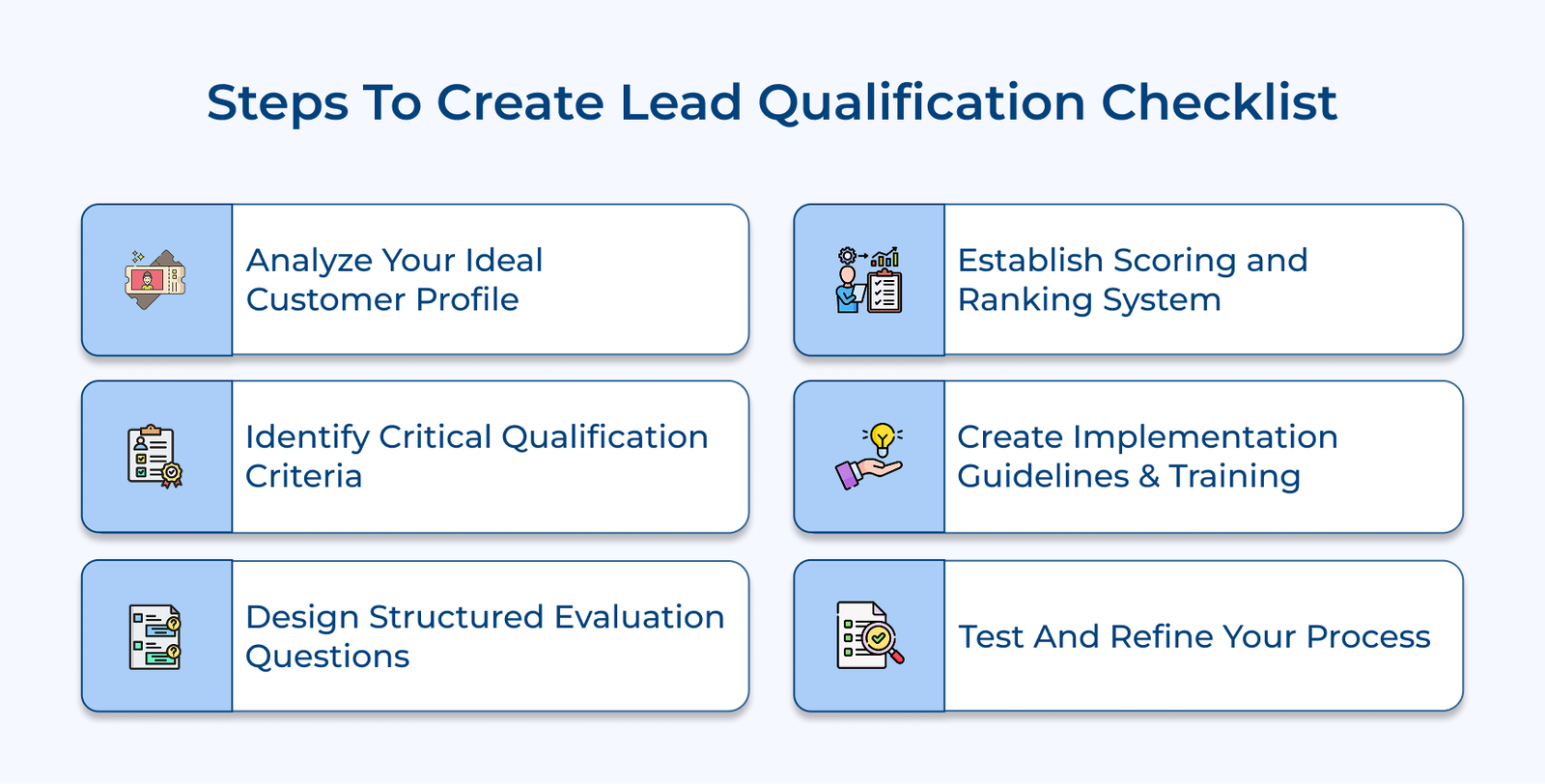
Creating an ideal customer profile is the cornerstone of effective lead qualification. Start by analyzing your most successful customers to identify shared characteristics, behaviors and challenges. It helps you pinpoint the specific traits that make them valuable and guides your sales team in targeting the right leads.
Gather data on factors like company size, business challenges and buying behaviors. Create detailed profiles that capture both demographic and behavioral characteristics. Use the insights to define clear criteria for qualifying leads.
Pro tip:
Critical qualification criteria help transform your ideal customer profile into actionable evaluation points. The measurable factors guide your sales team in identifying prospects that are the best fit for your solution. Focus on essential characteristics like budget authority, need timeline and technical compatibility, then prioritize them based on their potential to predict success.
Make sure there’s enough clarity in your criteria definitions for consistent evaluation. Include both positive as well as negative indicators to spot red flags early and create weighted criteria to prioritize the most impactful factors.
Actionable tip:
Well-crafted evaluation questions are an essential tool for your sales team to gather detailed qualification information. The questions should be specific, actionable and designed to uncover whether a prospect aligns with your qualification criteria. You can ensure a consistent evaluation process across all interactions by keeping them clear and focused.
Design a set of open-ended questions that map directly to your criteria, ensuring they flow naturally in conversation. Test the questions with your top sales performers and refine based on real-world feedback to improve their effectiveness.
Best practices:
A scoring system offers an objective, data-driven way to assess prospects against your qualification criteria. As it removes guesswork and bias, you can ensure there’s a consistent evaluation process across your team and establish a clear standard for prioritizing leads.
Create a point-based system that assigns values to each criterion, with scoring guidelines and real-world examples to help sales teams apply it consistently. Regularly review scoring patterns to fine-tune the system as needed.
Pro tips:
Clear implementation guidelines help ensure your sales team consistently applies the qualification process, providing a roadmap for effective use while maintaining quality standards across all prospect interactions. The guidelines also support seamless onboarding for new team members.
Create training materials with real-world examples, role-playing scenarios and hands-on exercises. Develop step-by-step guides and hold regular training sessions to reinforce best practices. Build confidence in using the checklist through practical experience.
Key takeaways:
The testing phase is crucial for assessing the effectiveness of your qualification checklist in real-world situations. It helps uncover gaps, practical challenges and areas for improvement. Ongoing refinement ensures your checklist adapts to changing market conditions and customer needs.
Start by testing with a small team to gather initial feedback and identify potential issues. Monitor key metrics like qualification accuracy, conversion rates and sales cycle length. Regularly review feedback from your team and use it to make continuous improvements.
Pro tip:
Following are the nine essential questions your lead qualification checklist should include to help your sales team efficiently identify high-potential prospects.
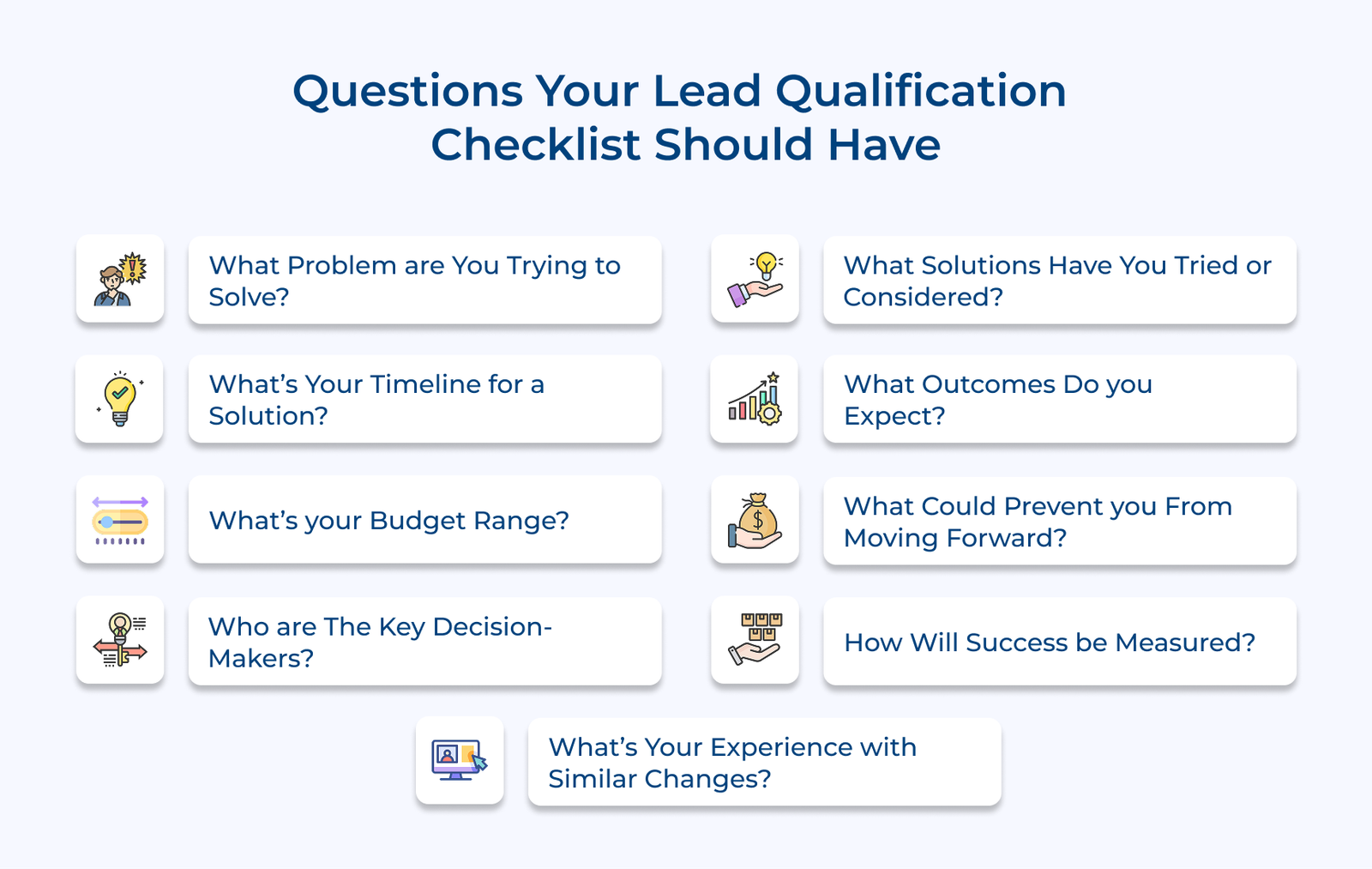
The key question reveals the prospect’s primary motivation and pain points, helping you assess if their needs align with your solution. It encourages them to articulate their challenges, providing clarity on if your product or service is a fit.
You can measure the urgency of your customers’ situation and customize your pitch to address their specific requirements by asking the question early on. The more detailed their answer, the clearer their problem and the more serious they are about finding a solution.
Key takeaway:
Understanding the timeline assesses the prospect’s urgency and readiness to make a purchase. The question distinguishes serious buyers from those merely exploring options. It’s essential to optimize resource allocation and keep your sales pipeline on track.
Knowing their timeline helps you prioritize leads based on when they plan to buy and it also allows you to align your sales process accordingly. A clear timeline also enables you to plan follow-up strategies and set realistic expectations.
Pro tips:
The budget question helps measure a prospect’s financial preparedness to solve their problem and if they’ve allocated funds for the solution. It not only reveals if they can afford your solution, but also if they value it enough to invest in it.
Knowing a prospect’s budget ensures alignment between their expectations and your pricing structure. It allows you to propose ROI scenarios that fit their financial constraints. It’s key to determining if they’re a viable lead worth pursuing.
Actionable tips:
Understanding the decision-making structure helps you pinpoint who has the authority to approve the purchase and who influences the decision process. The question uncovers both formal and informal power dynamics, creating a clear map of the decision landscape.
Identifying key decision-makers early prevents wasted time engaging with individuals without purchasing authority. It also allows you to tailor your sales approach to the right stakeholders and navigate organizational complexities more effectively.
Key takeaway:
The question explores your prospect’s experience with similar solutions and their awareness of market alternatives. It provides insights into their level of market knowledge, past product experiences and evaluation criteria, helping you understand what has worked or failed for them.
You can better position your solution against competitors and address any concerns stemming from their past experiences by including the question. It also helps identify potential objections early, allowing you to craft responses that highlight your solution’s unique benefits.
Actionable tips:
The question explores the prospect’s vision of success and expected return on investment, prompting them to define measurable, concrete goals rather than vague improvements. You can assess if your solution aligns with their expectations and help them establish clear success metrics by understanding their desired outcomes.
Identifying the outcomes is vital for lead qualification as it reveals if your solution can genuinely meet their needs. It allows you to create tailored proposals that address their goals directly, demonstrating your solution’s value and setting realistic expectations.
Key takeaway:
The question identifies potential obstacles or deal-breakers that could hinder the purchase process, prompting prospects to consider internal challenges, budget constraints or technical limitations. You can assess if they are manageable or if they disqualify the lead by addressing the concerns early.
Including the question is crucial because it helps spot red flags and roadblocks early in the sales process. Understanding the prospect’s concerns lets you tackle them proactively, measure the likelihood of closing the deal and prioritize your efforts accordingly.
Key takeaway:
The question addresses the practical aspects of measuring success after implementation, ensuring clear accountability for tracking results and a defined process for evaluating effectiveness. You can align your solution with their tracking capabilities and reporting needs by understanding the measurement approach.
Including the question in your checklist is essential as it shows if the prospect has a realistic plan for measuring success. When you understand their evaluation methods, you can ensure your solution delivers the necessary data and reporting capabilities. The information also helps you set up proper success metrics and ensure both parties have aligned expectations for outcomes.
Actionable tips:
The question examines the prospect’s ability to manage implementation and change. It sheds light on their experience with similar projects, internal capacity for managing transitions and understanding of what successful implementation entails.
Knowing their implementation history is crucial for lead qualification because it helps predict potential challenges and resource needs. You can better tailor your approach and determine the level of assistance they will need during the process by assessing their readiness.
Key takeaway:
Check out the different lead qualification frameworks to understand how each of them can revolutionize your sales process.
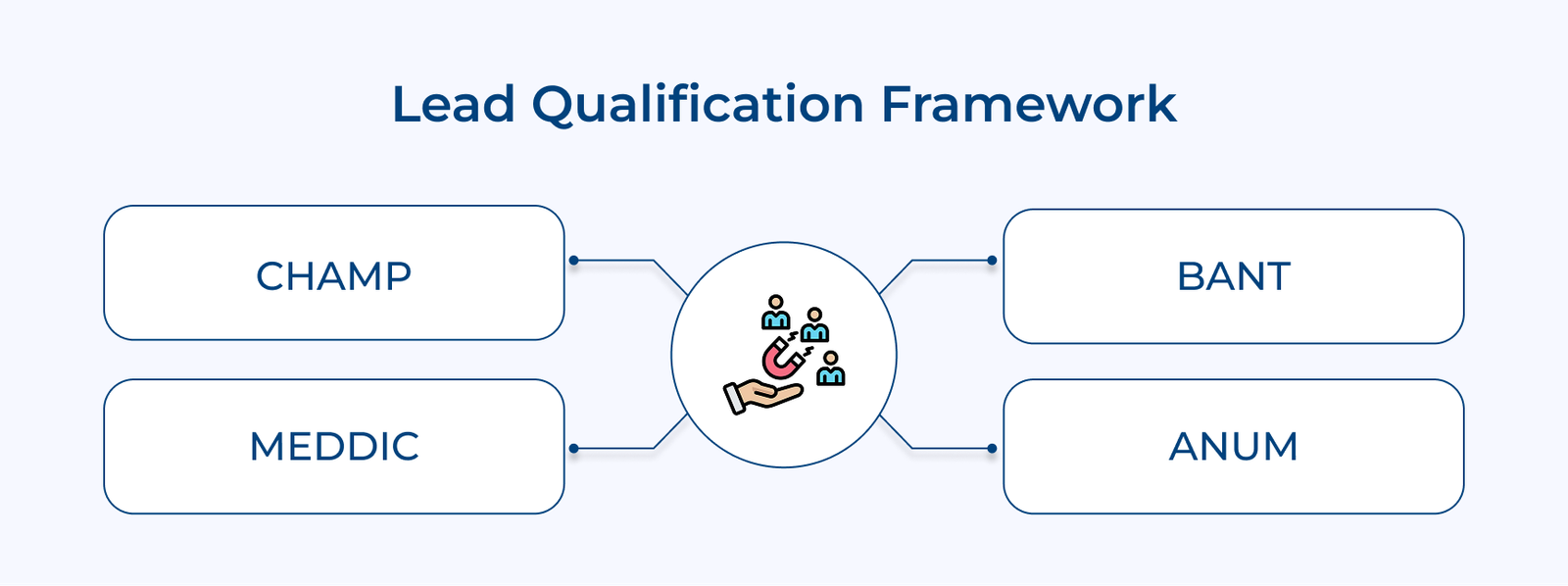
The CHAMP framework emphasizes understanding customer challenges before discussing budget. It focuses on identifying pain points and solving real business problems, rather than qualifying based solely on financial capacity.
CHAMP enhances stronger relationships and ensures prospects feel heard by shifting from a transactional to a consultative approach. It makes them more open to discussions about authority and budget, knowing their needs are being prioritized.
Developed by IBM, the traditional framework centers on four key qualification criteria to assess a prospect’s readiness to purchase. It begins with financial capacity and ensures time is spent on leads who can convert.
While its structured approach helps sales teams quickly identify qualified opportunities, the emphasis on a budget first can sometimes limit relationship building and overlook cases where the budget flexibility exists.
The MEDDIC framework is ideal for complex enterprise sales with multiple stakeholders. It focuses on understanding the prospect’s decision-making process and defining measurable success metrics.
MEDDIC helps sales teams navigate intricate organizational structures by identifying internal champions and assessing economic impact, making it invaluable for high-value, complex sales.
ANUM prioritizes identifying decision-makers early in the sales process, ensuring that sales teams focus their efforts on prospects with real purchasing power. The strategy eliminates the common mistake of wasting time with individuals who can’t make the final decision.
ANUM helps sales teams identify motivated buyers who are likely to find the budget once they recognize the value of the solution by addressing urgency before budget. The approach streamlines the qualification process and increases the likelihood of closing the deal.
Following are the common mistakes to avoid when using a lead qualification checklist, ensuring your sales team avoids wasting valuable time on unqualified leads.
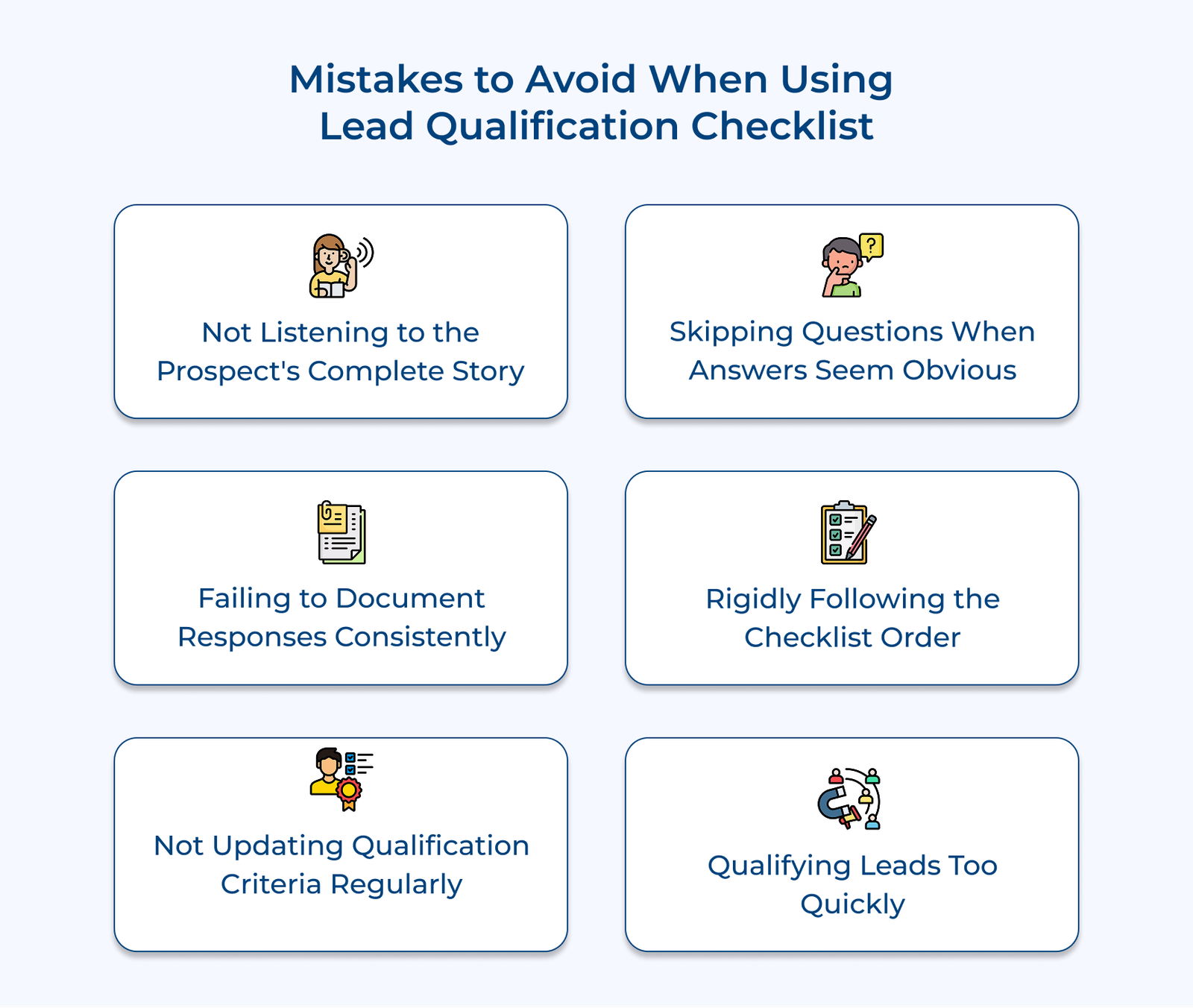
Sales teams sometimes rush through qualification questions, prioritizing checkboxes over understanding the prospect’s deeper needs. The approach overlooks valuable insights and misses opportunities for building meaningful relationships.
Assumptions in lead qualification can be risky. Sales representatives may skip “obvious” questions based on past experience, missing crucial details that could affect the sales process or reveal hidden objections.
Lack of proper documentation creates gaps in prospect information. Inconsistent note-taking loses valuable context, making it harder to track progress and share insights effectively within the team.
Strictly sticking to a checklist can make conversations feel robotic and uncomfortable. The rigidity disrupts the natural flow, causing prospects to feel defensive or reluctant to share information.
Relying on outdated qualification criteria limits adaptability to market shifts. Static checklists may overlook emerging needs or trends, resulting in missed opportunities or wasted resources.
Rushing the qualification process can result in poor-quality leads. Hurrying through steps often means missing red flags and wasting time on prospects that aren’t genuinely qualified.
Pro tips to overcome the challenges:
A well-designed sales qualification checklist is your roadmap to success, helping teams efficiently identify top opportunities and avoid wasting time on unqualified leads. You can create a qualification system that adapts to your business needs by using proven frameworks like BANT or MEDDIC and refining the process regularly.
Successful lead qualification combines thorough evaluation with building real connections. Behind every checklist response is a customer with unique challenges. Balancing systematic qualification with authentic relationship-building sets the stage for long-term sales growth.

The lead qualification process is a structured journey, beginning with initial contact and progressing through key evaluation stages. Sales teams gather essential details on budget, authority, needs and timeline through focused conversations. Leads are then scored based on defined criteria and documented in a CRM for easy tracking.
A strong marketing qualification checklist should address six areas: budget, authority, needs, timeline, solution fit and risk. Each area should include targeted questions to assess the prospect’s readiness and potential value.
Update your sales qualification checklist every quarter to stay aligned with shifting market trends, customer needs and business goals. Incorporate feedback from sales teams, customer success managers and market analysis to keep your criteria relevant
A well-structured lead qualification checklist significantly enhances conversion rates by helping sales teams focus on high-potential prospects. Assessing the leads against proven criteria will help you identify serious buyers early in the process, prioritize efforts where they matter most, and avoid investing time in prospects who are unlikely to convert. It not only streamlines the sales cycle but also improves efficiency, ensuring that resources are allocated effectively to maximize revenue and growth.
Seamlessly integrate the lead qualification checklist into daily sales operations by leveraging CRM tools, conducting regular training sessions and tracking performance metrics. Standardize documentation processes, establish clear lead-scoring guidelines and reinforce best practices through periodic reviews to ensure consistency.
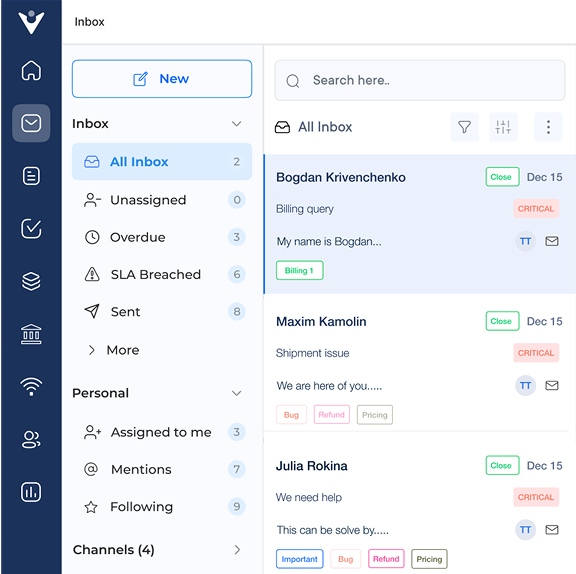
Grow Customer Relationships and stronger team collaboration with our range of products across the Conversational Engagement Suite.
Omnichannel Customer Support & Help Desk Software
AI Enabled Business Messaging and Chatbot Software
Sales Engagement & CRM Software
Call Center Software & Virtual Phone System
Product Marketing & Experience Platform
Customer Experience & Feedback Management Software

 How to Calculate Net Promoter Score (NPS)?
Scroll to top
How to Calculate Net Promoter Score (NPS)?
Scroll to top