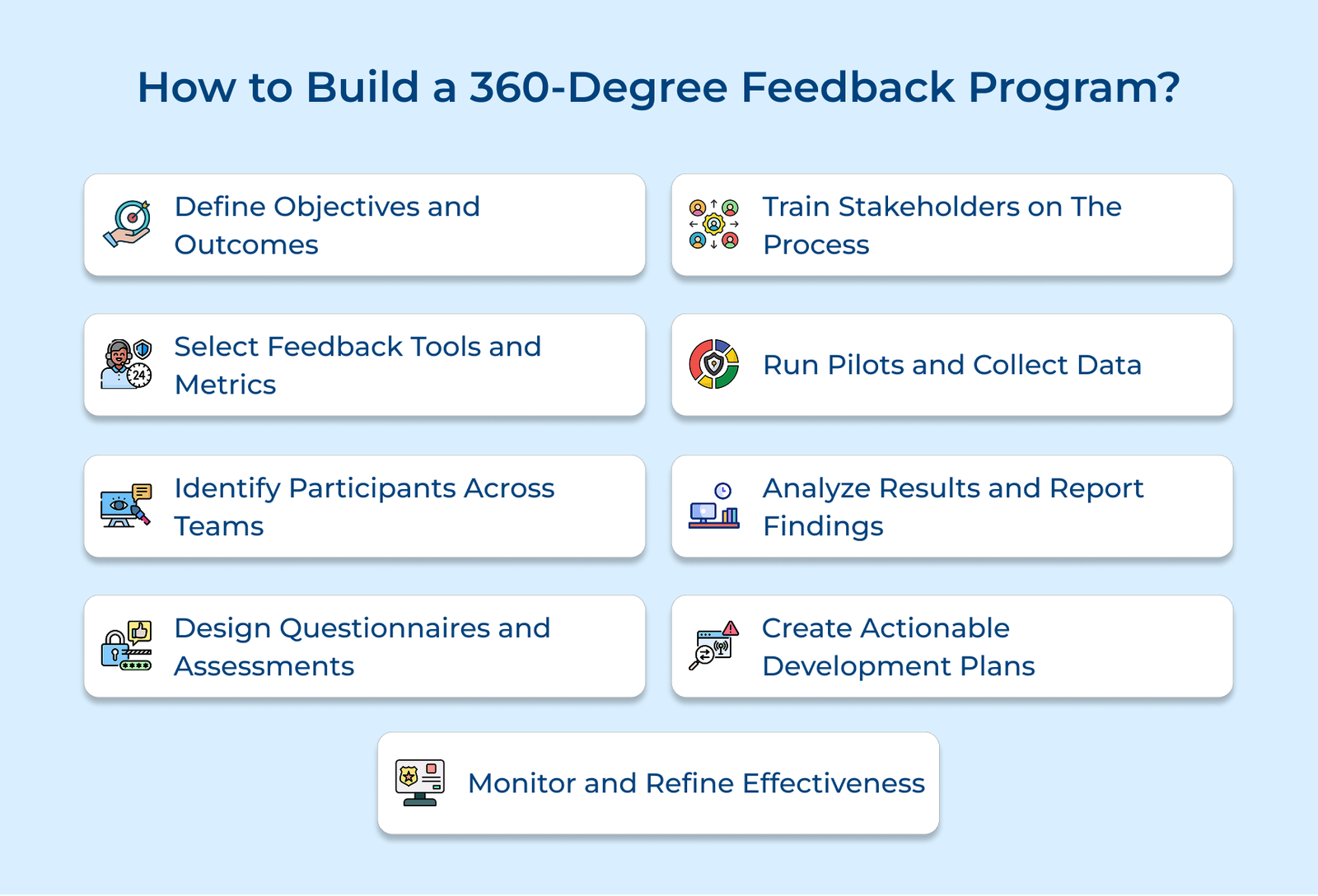
1. Define Clear Objectives and Desired Outcomes
The success of a 360-degree feedback program begins with setting measurable objectives. It helps organizations define what they aim to achieve and how the feedback aligns with their development strategy, ensuring meaningful results.
Collaborate with key stakeholders including HR and department heads to identify focus areas like leadership development or team collaboration. Set measurable success criteria to track the program’s impact over time.
Pro tips:
- Document objectives in a shared charter for easy reference.
- Set both short-term and long-term goals to maintain progress toward broader organizational changes.
2. Select Appropriate Feedback Tools and Metrics
Selecting the right tools and metrics is key to gathering feedback that drives meaningful improvement. Choose tools that align with your objectives, are user-friendly and provide valuable data for analysis.
Mix quantitative rating scales with qualitative open-ended questions. Explore feedback platforms with features like anonymity and automated report generation. Test a few options with a small group to ensure they meet your needs.
Actionable tips:
- Choose tools that integrate seamlessly with your HR systems for easier data collection and analysis.
- Use customizable templates that can be adapted for various roles and departments.
3. Identify Participants Across Organizational Structure
Choosing the right participants is key to an effective 360-degree feedback process. Include individuals with regular, meaningful interactions with the person being evaluated such as supervisors, peers, direct reports and possibly external stakeholders like clients or vendors.
Establish a selection framework, setting a minimum interaction period (e.g. six months) to ensure quality feedback. Aim for a balanced mix of participants from each category to avoid overload and gain diverse perspectives.
Pro tips:
- Develop a standard selection matrix outlining participant numbers for each category.
- Allow employees to suggest additional participants who may offer valuable insights.
4. Design Comprehensive Questionnaires and Assessments
Designing a strong questionnaire is crucial to capturing meaningful feedback while keeping participants engaged. Align questions with your organizational competencies, leadership frameworks and development goals, ensuring they are clear for all participants.
Start with core questions applicable across all roles, followed by role-specific modules addressing unique competencies. Use a blend of rating scales, behavioral questions and open-ended prompts for both quantitative as well as qualitative insights. Focus on observable behaviors, not personality traits.
Actionable tips:
- Test your questionnaire with a diverse focus group to identify potential issues.
- Include a confidence-rating section to assess the accuracy of feedback.
5. Train Stakeholders on the Feedback Process
Proper training ensures participants understand their role in the feedback process and can provide valuable, constructive input. A strong training program alleviates anxiety and builds confidence in the system’s fairness, leading to better outcomes.
Start by creating comprehensive materials covering feedback guidelines, rating scales and best practices. Offer interactive workshops where participants practice giving feedback in a safe space. Include sessions on avoiding biases and providing actionable feedback.
Best practices:
- Create short video tutorials for later reference.
- Use real examples to highlight effective and ineffective feedback.
6. Implement the Pilot Program and Gather Feedback
A pilot program is vital for testing your 360-degree feedback system before the full-scale rollout. It helps identify issues, technical glitches and areas for improvement through careful planning and active monitoring.
Select a diverse group from various departments and levels to participate in the pilot. Monitor the process closely, gathering feedback from both evaluators and recipients. Focus on tool usability, clarity of instructions and time spent on assessments to refine the process.
Pro tips:
- Choose participants willing to provide detailed feedback and suggest improvements.
- Conduct regular check-ins to address concerns and maintain engagement.
7. Analyze Data and Prepare Detailed Reports
Data analysis turns raw feedback into valuable insights that guide development. It highlights strengths, areas for growth and blind spots not seen in single-source evaluations, identifying patterns.
Start by aggregating feedback and spotting common themes. Compare ratings across stakeholder groups to uncover perception gaps. Visualize key findings clearly to make the data easy to interpret.
Best practices:
- Create tailored report formats for HR, management and feedback recipients.
- Analyze qualitative comments to provide context and actionable insights alongside quantitative data.
8. Create Actionable Development Plans Accordingly
The final step in the 360-degree feedback process is creating actionable development plans that drive growth. The plans turn feedback insights into concrete steps for improving performance and facilitating professional development.
Prioritize key development areas based on organizational and individual goals, setting specific, measurable goals with clear timelines. Include a mix of formal training, hands-on experience and coaching. Schedule regular check-ins to track progress and adjust plans as necessary.
Pro tips:
- Use the SMART framework (Specific Measurable Achievable Relevant Time-bound) to structure clear, achievable goals.
- Balance short-term wins with long-term objectives to keep momentum high.
9. Monitor Program Effectiveness and Refine
The long-term success of a 360-degree feedback program hinges on continuous monitoring and refinement. Regular evaluation is what ensures your program stays effective, relevant and aligned with evolving organizational goals.
Businesses must set up a system that tracks both process metrics and results. Make it a practice to regularly monitor completion rates, feedback quality and participant satisfaction. Pulse surveys and performance indicators can also be used as they help to measure progress.
Actionable tips:
- Create a feedback loop for participants to share suggestions and insights.
- Develop a scorecard tracking both quantitative metrics (e.g. participation rates, completion times) and qualitative feedback (such as feedback quality, participant satisfaction).
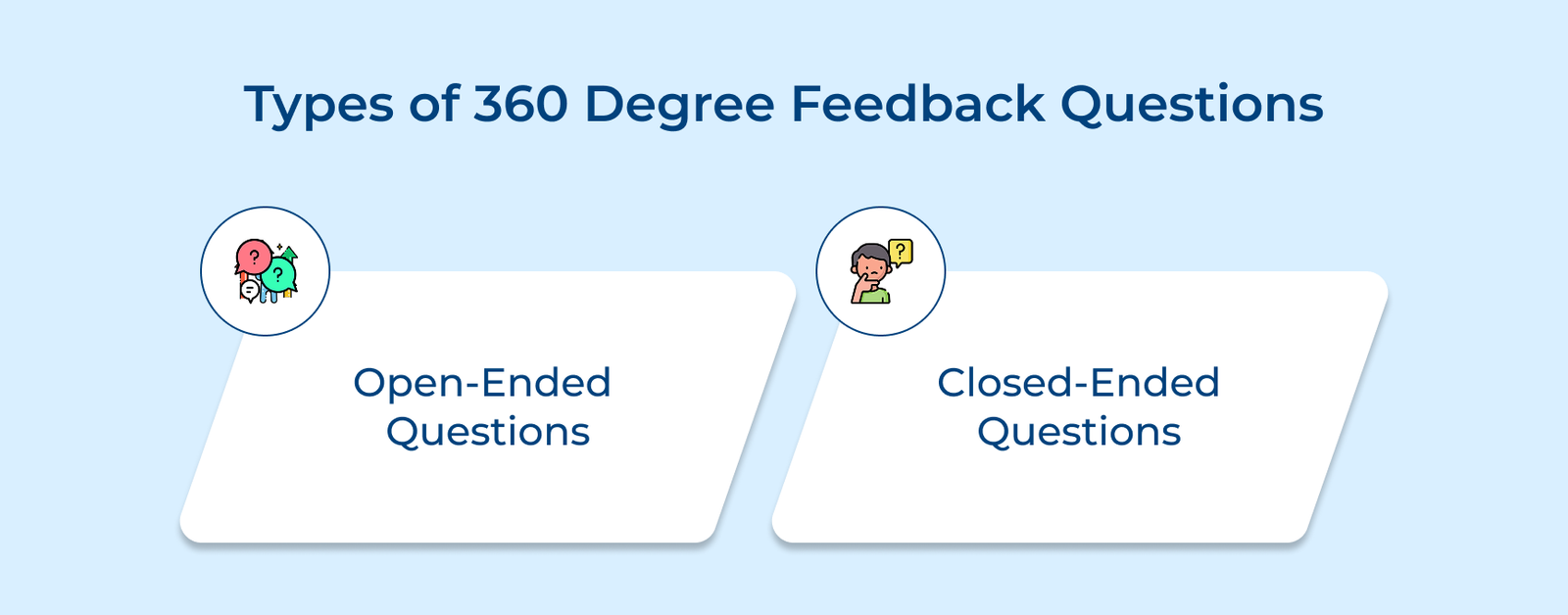
360 Feedback Questions Based On Types
Let’s go through the two main types of 360 feedback questions and see specific examples that can help evaluate different aspects of performance.