1. Focus
Customer success focuses on ensuring that customers achieve their desired outcomes with a product or service. It involves proactively engaging with customers to help them get the most value out of what they have purchased.
Customer experience is the overall perception a customer has of their interactions with a company. It covers all customer interactions from brand discovery to after-sales assistance.
Customer service is reactive and focuses on addressing customer issues. It is centered around providing support and assistance to customers when problems arise. Customer service representatives are typically the frontline employees. They interact directly with customers to resolve their issues and answer their questions.
2. Relationship
Customer success is all about building long-term, mutually beneficial relationships with customers. Customer success managers work to understand the unique needs of each customer and then provide personalized support to help them succeed.
Customer experience also focuses on building strong relationships with customers, but it takes a broader view of the customer journey. It involves understanding every interaction a customer has with a company to create a seamless and enjoyable experience.
Customer service is more transactional. It is focused on resolving specific issues that customers have in a timely and efficient manner. Customer service interactions can help build trust and goodwill with customers. They are typically more about addressing immediate needs rather than nurturing long-term relationships.
3. Metrics
Customer success is typically measured by key performance indicators (KPIs) such as customer retention, upsell and cross-sell rates. The metrics help customer success managers track the impact of their efforts on customer outcomes and overall business success.
Customer experience is often measured by metrics such as Net Promoter Score (NPS), customer satisfaction (CSAT) scores, customer health scores and customer effort score (CES). The metrics provide insight into how customers perceive their interactions with a company. It can help identify areas for improvement in the customer journey.
Customer service is typically measured by metrics such as first response time, resolution time and customer churn rates. The metrics help customer service teams to track their efficiency in resolving customer issues and inquiries.
4. Strategy
Customer success is a strategic, proactive approach to ensuring customer satisfaction and retention. It involves collaborating with customers to grasp their needs and tailored guidance for their success. Customer success is about creating value for customers and driving long-term loyalty.
Customer experience is also a strategic approach to delivering exceptional service and creating positive interactions with customers. It involves optimizing all customer touchpoints for a cohesive, satisfying experience. Customer experience is about building brand loyalty and advocacy by consistently exceeding customer expectations.
Customer service is more of a tactical, reactive approach to addressing customer issues and inquiries. It involves promptly addressing customer needs, resolving issues and offering assistance.
5. Employee Involvement
Customer success depends on department collaboration to provide the required support and guidance for customers to succeed. Customer success managers collaborate cross-functionally to align customer needs with business goals. It helps for a seamless customer experience.
Customer experience also requires collaboration across departments to deliver a consistent customer experience at every touchpoint. Customer experience teams collaborate with various departments. It helps to connect customer needs with business objectives for a unified brand experience.
Customer service is handled by dedicated customer service representatives who are responsible for responding to customer issues. Customer service teams may collaborate with other departments to resolve complex issues. The primary focus is on providing support to customers in a timely and efficient manner.
3 Customer Success Strategy Examples
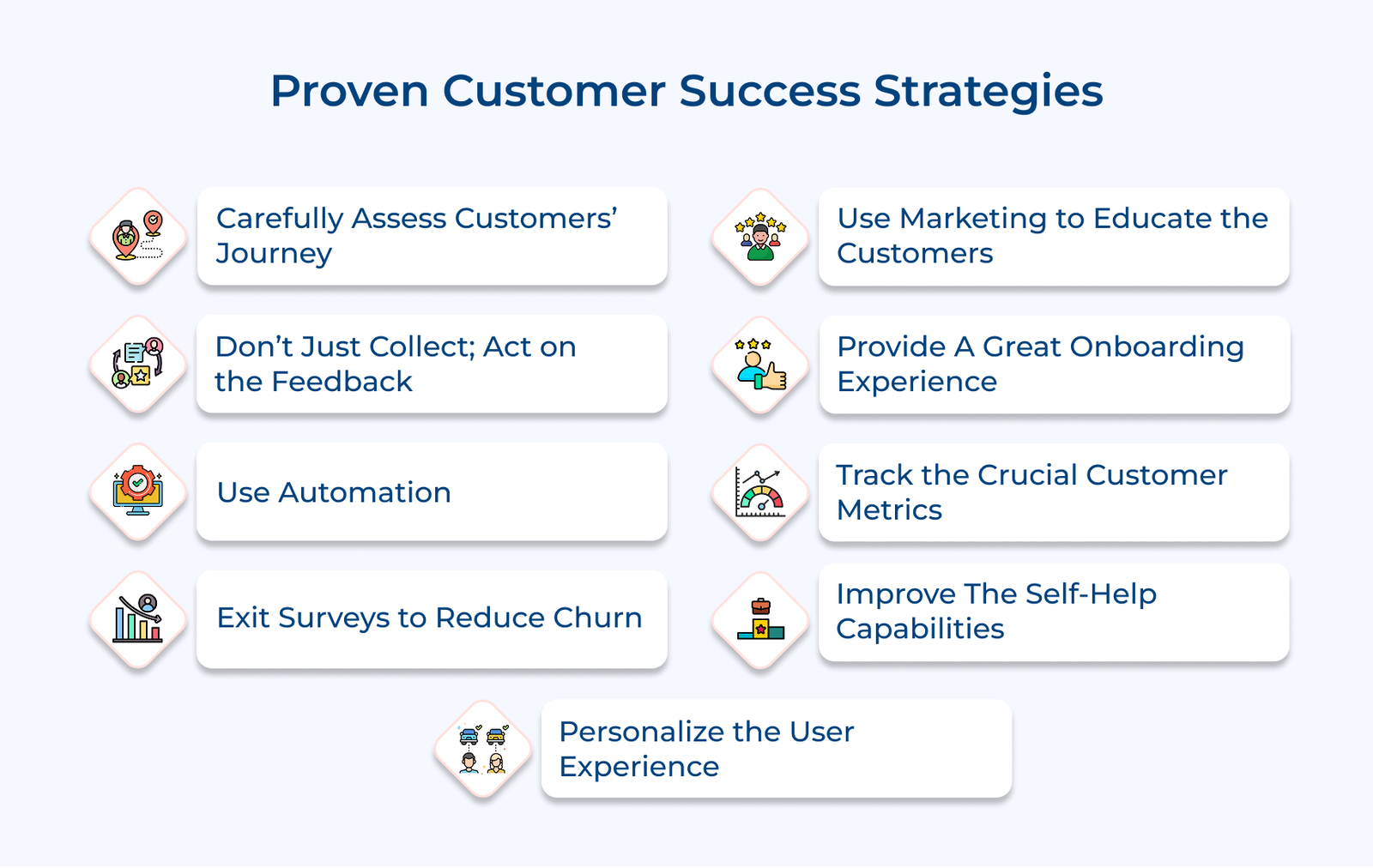
Below are some of the best customer success strategy examples that have proven to drive engagement, retention and revenue.