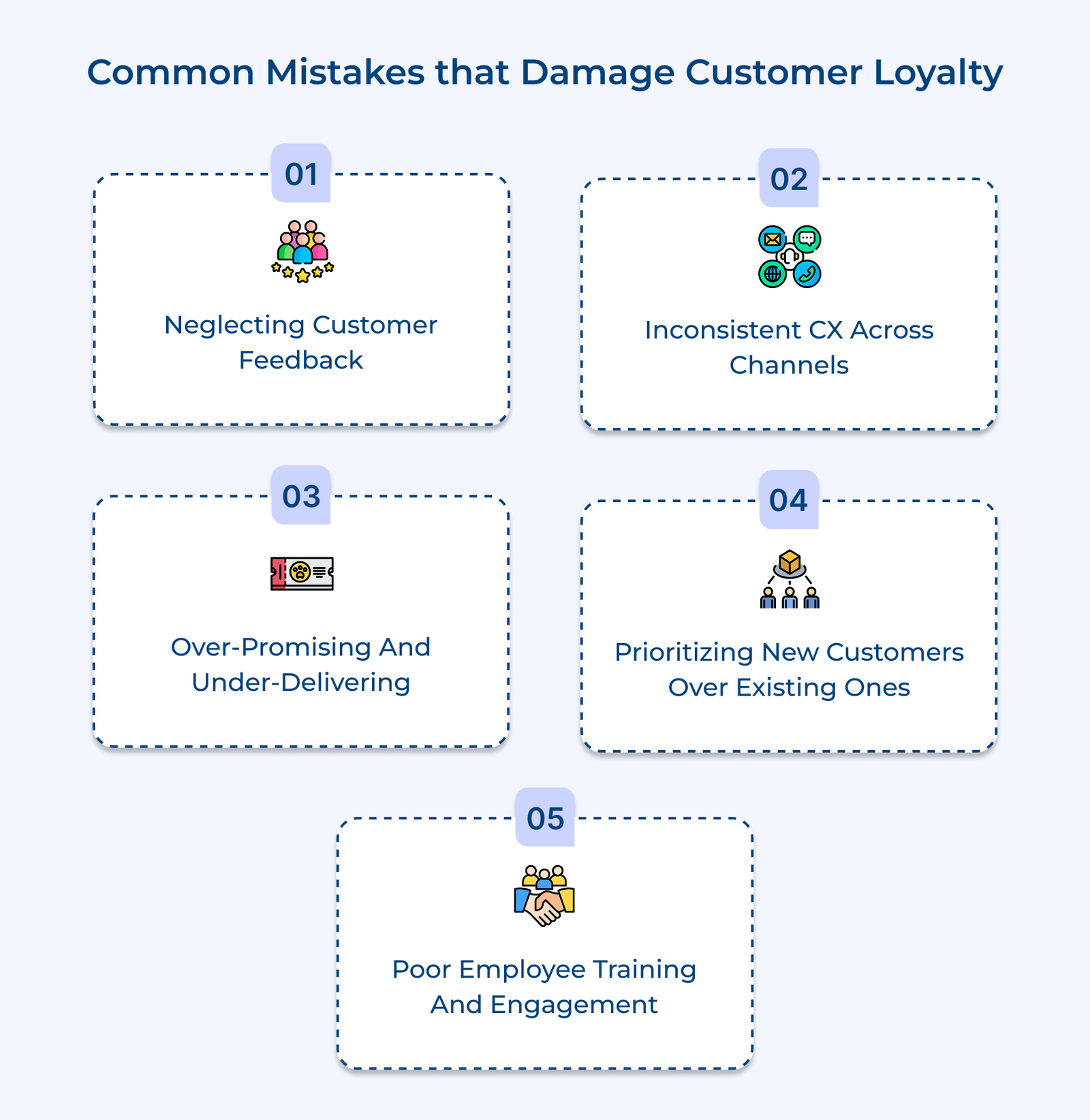
1. Neglecting Customer Feedback
Many businesses overlook customer feedback, missing opportunities for improvement and leaving customers feeling unheard. Ignoring negative comments can lead to unresolved issues and lower satisfaction.
Implement a proactive feedback system through surveys, social media and direct outreach. Analyze and prioritize feedback, then take visible action. Communicate changes based on customer input to show that their opinions drive improvement and enhance satisfaction.
2. Inconsistent Customer Experience Across Channels
Many businesses struggle to deliver a consistent customer experience across various touchpoints (in-store, online or through customer service). Inconsistency can create frustration and weaken brand loyalty.
Create a seamless omnichannel strategy that ensures consistent messaging, branding and service quality across all platforms. Use integrated systems to share customer data, enabling personalized experiences. Train staff regularly to maintain consistency in every interaction, regardless of the channel.
3. Over-promising and Under-delivering
Businesses often overpromise—be it on product features, delivery times or service quality. When the promises fall short, it leads to disappointment and erodes trust, damaging loyalty.
Focus on setting realistic, achievable expectations in all communications. Be clear about what customers can expect in terms of products, services and delivery. Ensure systems are in place to deliver on promises and if issues arise, communicate proactively with fair solutions to maintain customer confidence.
4. Prioritizing New Customers Over Existing Ones
Many businesses prioritize new customer acquisition at the expense of their existing loyal customers, leaving them feeling overlooked and undervalued. It can drive them to competitors who show more appreciation.
Strike a balance by investing in both customer acquisition and retention. Create loyalty programs that deliver real value and exclusive perks to long-term customers. Keep them engaged with personalized messages, special offers and early access to new products or services.
5. Poor Employee Training and Engagement
Poor customer service often stems from inadequate training or disengaged employees, leading to inconsistent experiences and missed opportunities to build loyalty.
Invest in robust training that covers product knowledge, customer service skills and company values. Enhance a culture of engagement through recognition, growth opportunities and regular feedback. Empower employees to make customer-focused decisions, creating a more responsive and loyal customer base.
Examples of Building Customer Loyalty
Below are real-world examples of businesses that have excelled in cultivating customer loyalty. Let’s go through them to get understand how to build customer loyalty effectively:
1. Amazon Prime
Amazon’s Prime membership offers a compelling bundle—free two-day shipping, streaming, exclusive deals and more at a flat annual fee. The value proposition boosts frequent usage and raises switching costs, locking customers into the ecosystem.
Since its launch, Prime has been a major success, with over 200 million members worldwide by 2021. Prime members spend twice as much annually as non-members, fueling Amazon’s rapid growth and solidifying its dominance in e-commerce.
2. Starbucks Rewards
Starbucks’ mobile app-based loyalty program lets customers earn “stars” for purchases, redeemable for free drinks and food. The app also offers mobile ordering, enhancing convenience, while personalized promotions and early product access keep members engaged.
Starbucks Rewards has been a key driver of loyalty and sales with over 22 million active U.S. members by 2021. Members contribute to around 50% of the company’s revenue, proving the program’s success in boosting repeat business and customer lifetime value.
3. Nike Membership
Nike’s multi-tiered membership program offers exclusive product access, personalized training plans and event invitations, all integrated with its fitness apps. It creates an immersive ecosystem that extends beyond just purchases, using data to deliver tailored recommendations and content.
Nike’s focus on digital engagement has paid off, with its membership base growing to nearly 300 million globally by 2021. The program has been a key driver of increased direct-to-consumer sales, contributing significantly to Nike’s growth as digital and direct sales become a larger part of its business model.
4. Sephora Beauty Insider
Sephora’s Beauty Insider program offers a tiered rewards system that increases benefits with spending, including points for purchases, free beauty classes, exclusive events and early access to products. Sephora delivers personalized product recommendations and tailored marketing by leveraging program data.
The Beauty Insider program is a key driver of Sephora’s success with over 25 million members. Loyalty members account for up to 80% of annual sales, demonstrating the program’s powerful role in enhancing repeat business and customer engagement.
5. Apple Ecosystem
Apple has built strong customer loyalty through its seamless ecosystem of offerings, integrating devices like the iPhone, iPad and Mac with services such as iCloud, Apple Music or Apple TV+. The interconnectedness enhances the value for customers who use multiple Apple offerings.
Apple boasts exceptionally high customer retention, with iPhone loyalty rates exceeding 90% in some surveys. The loyalty drives steady revenue, not only from hardware sales but also from a rapidly growing services business, which has become a key growth engine for the company.
Metrics to Measure Customer Loyalty Effectively
If you’re looking to elevate your business and cultivate lasting relationships with your customers, learn the key metrics that will enable you to measure customer loyalty effectively.