1. Offering Problem or Troubleshooting Guide
The template offers clear, step-by-step instructions to help customers solve common issues on their own. It empowers customers to quickly troubleshoot without needing lengthy support interactions by providing easy-to-follow solutions.
Businesses can reduce support ticket volume, boost customer confidence and improve satisfaction by offering troubleshooting guides. The proactive approach not only builds trust but also helps customers feel more in control of their experience.
Example:
SMS: “Hey [Name], sorry for the trouble! Try the steps to fix it:
1. Restart your device
2. Clear the app cache
3. Update to the latest version
Still, having issues? Reply ‘HELP’ for more support. Thanks for your patience!”
2. Requesting Customers to Switch from Text to Voice
The template gently encourages customers to switch from text to phone calls for more efficient support. It explains that voice communication can help resolve complex issues more quickly and allows for immediate clarification, leading to better understanding.
The approach enhances a more personal connection and often results in faster, more effective resolutions by offering the option to speak directly. It ensures customers feel valued and provides a smoother, more satisfying experience.
Example:
SMS: “Hi [Name], we’d love to help you faster with a quick call. Reply YES to receive a call, or NO if you’d prefer to continue via text. Your choice matters to us!”
3. Information Related to Refund Issued
The template confirms the refund process, detailing the amount, expected timeframe and how to track it. It also thanks the customer for their patience, offering transparency throughout.
Clear communication enhances trust, reduces unnecessary follow-ups and enhances the customer experience. You can turn a refund into an opportunity to strengthen customer loyalty by setting clear expectations.
Example:
SMS: “Hi [Name], your refund of $[Amount] is on the way! It should reach your account in 3-5 business days. Track it here: [link]. Any questions? Just reply. Thanks for choosing us!”
4. Updating on Order Status
The template keeps customers informed about their order status, including delivery estimates, tracking details and any delays. It offers proactive updates to ensure customers are aware of their order’s progress at every stage.
Frequent order updates help alleviate customer concerns, reduce unnecessary inquiries and create a more seamless shopping experience. The updates enhance trust by managing expectations and showing attention to detail.
Example:
SMS: “Hi [Name], your order #[Number] is on its way! Expected delivery: [Date]. Track it here: [link]. We’ll keep you updated on any changes. Thanks for choosing us!”
5. Responding to Negative Feedback
The template acknowledges the customer’s frustration, offers a sincere apology and provides a clear solution or next steps. It reassures the customer that their concerns are taken seriously and emphasizes the company’s commitment to resolving the issue.
Effectively addressing negative feedback not only resolves the issue but can also build long-term loyalty. It demonstrates that the company values the customer’s experience and is dedicated to making improvements to ensure satisfaction.
Example:
SMS: “We’re sorry for the inconvenience, [Name]. Your feedback matters to us. Our manager will reach out within 24 hours to resolve it. Thanks for helping us improve!”
6. Membership Renewals
The template reminds customers of their upcoming membership renewal, emphasizing the benefits of continuing their membership and providing easy renewal instructions. It may also include exclusive offers or incentives to encourage prompt action.
Well-crafted renewal reminders help reduce churn, boost retention and maintain steady revenue. You can enhance customer satisfaction by highlighting the value of the membership and simplifying the renewal process.
Example:
“Hi [Name], your [Product] membership is about to expire! Renew now to continue enjoying [Key Benefit]. Click here to renew: [link]. Renew by [Date] for 10% off! Need help? Reply ‘HELP’. We appreciate you!”
7. Upselling and Cross-selling
The template recommends relevant products or services based on the customer’s past purchases or preferences. It highlights how these additions can enhance their current experience and deliver even more value.
Smart upselling and cross-selling not only increase sales but also introduce customers to products that truly complement their needs. The approach shows that you understand their preferences and can anticipate what they might like next.
Example:
SMS: “Hey [Name], loving your [Product]? Upgrade with [Complementary Product] for [Key Benefit]. Get 15% off today: [link]. Reply to ‘INFO’ for details. Enjoy!”
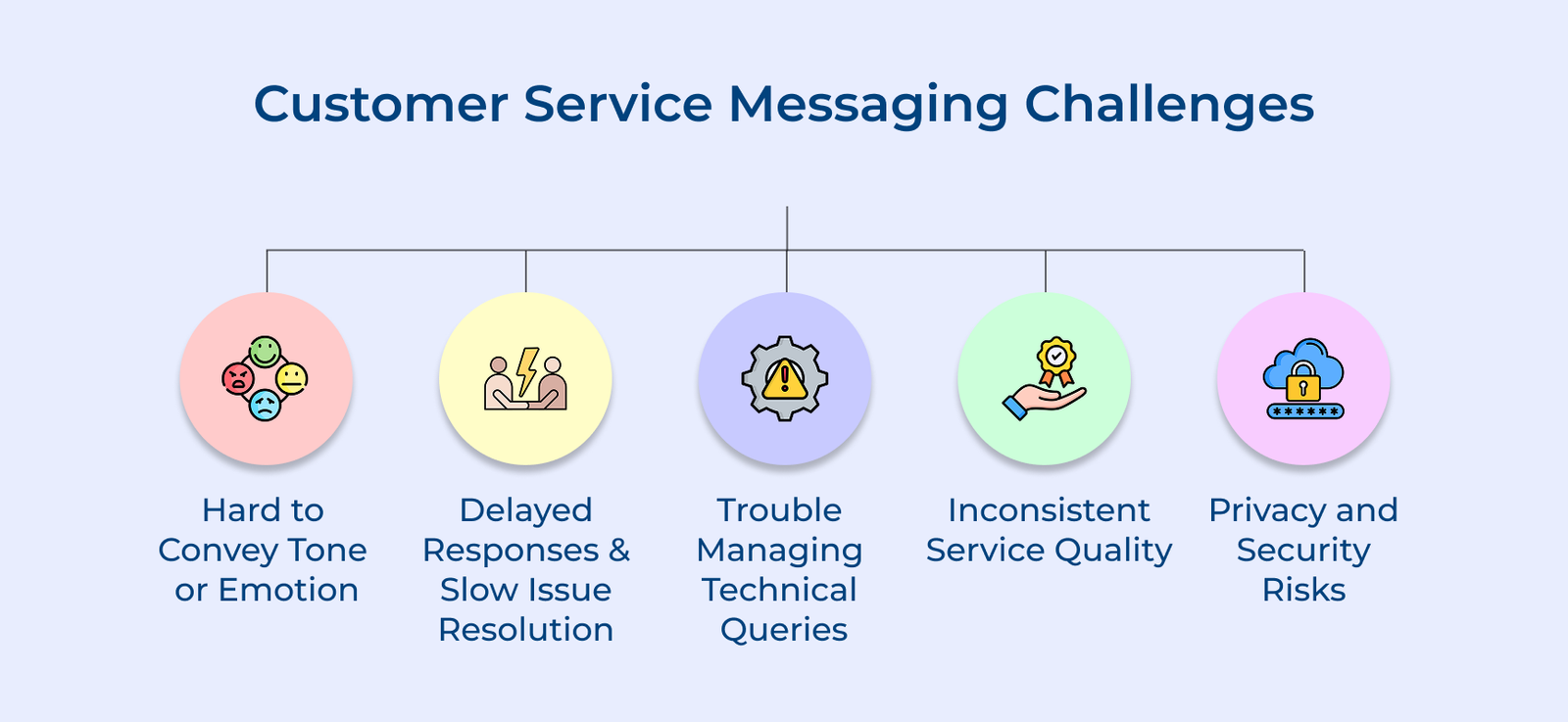
Challenges Associated with Customer Service Messaging
Check out some common hurdles companies face in customer service messaging and how to overcome them to enhance communication.