1. Focus
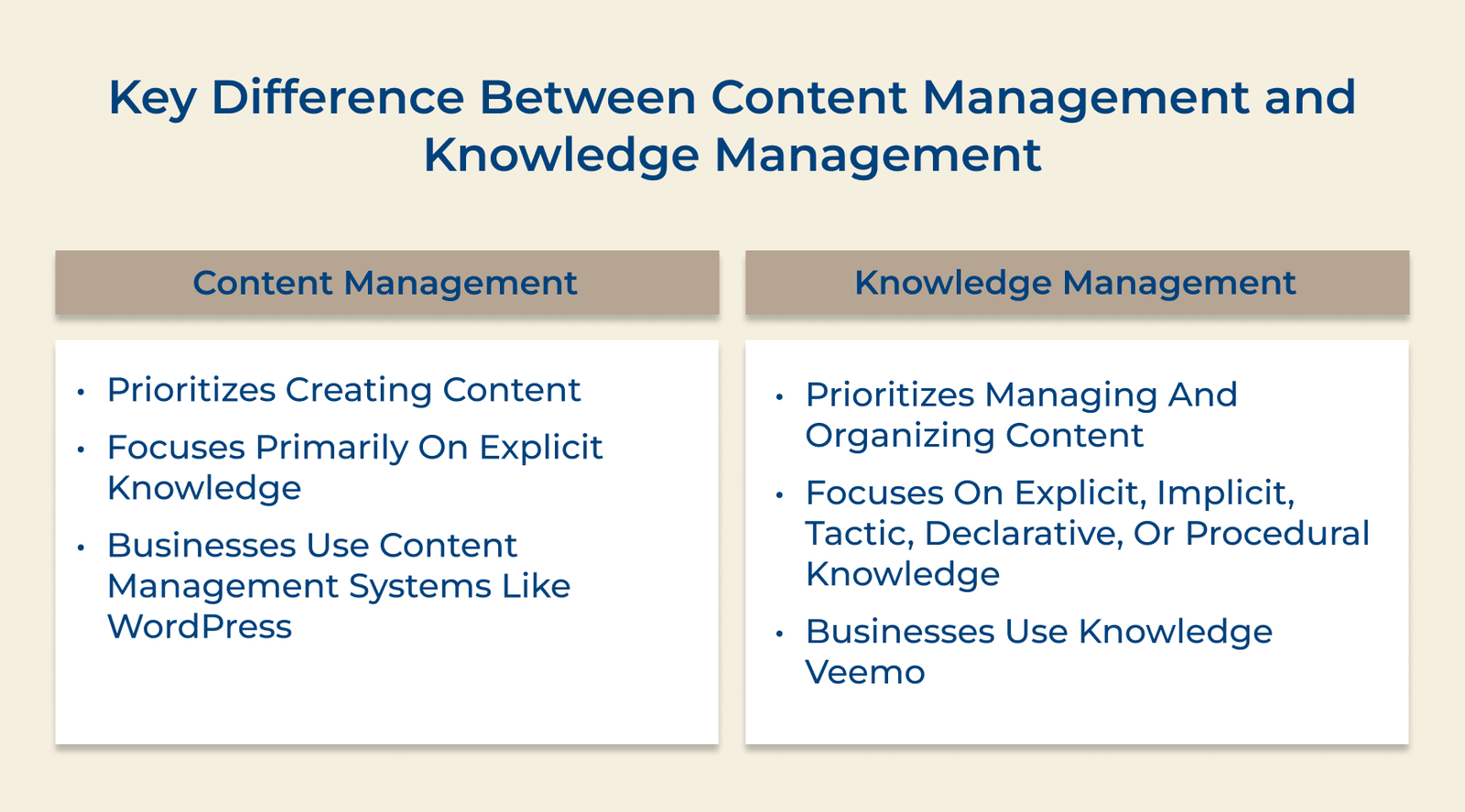
Content management primarily focuses on the organization, creation, publishing and distribution of content. It involves managing or storing content in a centralized system, making it easily accessible and editable. The main goal of content management is to ensure that content is up-to-date, relevant and consistent across all platforms.
Knowledge management focuses on capturing, storing, sharing and using knowledge within an organization. It involves identifying or sourcing knowledge from employees, organizing it in a centralized system and making it easily accessible to those who need it. The main goal of knowledge management is to improve decision-making, problem-solving and innovation within the organization.
Key takeaways:
- Content management is ideal for businesses that need to manage large volumes of content and ensure consistency across multiple platforms.
- Knowledge management is better suited for businesses that rely heavily on the knowledge or expertise of their employees to drive innovation and competitive advantage.
2. Scope
The scope of content management is typically limited to the management of content within an organization or website. It involves creating, publishing or updating content to ensure that it is relevant and engaging for the target audience.
Knowledge management is broader in scope as it encompasses the creation, storage, sharing and utilization of knowledge within an organization. The knowledge can be in the form of documents, databases, expertise, best practices and experiences. Knowledge management aims to facilitate collaboration, innovation and decision-making by making relevant information easily accessible to employees.
Key takeaways:
- Promoting a culture of knowledge sharing and collaboration allows businesses to leverage their intellectual capital more effectively. It can lead to increased efficiency, innovation and competitive advantage.
- Content management is still essential for organizing and delivering information to customers effectively. A combination of both content and knowledge management may provide the most comprehensive approach for businesses.
3. Purpose
The main purpose of content management is to provide easy access to information and ensure that content is up-to-date for users. It helps businesses streamline their content creation processes, improve collaboration among team members and enhance the overall user experience.
Knowledge management’s motive is to facilitate collaboration among employees, improve decision-making processes and drive innovation. Knowledge management systems typically involve the creation of knowledge bases, forums, wikis or other tools to help employees access and contribute knowledge effectively.
Key takeaways:
- Content management is more suitable for businesses that mainly deal with creating and publishing content for external audiences
- Knowledge management is ideal for businesses that need to leverage internal knowledge or expertise to drive innovation and achieve strategic objectives.
4. User
Users of content management systems are typically content creators and administrators who are responsible for uploading, editing or publishing content. These users are focused on creating and managing the information that the organization wants to share with the outside world.
Users of knowledge management systems are employees who are seeking information and expertise within the organization. The users are focused on accessing the collective knowledge or expertise of their colleagues to improve decision-making and problem-solving.
Key takeaways:
- KM systems tend to prioritize collaboration and knowledge sharing among a wider range of users.
- CM systems may be more focused on content creation and distribution by a smaller group of users.
5. Technologies
Content management systems (CMS) focus on the creation, storage and management of digital content such as text, images, videos or documents. CMS utilizes technologies such as web servers, databases, content repositories or content delivery networks to organize and deliver content to users. Popular CMS platforms like WordPress, Drupal and Joomla offer user-friendly interfaces for content creators to publish content on websites.
KMS technologies may include document management systems, collaboration tools, knowledge bases and search engines to facilitate knowledge sharing among employees. Platforms like Microsoft SharePoint and Confluence are commonly used for knowledge management purposes.
Key takeaways:
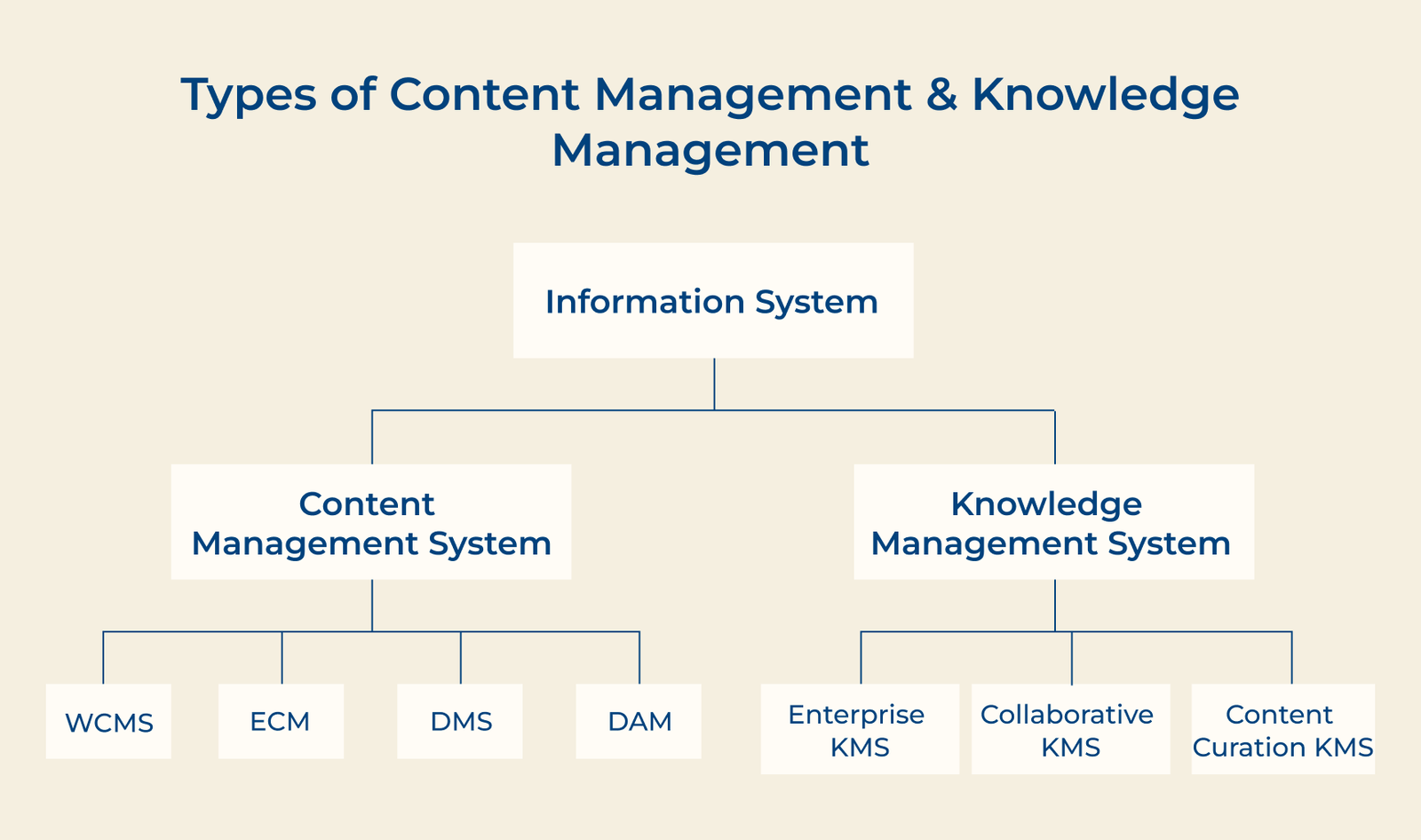
- Content management systems typically utilize document management software, web content management systems and digital asset management tools to help organize or control content.
- Knowledge management systems often involve the use of knowledge bases, collaboration tools and artificial intelligence technologies to capture and disseminate knowledge across an organization.
6. Measurement
Success is often measured by metrics such as content quality, timeliness of content delivery, user engagement and website traffic in content management. Key performance indicators (KPIs) may include page views, time on site, bounce rate and conversion rate.
Success in knowledge management is often measured by metrics such as knowledge sharing, knowledge retention, problem-solving speed, employee engagement and innovation. KPIs may include knowledge base usage, expertise location, collaboration frequency and knowledge transfer effectiveness.
Key takeaways:
- Content Management systems are typically easier to quantify in terms of metrics such as page views, engagement and content performance.
- Knowledge management may require more qualitative measures such as employee satisfaction, knowledge sharing and problem-solving capabilities.
7. Impact
The impact of content management lies in its ability to attract or engage consumers, drive traffic to websites and enhance brand visibility. Consistently delivering high-quality, relevant content allows businesses to establish themselves as industry leaders and build a loyal customer base.
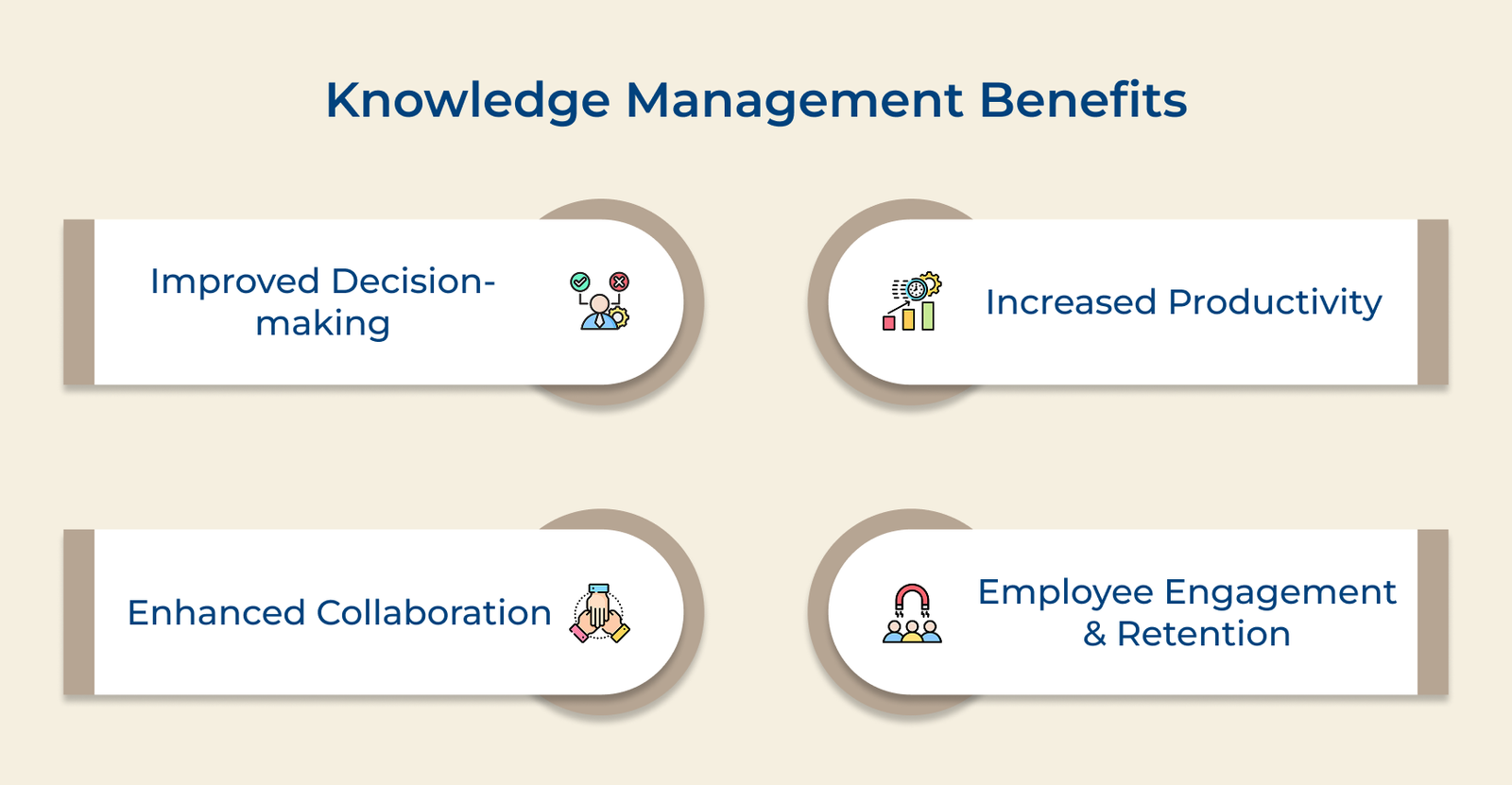
Knowledge management’s impact is seen in improved decision-making, increased productivity and enhanced collaboration among employees. Effectively managing knowledge allows businesses to avoid costly mistakes, promote innovation and promote a culture of continuous learning.
Key takeaways:
- Knowledge management is often seen as more valuable as it leverages the collective intelligence of an organization to drive innovation and competitive advantage.
- Content management is essential for managing information, knowledge management enables organizations to harness their intellectual capital for strategic growth and development.
Use Cases of Content Management
Check out the various use cases of content management that demonstrate its powerful impact across different industries and functions.